
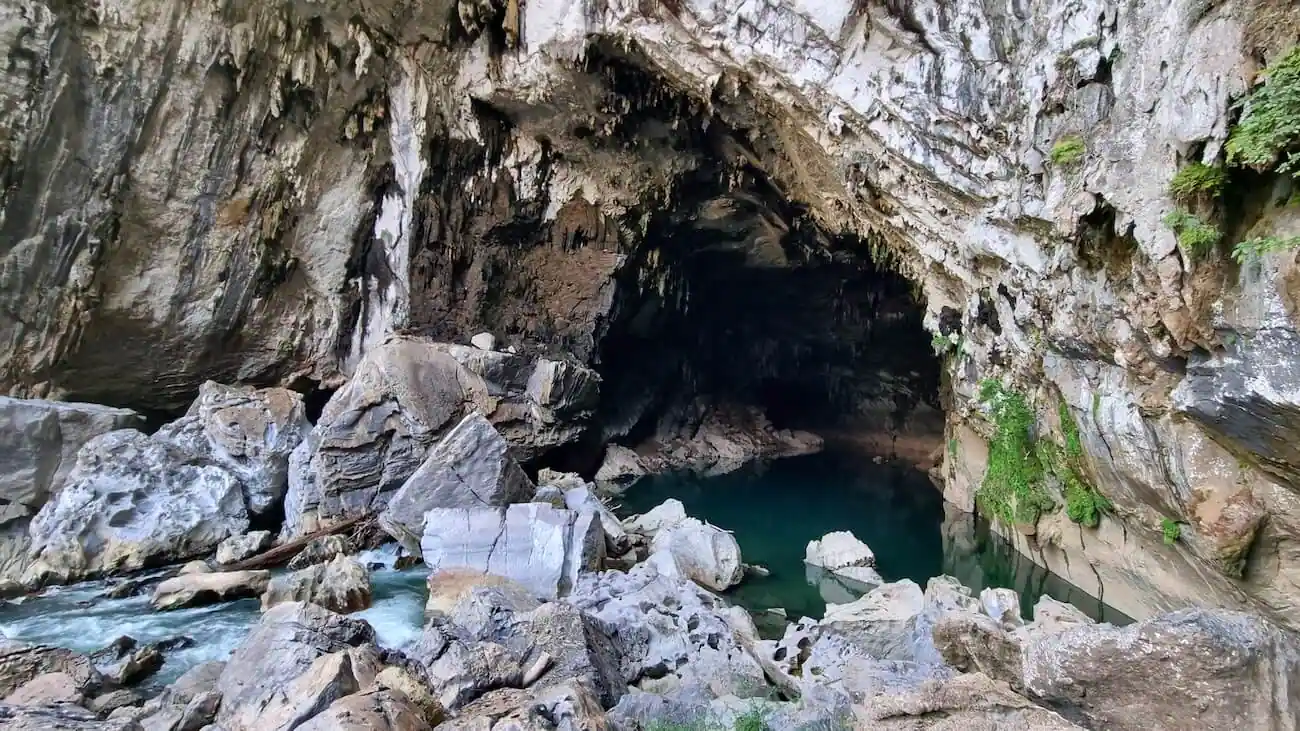
Hidden deep within the dramatic limestone landscape of the Annamite Mountain Range in central Laos, Xe Bang Fai Cave is one of the largest river caves in the world, and hardly anyone knows about it! Carved over thousands of years by the powerful Xe Bang Fai River, this enormous cave system stretches over eleven kilometers underground, creating vast chambers, cathedral-like ceilings, and a sense of scale that is hard to imagine until you are inside.
Xe Bang Fai Cave takes its name from the Xe Bang Fai River, which flows directly through the cave and continues to shape it to this day. To avoid confusion, it’s worth noting that there is also a village called Xe Bang Fai, located along the main road Nr. 13 between Savannakhet and Thakhek. Despite sharing the same name, the village is not where the cave is located. The cave itself lies much deeper in the remote limestone karst region of Khammouane, close to the Lao–Vietnamese border right on the so called Ho Chi Minh Trail, which was an important supply trail for the Viet Cong during the American-Vietnam War. Many people skip this natural wonder because it requires a detour from the typical Thakhek Motorbike Loop.
If you decide to do the detour to reach the massive Xe Bang Fai Cave, you will see:
✅ one of the largest river caves in the world.
✅ a place that is far away from mass tourism.
✅ Laos’ 4th officially recognised UNESCO world heritage site.
✅ untouched nature & wildlife in the Hin Nam No National Park.
As mentioned earlier Xe Bang Fai Cave is one of the largest active river caves in the world and stands out because of it’s scale, power, and untouched character. The cave is approximately 6.4 to 11 kilometers long, with enormous chambers reaching up to 200 meters wide and ceilings rising over 100 meters high in some sections. What makes it truly unique is the Xe Bang Fai River itself, which flows straight through the cave with a strong current, shaping the interior year-round.
Unlike many large caves that are dry or partially flooded, Xe Bang Fai remains an active hydrological cave system, complete with rapids, deep pools, powerful air circulation, and seasonal water level changes. Located within the limestone karst of Hin Nam No National Park, the cave is part of a vast underground river network connected to the transboundary cave systems of Laos and Vietnam, making it not just a geological giant, but also one of the most significant cave environments in Southeast Asia and the world.
The discovery of Xe Bang Fai Cave happened surprisingly late, considering its enormous size. While the cave had long been known to local villagers, early scientific interest was limited to a few isolated expeditions, including French explorations in 1905 and again in 1995, neither of which led to broader international recognition. For decades, the cave remained largely undocumented and absent from global cave research.
This changed in the year 2008, when an expedition supported by National Geographic carried out detailed surveys and documentation inside the cave. The results revealed one of the largest active river cave passages in the world and brought Xe Bang Fai to international attention for the first time. Subsequent research and conservation work in the area involved European partners, including German Cooperation (“Deutsche Zusammenarbeit”), and was co-financed by EU-funded programs focused on scientific documentation, conservation, and sustainable community-based tourism.
Xe Bang Fai Cave, sometimes referred as Tham Khoun Xe is located in Nong Ping village in Boualapha District of Khammouane Province and lies within the Hin Nam No National Park, one of Laos’ most important limestone karst landscapes. In July 2025 the Hin Nam No National Park officially became the 4th UNESO World Heritage Site in Laos. This protected area is part of a much larger karst system that continues across the Lao-Viet border. On the Vietnamese side, the same underground river networks and limestone formations connect to Phong Nha Ke Bang National Park, home to Son Doong Cave, the actual largest cave in the world. Although separated by a national border, the rivers, caves, and ecosystems beneath the surface are deeply interconnected, making this one of the most significant cave regions on Earth for all cave lovers.
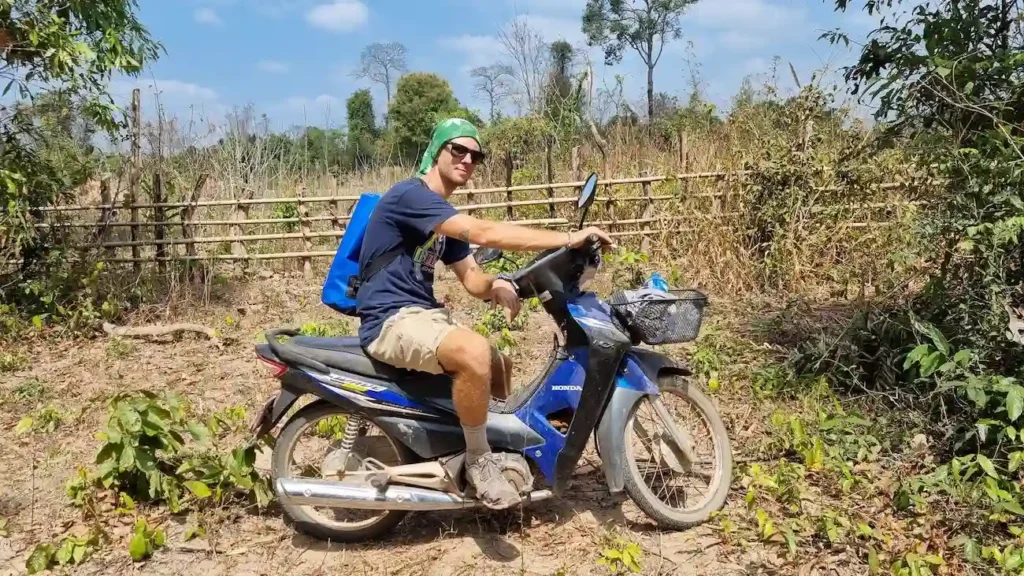
🏍️ By Motorbike or Car from Thakhek: Many people do the famous Thakhek Loop by Motorcycle in the area. For those who have 1-2 extra days, I would highly recommend doing the detour. It takes between 3-3.5 hours from Thakhek to arrive at the Xe Bang Fai Cave. So well over 6 hours for both ways. Distance from Thakhek is 145 km.
If your starting point is the Thakhek, then just start the loop counterclockwise on Road Nr. 12 where many caves and tourist spots are located. On the way you will find Xieng Liap Cave, Thafalang, Nang Ene Cave or Pha Sueam Cave. After around 1 hour from Thakhek (40 km) you will reach a turning point to Road Nr. 122 towards Mahaxay. Turn right until you reach Mahaxay. Then just keep driving until Xaybuathong towards Bualapha and then Xe Bang Fai. Coming from Thakhek, GPS and Google Maps actually work fine, so you can just follow maps.
🚌 By Bus & Public Transport:
Visiting Xe Bang Fai Cave by public transport is possible, but it requires flexibility, patience, and good timing. There is no direct bus to the cave itself, and the final part of the journey must be arranged locally.
From Thakhek, take a local bus or shared minivan heading east on Route 12 towards Bualapha or Lak Sao. These buses usually depart from Thakhek’s main bus station in the morning and take around 3–4 hours (or much more, never know in Laos), depending on road conditions and stops. Tell the driver that you want to get off near Bualapha or at the junction for Ban Nong Ping. The journey will be split up, so you have to ask around for: Getting from Thakhek to Mahaxay or Xaybuathong, then Bualapha and then Xe Bang Fai Cave.
🏍️ By Motorbike or Car from Savannakhet:
Not sure if many people actually make their way from Savannakhet to Xe Bang Fai Cave, but we did (the other way round). And that’s the proper local way of reaching the cave because it involves a ferry river crossing local lao style. Starting from Savannakhet, go to Xeno (or Seno), a well known hub in the area.
From Xeno go in the direction of Vientiane/Thakhek on Road Nr. 13. The same as above, just with the difference that you have to turn right in a village called Ban Savang Neua, which you can find on Maps. After that turn, simply follow the road until you reach Ban Kengpe. Thats the village where the river crossing by ferry happens. Just go until the dead end on the river. You will see other villagers and the ferry. The boat costs 50.000 LAK and will bring you across Xe Bang Fai River safely. Arrived on the other side continue on the road until Xaybuathong, then follow towards Bualapha and Ban Kok. If unsure, ask locals, they know exactly where you want to go. All you need is the following direction points: Xaybuathong, Bualapha, Kok, Ban Nong Ping.
At the moment of writing this article, I’m not aware of any public transport to go to Xe Bang Fai Cave from Savannakhet. You best best would be going from Savannakhet to Xeno by public bus or minivan (thats easy). Or to take public transport to Thakhek from Savannakhet first and then continue the journey. Savannakhet Bus station has many daily connections to Thakhek. No need to pre-book anything, just go to the Provincial Bus Station in Savannakhet.
Reaching Xe Bang Fai Cave has become significantly easier in recent years. All main access roads are now fully paved and in good condition (for lao standards), right up to the parking and camping area near the cave. From Thakhek, Savannakhet, or Xeno, the route consists almost entirely of asphalt roads, making the journey straightforward for motorbikes, cars, and mini vans. You will still find the lao-typical potholes though, but mostly paved roads all the way to the cave.
The roads through Mahaxay, Xaybuathong, Bualapha, and Ban Nong Ping are smooth and well maintained, with only a few rural stretches where livestock, potholes after heavy rain, or slow-moving local traffic may require extra attention. During the dry season, road conditions are excellent and suitable for all vehicles. In the rainy season, the asphalt roads generally remain passable, but short sections can become muddy near villages or river crossings, especially after heavy rainfall.
Importantly, no off-road driving or 4WD vehicle is required to reach Xe Bang Fai Cave. Even the final stretch to the campsite and visitor area is fully asphalted. The villagers told us, that the road got fixed back in 2023.
👉 Laos Insider Tip: Fuel stations become less frequent after leaving the main roads, so it’s best to refuel in Thakhek, Mahaxay, or Xaybuathong before continuing toward the cave.
Hin Nam No National Park is one of the most remote and ecologically important protected areas in Laos. Located in Khammouane Province along the Lao–Vietnamese border, the park is dominated by dramatic limestone karst landscapes, dense forests, underground rivers, and some of the largest cave systems in Southeast Asia. Covering a vast and largely untouched area, Hin Nam No forms part of a transboundary karst ecosystem that continues into Vietnam’s Phong Nha–Ke Bang region.
The park is not only significant for its geology and biodiversity, but also for the people who live around it, many of whom have depended on its forests, rivers, and caves for generations. Today, Hin Nam No is managed through a co-management approach that combines conservation, scientific research, and community-based tourism, helping to protect this unique landscape while supporting local livelihoods. (Source: Information Boards Xe Bang Fai Campsite, Hin Nam No Nationalpark, Nong Ping, Khammouane Province, 2026).
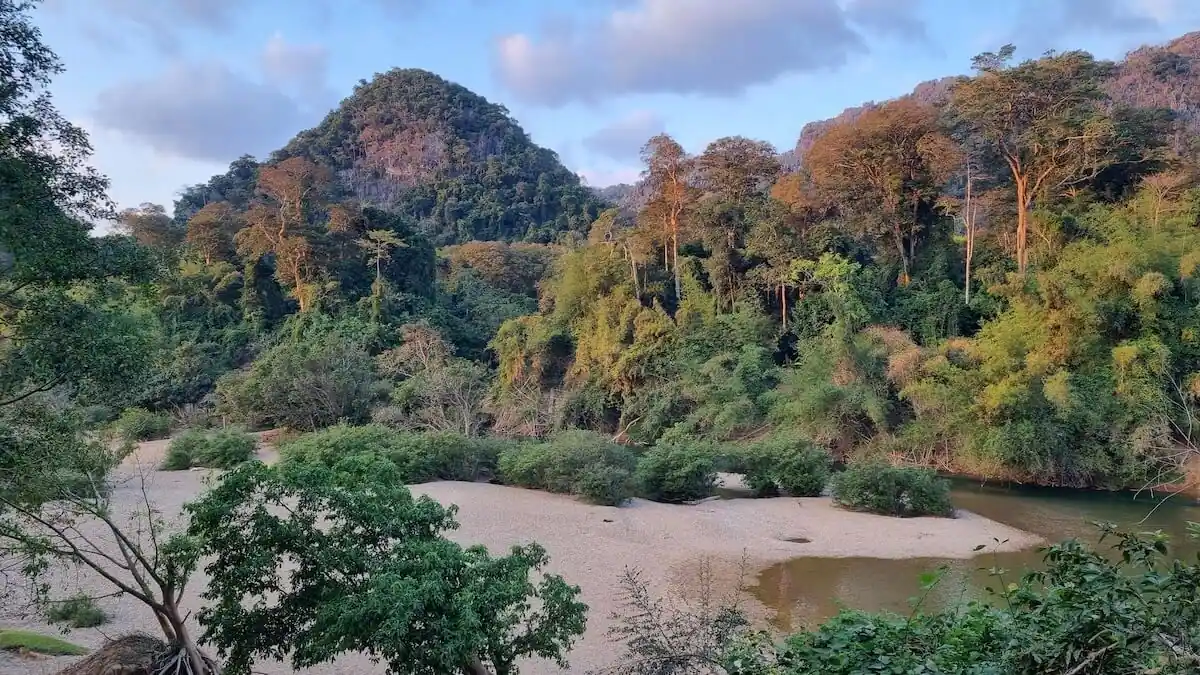
The landscape of Hin Nam No National Park has been shaped by human presence for thousands of years. Natural caves, reliable water sources, and abundant forest resources made the area an ideal place for early settlement long before written history. Archaeological finds suggest that people have used this karst landscape since prehistoric times, and its rugged terrain has helped preserve traces of early human activity.
During the rise of the Lan Xang Kingdom between the 14th and 17th centuries, the region became part of important trade networks linking what is now Laos with Thailand, Vietnam, and southern China. Trails, rivers, and mountain passes through the Annamite Mountain Range supported the movement of goods and people, leaving behind evidence of long-distance trade.
In the colonial era, the French expanded infrastructure across Laos, including routes through remote mountain regions. While Hin Nam No remained largely undeveloped, these connections slowly opened the area to outside influence. Later, during the Indochina and Vietnam wars, the park’s caves, valleys, and forests gained strategic importance as part of the Ho Chi Minh Trail network, serving as shelter, supply routes, and hiding places. Even today, physical traces of this period can still be found across the landscape, adding another historical layer to this remote and protected region. (Source: Information Boards Xe Bang Fai Campsite, Hin Nam No Nationalpark, Nong Ping, Khammouane Province, 2026).
The area around Hin Nam No National Park is home to a wide mix of ethnic communities whose lifestyles have long been shaped by the surrounding forests, rivers, and limestone landscapes. Living in a remote karst environment has influenced how people farm, gather food, and use natural resources over generations.
The population mainly consists of Tai-Lao and Mon-Khmer groups, alongside smaller mixed communities. Each group maintains its own language, traditions, and local knowledge, especially when it comes to agriculture, forest use, and traditional medicine. Wet rice farming is common in flatter areas, while forest-based livelihoods remain important in more rugged terrain.
A smaller share of the population belongs to less-documented groups such as the Salang, as well as families who migrated from neighboring regions, including Vietnam, over time. Together, these communities form a culturally diverse region where traditional ways of life continue to coexist closely with the natural environment of Hin Nam No. (Source: Information Boards Xe Bang Fai Campsite, Hin Nam No Nationalpark, Nong Ping, Khammouane Province, 2026).
Hin Nam No National Park protects one of the most diverse and least disturbed plant ecosystems in central Laos. Together with the neighboring Phong Nha Ke Bang area in Vietnam, the park forms a vast transboundary landscape shaped by limestone karst, mountains, and dense forest cover. This varied terrain creates a wide range of habitats, from dry karst hilltops to evergreen lowland forests and high altitude mountain forests.
The park is considered a botanical hotspot, with well over a thousand documented plant species and many more expected to be discovered as research continues. A particularly striking feature is the high number of rare and endemic plants, some of which are found nowhere else. Orchids, bamboo species, and forest trees adapted to extreme karst conditions all play an important role in the park’s ecosystem.
Forests cover around 94% of the park and are essential not only for biodiversity but also for local communities, who depend on forest plants for food, medicine, construction materials, and traditional practices. At the same time, valuable hardwoods and aromatic species such as agarwood and rosewood are under pressure, making conservation and sustainable management critical. Hin Nam No’s forests are therefore not just visually impressive, but a key element in protecting both biological diversity and local livelihoods in this remote region of Laos (Source: Information Boards Xe Bang Fai Campsite, Hin Nam No Nationalpark, Nong Ping, Khammouane Province, 2026).
Hin Nam No National Park is one of the most biodiverse protected areas in Laos. Surveys have recorded hundreds of animal species across forests, rivers, caves, and karst landscapes, with many species endemic to the Annamite Mountains or globally threatened.
🐒 Primates:
Hin Nam No is a major primate habitat with 10-11 species recorded, including globally endangered langurs, gibbons, and slow lorises. The park also hosts five macaque species, making it one of the most primate-rich regions in the country.
🦇 Bats:
The park supports 41 bat species, accounting for over 40% of Laos’ total bat diversity. Several species are Near Threatened or Critically Endangered, underlining the importance of Hin Nam No’s caves as key roosting sites.
🐦 Birds:
With around 250 bird species, Hin Nam No is a hotspot for avian diversity. Rare and threatened species such as Great Hornbills and White-winged Ducks are found here, alongside several birds endemic to the Annamite Range.
🐍 Amphibians & Reptiles:
At least 98 species of amphibians and reptiles have been recorded, including karst-adapted geckos, endangered pit vipers, rare turtles, and the Lao Knobby Newt, a species with a very limited national range.
🐟 Freshwater Fish:
Rivers and underground streams support about 95 freshwater fish species, including cave-adapted species found nowhere else. Some fish populations are protected in village conservation zones due to their ecological and economic value.
🕷️Invertebrates:
Although still poorly studied, Hin Nam No hosts a wide range of invertebrates such as giant huntsman spiders, cave spiders, pseudoscorpions, and insects, with many species likely still undiscovered. The Giant Cave Huntsman Spider was discovered by German researchers and is one of the biggest spider species in the world (Heteropoda steineri or Heteropoda maxima) (Source: Information Boards Xe Bang Fai Campsite, Hin Nam No Nationalpark, Nong Ping, Khammouane Province, 2026).
Once you arrive in the area of Xe Bang Fai Cave, you’ll find the campsite area and National Park office. There is plenty of space to park motorbikes and cars, and access is straightforward. Parking is free for both motorbikes and cars, and you can leave your vehicle there safely while visiting the cave.
You will see a barrier and the Hin Nam No National Park Office where entrance fees and tour arrangements are handled. Access to Xe Bang Fai Cave is only possible as part of a guided tour, and entrance fees are collected on-site.
➡️ Entrance Fee Hin Nam No National Park: Foreigners have to pay an entrance fee of 50.000 LAK (2,30 USD), while locals pay a bit less.
➡️ Parking Fee: Car parking fee is 20.000 LAK (0,90 USD) and motorbike parking is 10.000 LAK (0,45 USD).
➡️ Boat Service Fee & Guide: To get into the cave, a boat with local guide has to be arranged. The cave can not be visited without a local guide. The big boat is 300.000 LAK (14 USD) for the whole boat including guide and can fit up to five people, while the small boat costs 150.000 LAK (7 USD) and can fit up to 2 people
All fees are usually paid in cash or by scanning a Lao-QR-Code, so it’s good to have some cash on you. Not sure how to get cash or exchange Money in Laos? Check our dedicated article.
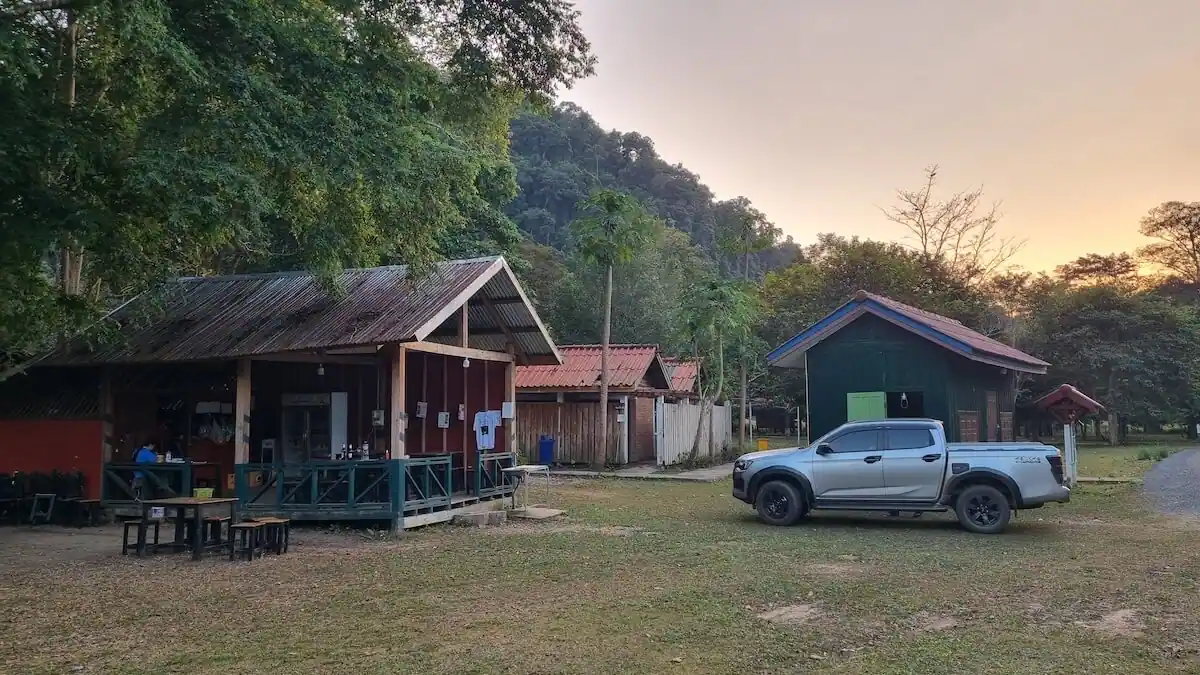
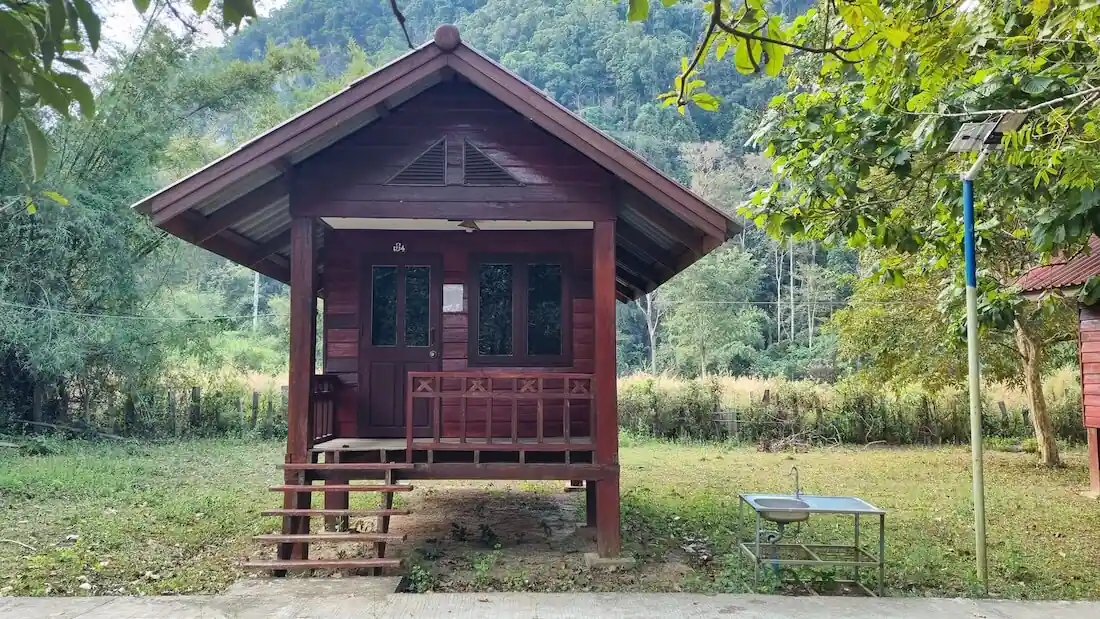
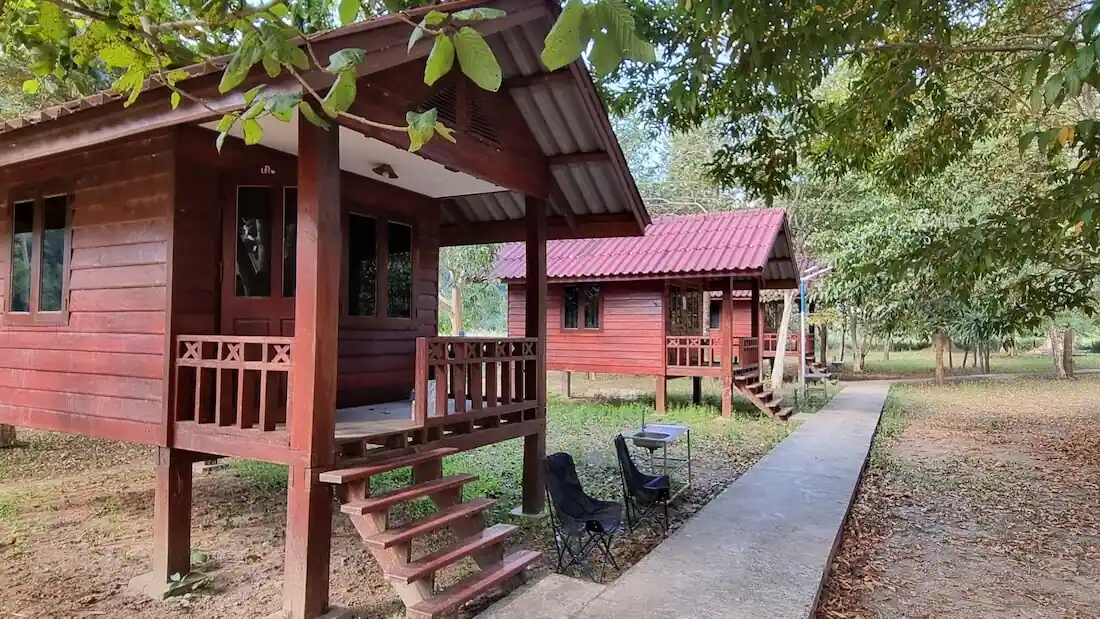
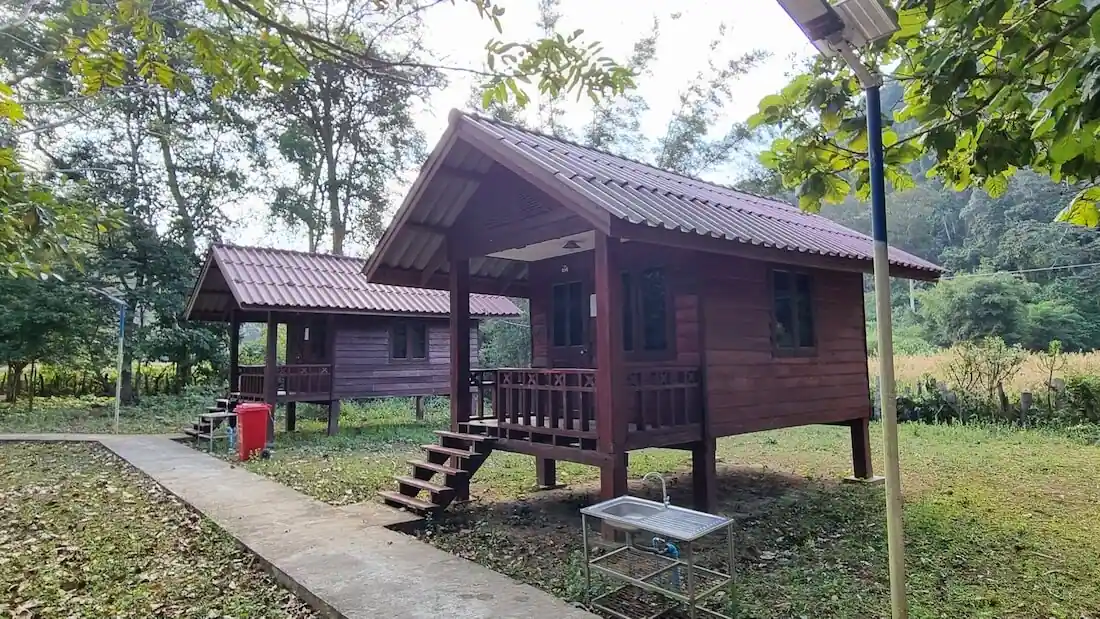
It is possible to stay overnight at the campsite of Xe Bang Fai Cave, and doing so is highly recommended. Surrounded by dramatic limestone cliffs and jungle scenery, the campsite offers a quiet and atmospheric setting right at the edge of Hin Nam No National Park. Visitors can choose between simple wooden bungalows or tent accommodation, making it easy to stay close to the cave without rushing the experience. Prices are very affordable, and spending at least one night here allows you to explore the cave in a relaxed way and start early the next morning.
The campsite has been significantly upgraded in recent years through German–Lao cooperation projects, improving comfort while keeping the area low-impact and nature-focused. Today, the facilities include several fan-cooled wooden bungalows, covered platforms for tents, and clean shared shower and toilet facilities. There is also a small on-site restaurant, run by local women from nearby villages as part of a community-based tourism initiative. The food is simple but filling, with rice, noodles, vegetables, and basic meat dishes usually available, along with cold Beerlao.
➡️ Bungalows with double bed: Basic bungalow with a small balcony, mosquito net, very clean and cozy. Price is 150.000 LAK per night (7 USD). Shared bathroom, but very clean facilities on site.
➡️ Tents: It’s either possible to bring your own tent or let them set up a tent for you. Forgot to ask about the tent prices, but if the bungalow is already very cheap, the tent will be even less. Because it’s so cheap, I didn’t bother.
There is also a small Restaurant there, run by women from nearby villages as part of the sustainable tourism project and to support locals in the region. The ladies are super friendly and prepare some delicious food. Limited items though, but everyone should be able to find something. They also have vegetarian options. Water, Beers and cup noodles can be bought there as well. Kitchen closes at 8 pm.
Without the word of a lie, this was again some of the best things to do in Central Laos! We stayed at the campsite in January 2026. It was only 3 of us staying there. Even the staff left, so we had the whole campsite completely to ourselves. We went down to the river, made a campfire near the cave entrance and enjoyed the sounds of the jungle and stars. The friendly ladies at the Restaurant prepared a delicious breakfast before we headed into Xe Bang Fai Cave for about 2 hours.
Would I recommend to stay overnight? YES!
It is not possible to book online via Booking or Agoda. You just turn up and will most likely have a place to stay. In case you arrive with a big group of people, you can send them a message on WhatsApp or Facebook Messenger before arriving to secure your accommodation.
For most people the town of Thakhek will be the starting point, either for the adventure to Xe Bang Fai Cave or the classic Thakhek Loop. We live close to Thakhek and been there many times. Therefore I would like to give some recommendations about places to stay in Thakhek before venturing out to explore. All the hotels & guesthouses below can easily be booked online on Agoda – our preferred choice of booking platform in Southeast Asia simply because it has mostly better deals than Booking.com.
As one of the largest active river caves in the world, Xe Bang Fai is not a single, fixed experience but a vast cave system that can be explored in different ways. To accommodate both casual visitors and serious adventurers, two main tour options are offered: a basic cave tour, designed to showcase the immense scale and atmosphere of the cave without physical difficulty, and a full-day expedition, which allows experienced participants to travel several kilometers deep into the cave by kayak and actively navigate the underground river with all it’s rapids.
Both options are strictly guided and depend on water levels and seasonal conditions, but they differ greatly in duration, difficulty, and how much of the cave system you actually experience. Understanding this distinction is essential when planning your visit, as the two tours offer completely different perspectives on Xe Bang Fai Cave.
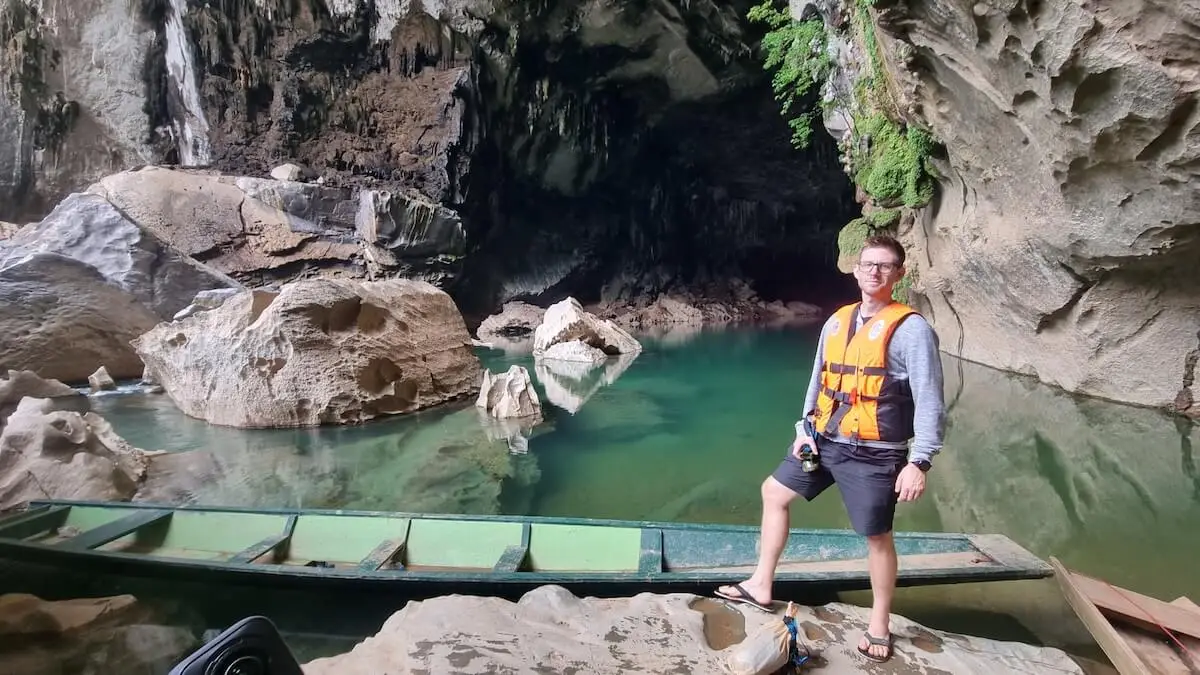
The basic cave tour is the standard option at Xe Bang Fai Cave and is suitable for most visitors. It offers an impressive introduction to the cave’s scale and atmosphere without requiring special skills or physical effort. This is the tour we personally did.
After registering at the Hin Nam No National Park office, visitors meet their local guide and board a large wooden boat at the river entrance. Life jackets & headlamps are provided, and the guide paddles the boat, meaning guests can simply sit back and experience the cave. It starts with a short 15-minutes walk from the campsite along the river until the cave entrance where passengers board the wooden boat.
The boat glides steadily upstream into the cave until it reaches a designated point to leave the boat. From here, visitors step out and continue on foot for a short walk inside the cave. This section is easy and not physically demanding, with stable ground and no need for climbing, swimming, or scrambling. The focus is entirely on observing the immense limestone chambers, rock formations, and the unique atmosphere created by darkness, echoing water sounds, and cool cave air.
The entire basic tour takes around 1.5 hours, making it ideal for travelers with limited time or those who want to experience Xe Bang Fai Cave without committing to a full-day expedition. It is suitable for anyone with normal mobility and offers a safe and accessible way to visit one of Laos’ most remarkable natural wonders.
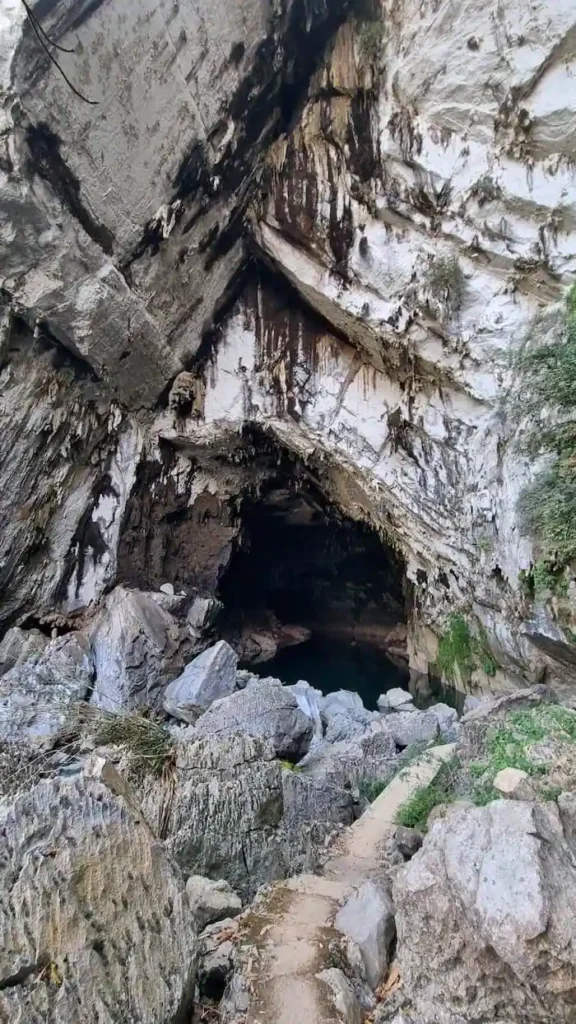
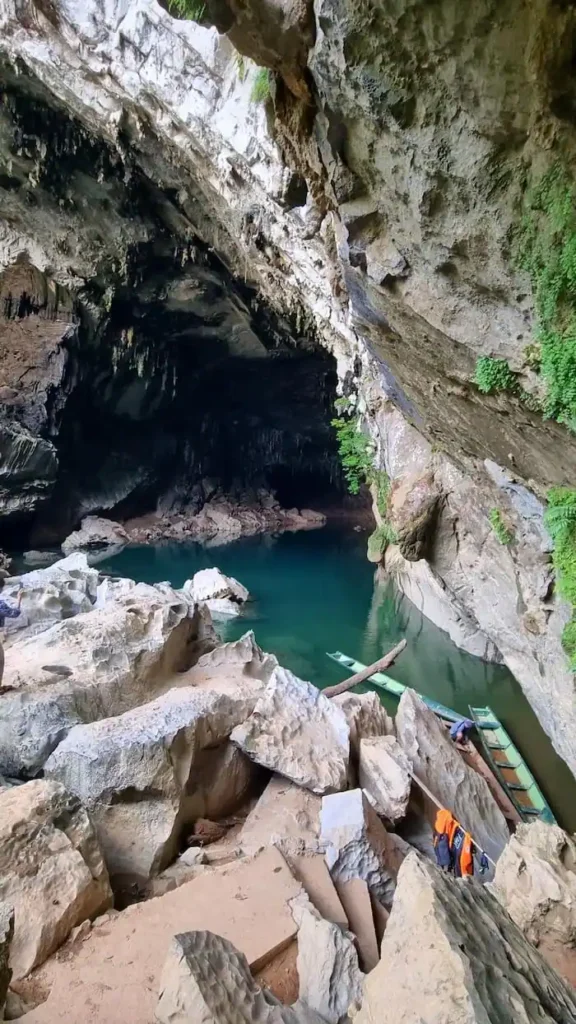
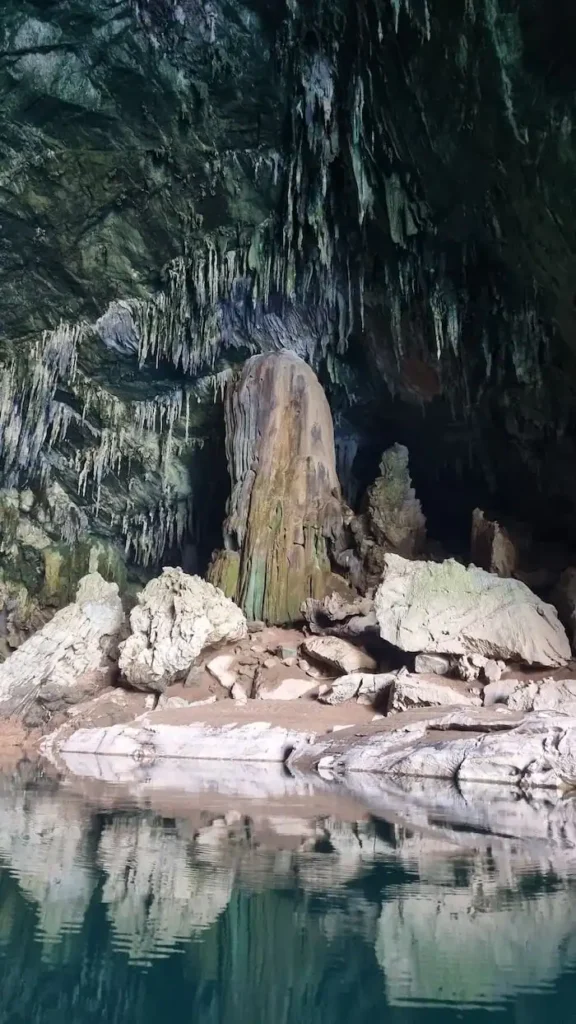
During the basic tour of Xe Bang Fai Cave, visitors explore the only developed walking section inside the cave, commonly known as the Dragon’s Passage. Located about 800 meters from the cave entrance, this elevated trail allows visitors to walk through several impressive chambers and safely observe the cave’s massive formations.
Along the trail, guides often point out a group of unusual, rounded mineral formations nicknamed the “Alien Eggs”. The walkway continues to the Dragon’s Balcony, an elevated viewpoint overlooking the underground river and the vast cave chamber below. There is no artificial lighting inside the cave, so headlamps are essential and the atmosphere remains raw and completely natural.
For experienced adventurers, Xe Bang Fai Cave also offers a full-day cave expedition by kayak, which is a completely different experience from the basic tour. This tour usually runs from around 8:30 am to 5:00 pm and starts directly from the Xe Bang Fai campsite. Participants hike to the cave entrance and then enter the cave using inflatable kayaks, paddling upstream deep into the cave system.
The route covers up to 6.4 kilometers inside the cave, passing through enormous chambers decorated with stalactites, stalagmites, flowstones, and cave crystals. The tour includes paddling against the current, navigating dark sections, and retracing the route back out of the cave in the afternoon. Due to the physical demands, long duration, and challenging conditions, this expedition is only suitable for fit participants with kayaking experience and is strictly guided.
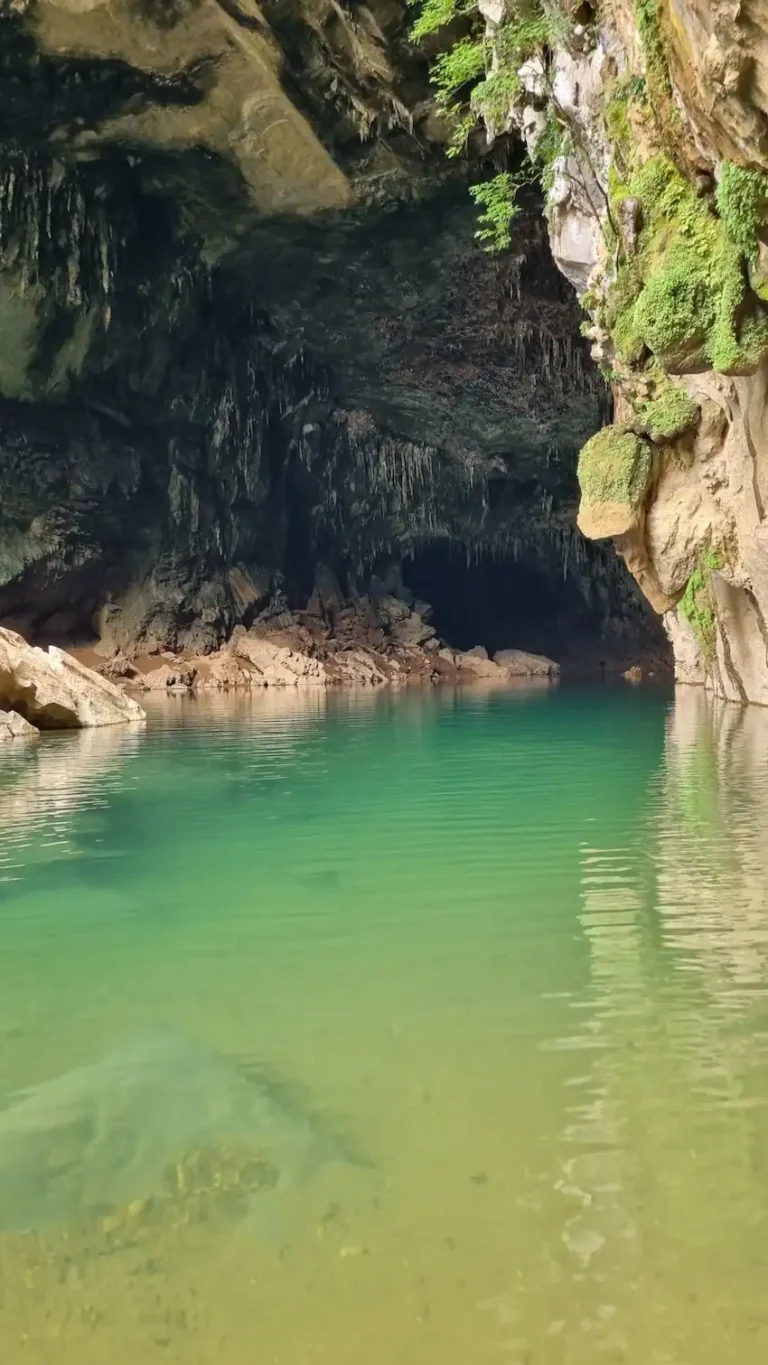
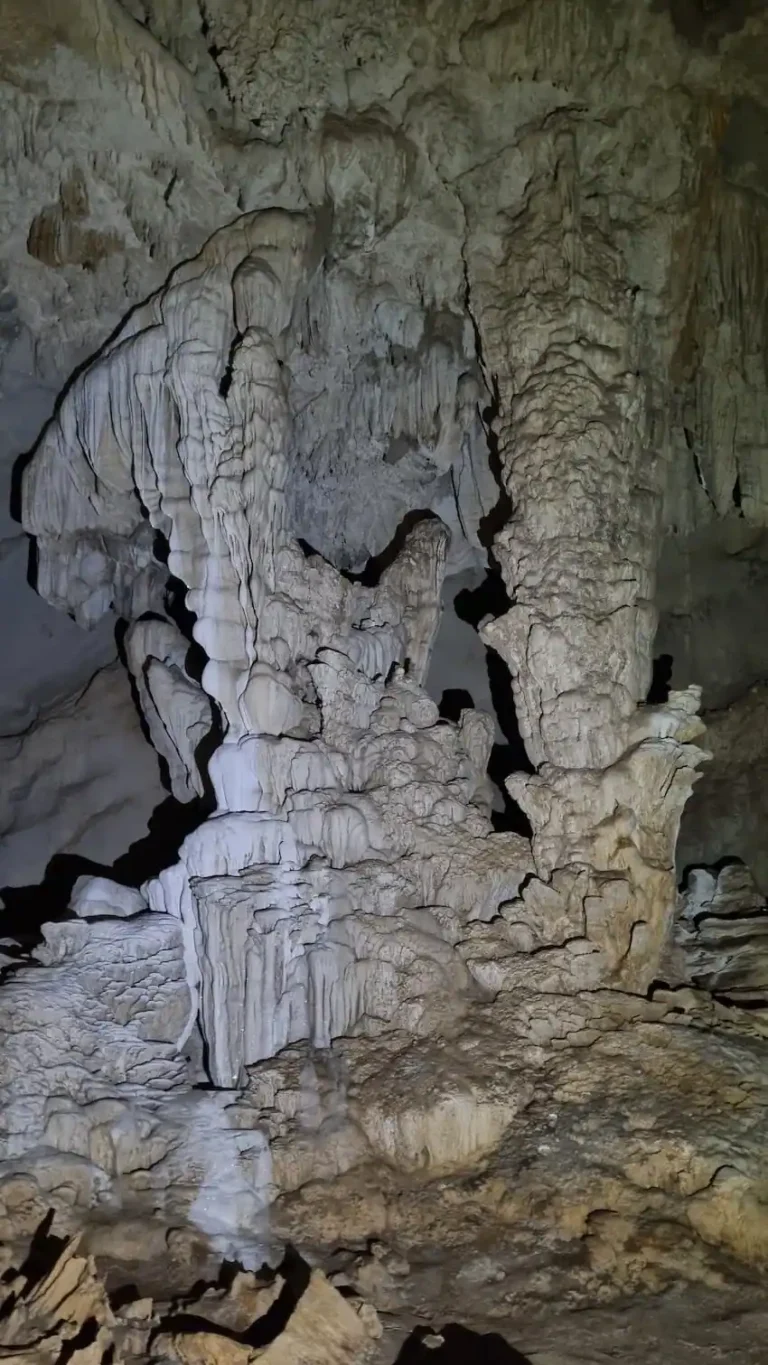
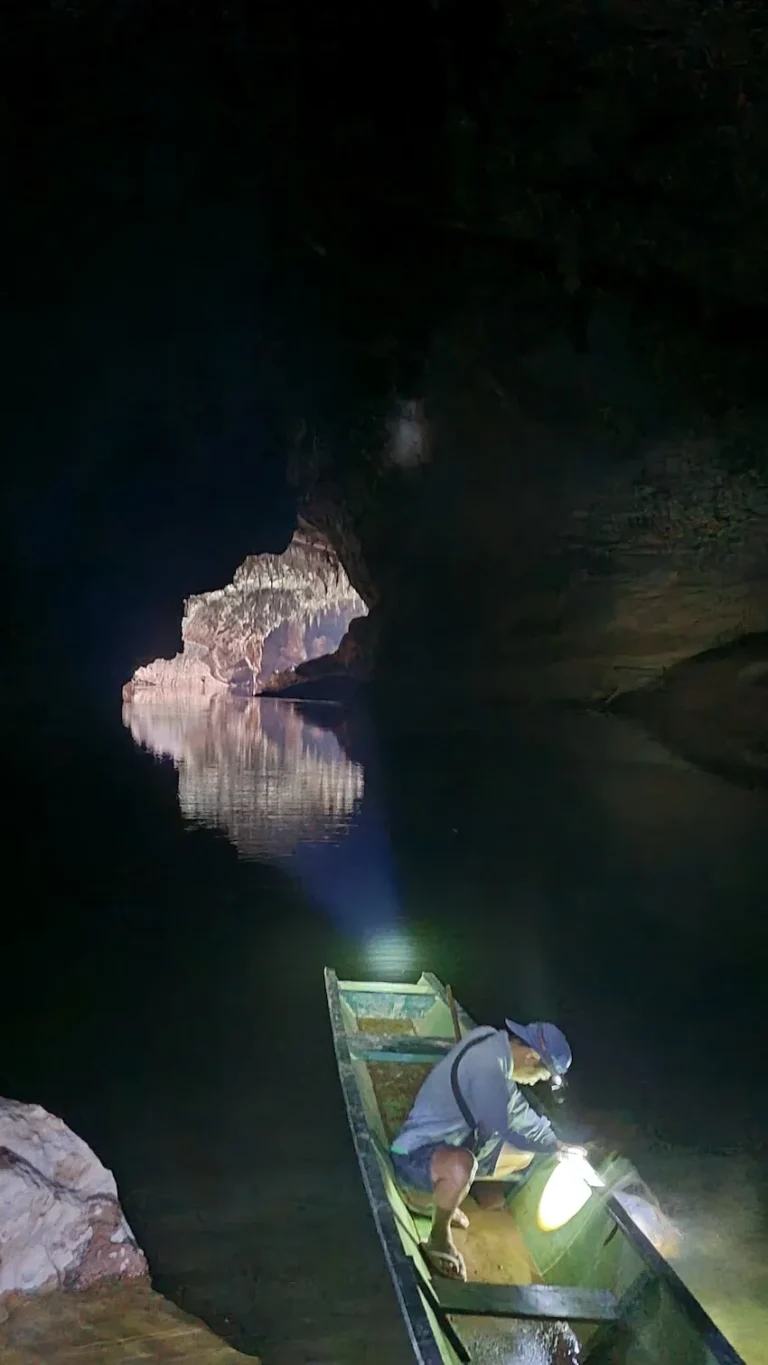
The basic cave tour is safe and easy, led by experienced local guides and suitable for most visitors. Life jackets and torches are provided, the guide paddles the boat, and the short walking section inside the cave is stable and not physically demanding. No swimming or technical skills are required, but the cave is completely dark, so a headlamp is essential.
The full-day kayak expedition, on the other hand, is physically demanding and only suitable for fit, experienced participants. It involves paddling against the current, long hours underground, and depends heavily on water levels. Tours are cancelled if conditions are unsafe.
In short: Xe Bang Fai Cave is not dangerous if you choose the right tour for your ability and respect the conditions, but it should never be underestimated.
Xe Bang Fai Cave is not accessible all year round. Because the Xe Bang Fai River flows directly through the cave, visits depend entirely on water levels and safety conditions.
The cave is usually open from mid November until around May, during the dry season in Laos. This period offers stable water levels, safe conditions inside the cave, and reliable access for guided tours. Both the basic cave tour and, when conditions allow, the full-day kayak expedition are typically operated during these months.
During the rainy season (roughly May to October), Xe Bang Fai Cave is closed to visitors. Heavy rainfall causes dangerously high water levels and strong currents inside the cave, making any tour unsafe. Even if the weather seems fine on the day, accumulated rainfall in the wider region can keep the cave inaccessible for weeks.
👉 If you’re planning a longer trip, timing your visit to Xe Bang Fai Cave should be aligned with the overall best season to travel in Laos. For a detailed month-by-month breakdown of weather, seasons, and travel conditions across the country, check out our full guide: Best Time to Visit Laos
In short, plan your Xe Bang Fai Cave visit between November and April for the safest and most reliable experience.
While Xe Bang Fai Cave is the main reason most travelers visit the area, Hin Nam No National Park has much more to offer beyond its famous caves. The park’s rugged limestone landscape, dense forests, and remote location create opportunities for exploring waterfalls, hiking trails, and lesser-known natural sites that remain largely untouched by mass tourism.
Several marked and unmarked routes lead through jungle, karst formations, and river valleys, often connecting small villages with hidden waterfalls and cave systems. These activities are best explored with local guides and reward visitors who stay longer in the area with a deeper understanding of the park’s natural and cultural landscape. If you have extra time beyond the cave tour, Hin Nam No offers a surprising variety of outdoor experiences worth considering.
➡️ The Houay Hok Trail is one of the most varied hikes in Hin Nam No National Park, following a stream through jungle and limestone karst and passing several caves along the way. The trail leads to Pak Tham Cave, a small water-filled cave popular for swimming, and continues toward Nok Aen Cave, named after the swallows that nest there alongside bats. One of the most remarkable historical features is a large cave chamber with a natural skylight that was used as shelter by thousands of North Vietnamese soldiers and local villagers during the American war, highlighting the area’s role along the Ho Chi Minh Trail. The hike can be done as a half-day, full-day, or overnight jungle trek with camping and is best explored with a local guide. Ask the campsite staff to organize it for you.
➡️ Songsou Waterfall (Tad Songsou) is a lesser-known waterfall located near villages along the Ho Chi Minh Trail. Reached by a short walk through fields and forest, the waterfall flows year-round and offers a refreshing swimming spot, especially during the hotter months. Local legends are closely tied to the site, giving it cultural significance beyond its natural beauty. A local guide is usually recommended for visiting the area.
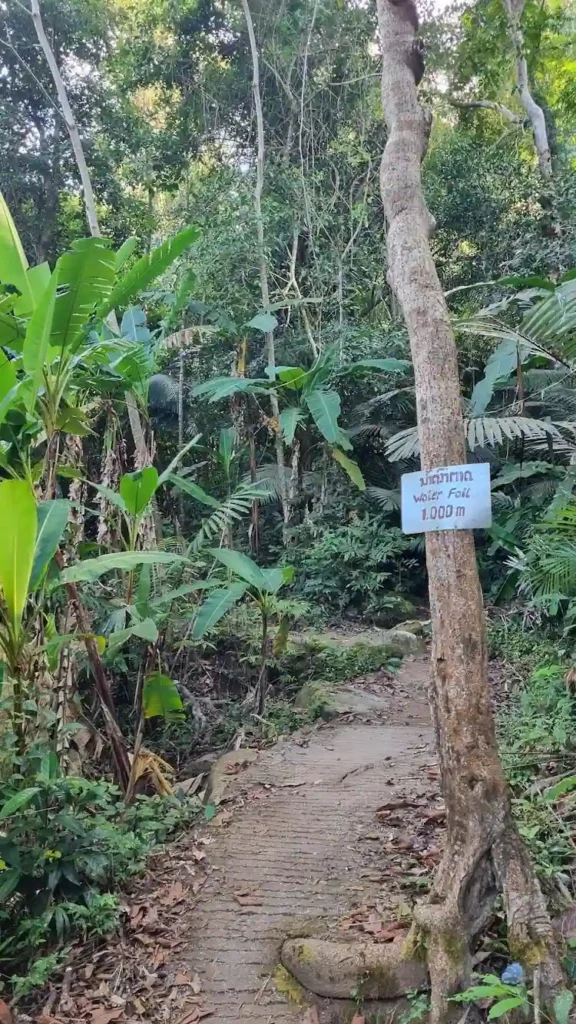
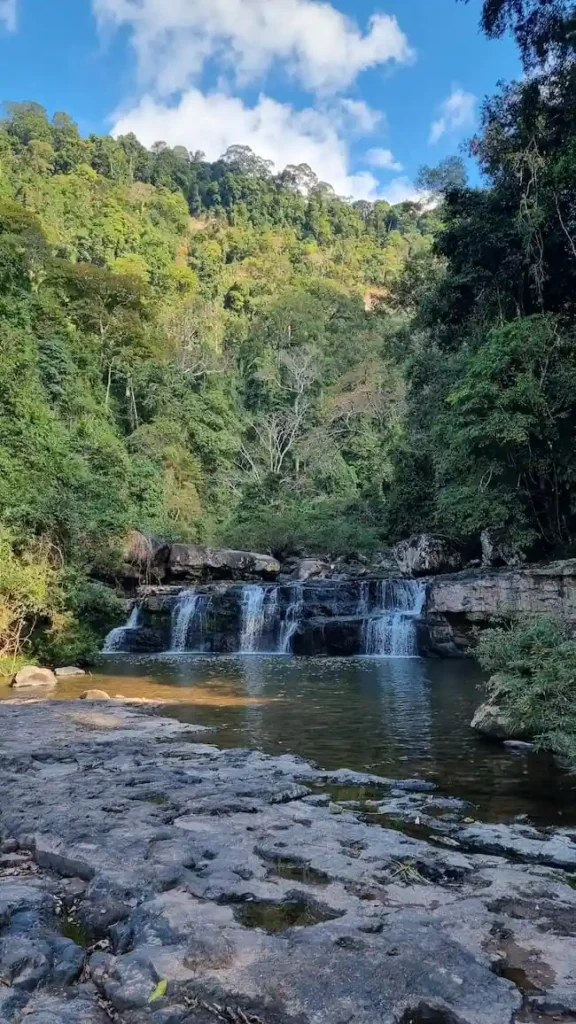
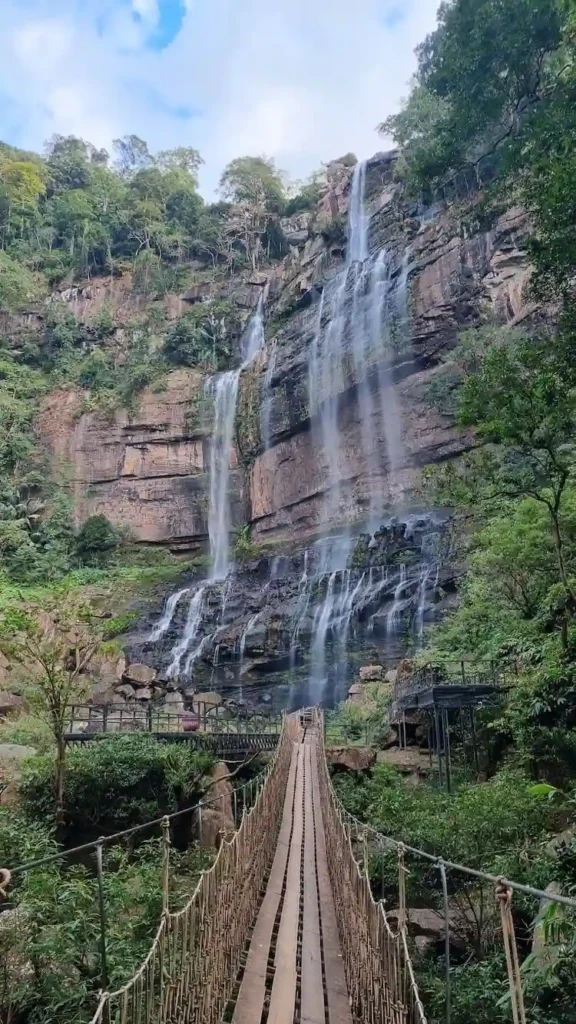
Xieng Lue Waterfall is one of the easiest waterfalls to visit near Xe Bang Fai Cave and the only one we personally visited. Located a short drive from Nong Ping toward Bualapha, the waterfall can be reached via a relaxed jungle walk of about 20-30 minutes. The length of the trail is 1.6 km and is well marked with signs. The tall cascade is especially impressive during the rainy season, and the sound of the falling water can be heard well before reaching it, making the hike both scenic and atmospheric. I’d recommend either visiting on the way to or from Xe Bang Fai Cave as it’s located on the way. The last bit of the road to reach the waterfall is a 4 km long dirt road through the forest, but they flattened it out, so it is easy accessible for any vehicle to pass. More difficult in rainy season though.
| Feature | Kong Lor Cave | Xe Bang Fai Cave |
|---|---|---|
| Location | Central Laos, near Kong Lor village | Hin Nam No National Park, Khammouane Province |
| Cave Type | River cave (straight passage) | Massive active river cave with multiple chambers |
| Length | Approx. 7.5 km | 6–11 km (depending on survey) |
| Tour Duration | Approx. 2–3 hours | Basic tour ~1.5 hours / Full-day expedition available |
| Difficulty | Very easy | Easy (basic tour) to demanding (full-day kayak) |
| Guide Required | Yes (boat driver) | Yes (mandatory guide) |
| Tour Style | Boat ride through the cave | Boat + short walk / Kayak expedition |
| Tourism Level | Popular and well known | Very remote and little visited |
| Seasonal Access | Accessible most of the year | Usually open mid-November to May only |
| Surroundings | Rural villages and rice fields | UNESCO-listed karst landscape & rainforest |
| Best For | First-time visitors, families, easy access | Adventure travelers, nature lovers, slow travel |
Xe Bang Fai Cave is one of the most impressive yet least visited natural attractions in Laos. Located deep inside the Hin Nam No National Park, a Natural UNSESO Heritage Site, this massive river cave offers a raw and authentic experience far from mass tourism. With guided boat tours, optional full-day kayak expeditions, affordable on-site accommodation, and well-maintained access roads, visiting the cave is easier than expected, but still feels like a true adventure.
Combined with the park’s rich wildlife, diverse plant life, cultural history, and nearby hiking trails and waterfalls, Xe Bang Fai Cave is much more than a single stop. For travelers visiting central Laos during the dry season, it is one of the most rewarding detours you can make, especially if you stay overnight and explore the area at a slower pace.
Doing the Thakhek Loop and thinking about skipping Xe Bang Fai Cave? Don’t skip it – it’s worth it in our opinion.
Yes, if you’re looking for a remote, raw, and uncrowded experience. Xe Bang Fai Cave is far less touristy than most caves in Laos and feels like a real adventure, especially if you stay overnight at the campsite.
No. Visiting the cave is only possible with a local guide, which is mandatory for safety reasons. All tours are organized on-site through the national park, which is good because all the money goes to the local communities.
Basic tour: around 1.5-2 hours
Full-day kayak expedition: roughly 8:00–17:00, depending on conditions
The basic tour is safe and easy for anyone with normal mobility. The full-day expedition, however, is physically demanding and only suitable for experienced, fit participants. Safety depends heavily on water levels.
The cave is usually open from mid-November to around May. During the rainy season (roughly May–October), the cave is closed due to dangerously high water levels.
The basic tour can be suitable for children who are comfortable with darkness and boat rides. It is not recommended for very young children or anyone afraid of enclosed spaces. The full-day exploration depends on the age of the kids and need to be clarified with the tour operator.
Compared to Kong Lor Cave, Xe Bang Fai is larger, wilder, and much less visited. Kong Lor is easier and more accessible, while Xe Bang Fai offers a more remote and adventurous experience.
No online booking is available. You usually arrange everything on arrival. During peak dry-season months, arriving early or staying overnight increases your chances of getting a tour. If you arrive with a big group, then you should contact them before either on Facebook Messenger or WhatsApp. +856 20 96 993 669
