
Disclosure: This article contains affiliate links. If you make a purchase through them, we may earn a small commission and you support our blog to write more helpful articles – at no extra cost to you.
| Quick Fact | Details |
|---|---|
| Starting Point | Pakse, Champasak Province, Southern Laos |
| Also Known As | Bolaven Loop or Pakse Loop |
| Small Loop | Around 200–225 km. We recommend 3 days / 2 nights to enjoy the route without rushing. |
| Big Loop | Around 320–340 km. Plan at least 4–5 days for the longer route. |
| Recommended Motorbike | A 110–125cc semi-automatic motorbike is sufficient for the Small Loop and comfortable for the longer distances. |
| Road Conditions | Most of the Small Loop is paved and relatively easy to ride, but potholes, wet roads and rougher sections can occur. Conditions can change considerably during the rainy season. |
| Best Time to Ride | October to March generally offers cooler temperatures, less rain and better riding conditions. |
| Main Highlights | Waterfalls, coffee plantations, local villages, the cooler Bolaven Plateau and scenic countryside around Pakse. |
| Riding Experience | Previous motorbike or scooter experience is strongly recommended. The Bolaven Loop is not a good place to learn how to ride for the first time. |
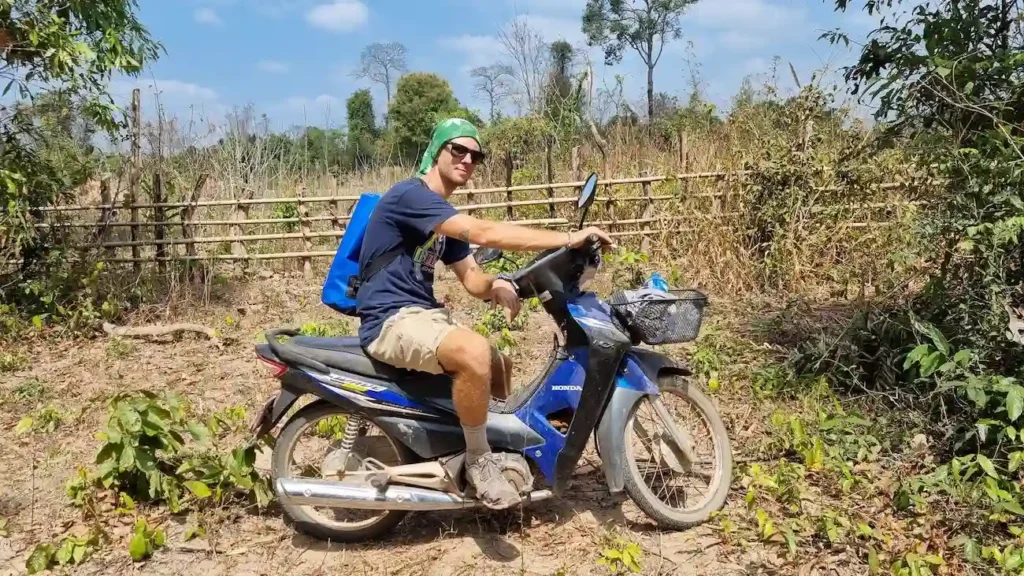
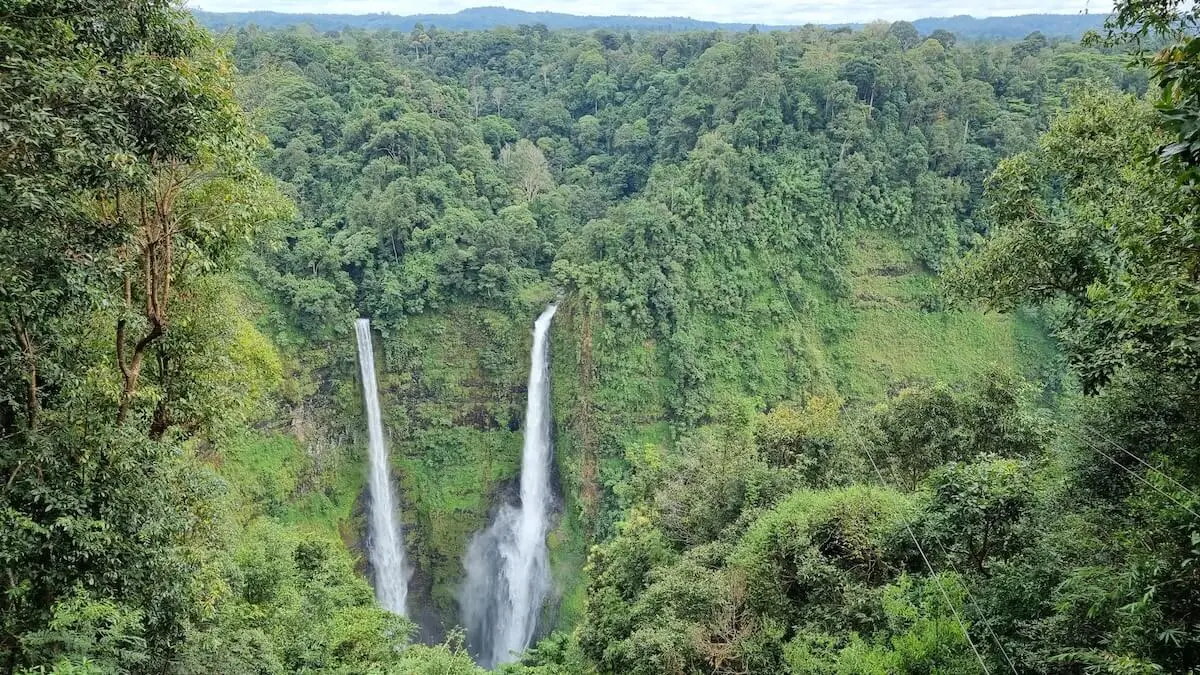
| Our Experience | We personally rode the Small Bolaven Loop in 3 days / 2 nights, starting and finishing in Pakse. On a later trip, we also explored part of the Big Loop, including the remote Tad Tayicseua Waterfall Valley. |
The Bolaven Plateau Loop, sometimes also simply referred to as the Pakse Loop because of its starting point, is one of the most popular motorbike loops in Laos. The country has several other motorbike routes, including the famous Thakhek Loop in Central Laos and the lesser-known Xe Champhone Loop around Savannakhet.
Most travelers will choose either the Thakhek Loop or the Bolaven Plateau Loop. While the Thakhek Loop is known for limestone mountains, caves and remote countryside, the Bolaven Loop takes you through waterfalls, coffee plantations, cooler highlands and rural villages.
In this guide, we focus on the Bolaven Plateau Loop starting from Pakse, including our personal 3-day Small Loop itinerary and experiences from parts of the Big Loop. If this is your first time traveling to Laos, you can also check out our Laos Travel Guide for more practical information about traveling in the country.
The starting point of the loop is the city of Pakse in Southern Laos. It is the biggest city in the south and popular among travelers, especially as the starting point for exploring the Bolaven Plateau. Pakse is conveniently located on the edge of the plateau, which is the most important coffee growing region in Laos and also known for growing tropical fruits. Because of its volcanic soil, the Bolaven Plateau is rich in minerals and very fertile. Combined with the cooler climate and high elevation, this creates excellent conditions for agriculture.
The Bolaven Plateau is also known for its stunning waterfalls, lush greenery and cooler climate, making it a refreshing escape from the hotter lowlands. The region is home to several ethnic groups, including the Laven, Alak and Katu, who maintain their own traditions and lifestyles. Along the Bolaven Loop, you can visit coffee plantations, try locally grown coffee and ride through scenic countryside and small villages while getting a glimpse into daily life in this part of Southern Laos.
Getting to Pakse in Southern Laos is relatively easy, with several options depending on where you are traveling from. You can reach Pakse by bus or minivan from other parts of Laos, cross overland from Thailand, or fly directly into Pakse International Airport.
Many travelers enter Southern Laos from Cambodia and first make their way to the 4000 Islands (Si Phan Don) before continuing north to Pakse. Getting from the 4000 Islands to Pakse is relatively easy. Your guesthouse can usually organize a minivan to Pakse, or you can travel to the local bus station in Nakasang and take a shared Songthaew or minivan from there.
Nakasang (on Google Maps Nakasong) is the main transport hub for travelers coming from Don Det and Don Khon, making it a convenient place to continue your journey to Pakse.
If you are traveling south through Central Laos from Thakhek or Savannakhet, you can easily continue to Pakse by bus or minivan. I personally prefer the minivan option because they usually make fewer stops along the way compared to the bigger local buses, which can take up to 2-3 hours longer compared to the minivans.
From Thakhek, head to the Inter Provincial Bus Station Thakhek and ask for the next bus or minivan to Pakse. There are usually several connections heading south during the day, but I recommend arriving at the station in the morning rather than relying on a specific departure time.
From Savannakhet, it works much the same way. Go to the Savannakhet Bus Station and ask for the next connection heading to Pakse.
Conveniently, Pakse has its own International Airport (PKZ), making flying one of the easiest ways to reach the starting point of the Bolaven Loop. As of 2026, direct flights connect Pakse with Vientiane and Luang Prabang within Laos, as well as Siem Reap in Cambodia and Ho Chi Minh City in Vietnam.
Some international connections are seasonal and may only operate during the main travel season, for example from around October to March. Flight schedules and frequencies can change, so make sure to check the current connections before planning your trip.
For comparing current flight schedules and prices, we recommend Trip.com. It is a convenient option for comparing available connections and booking flights to and from Pakse directly online.
If you are traveling from Thailand to Pakse, Ubon Ratchathani is one of the easiest places to cross into Southern Laos. From Ubon, the route goes via the Chong Mek border crossing in Thailand and Vang Tao on the Lao side. Lao Tourist Visa on Arrival is available at this border for eligible nationalities.
Ubon Ratchathani also has an International Airport (UBP), making it convenient to fly there from other parts of Thailand before continuing overland to Pakse. Direct international buses leave from the Ubon Ratchathani Bus Terminal and continue across the border to Pakse.
As of 2026, there are usually around two buses per day, currently departing at around 09:30 AM and 3:00 PM. The journey takes approximately 3 hours and the official fare is 200 THB. Tickets can be purchased directly at the bus station. Bus schedules can change, so we recommend confirming the departure time at the station before traveling. Also don’t be stressed about online bookings, usually everything can be booked on the spot.
If you want to do the Bolaven Plateau / Pakse Loop yourself by motorbike, here are some important things you should know.
First of all, make sure you have experience riding a motorcycle in Southeast Asia. Even though the road conditions on the Bolaven Loop are quite good, Laos is not a country where you should learn how to ride a scooter or motorbike.
To legally ride a motorbike in Laos, you should have an International Driving Permit that also covers motorcycles. There aren’t usually many police stops along the Bolaven Loop itself, but there can be checkpoints around Pakse.
Most local Lao people don’t even have a driving license, so police may not always care whether you have one. However, if you don’t have the correct license, you can be fined or might be asked for a small unofficial payment. I’m not supporting corruption, but from my own experience as a Foreigner living in Laos, being friendly and respectful can make encounters with the police much easier.
It is quite easy: If you did something wrong, such as riding without a helmet or without the correct license, you may sometimes be able to settle the situation with a small payment of around 50,000–100,000 LAK. Keep in mind that I’m simply sharing my own experiences in Laos and I’m not supporting riding without the proper paperwork.
If nothing happens, all good. But in case of an accident, your travel insurance might not cover the costs if you were riding without the necessary licence or documents. Make sure you have proper travel insurance when visiting Laos and check whether riding a motorbike is covered by your policy.
If you are still looking for travel insurance for your trip to Laos, you can also check current plans and coverage with SafetyWing. Make sure to read the current policy conditions and requirements for riding a motorbike before purchasing.
Road conditions on the Bolaven Loop are quite good by Lao standards, but there can always be sudden potholes in front of you. Especially during the rainy season from June to September, the roads can be wet and slippery.
From my own experience, inexperienced riders can easily get into trouble when using the front brake too hard on wet or slippery roads. Be particularly careful with the front brake in these conditions, avoid sudden braking and adjust your speed to the road conditions.
👉 For more detailed information about motorbike rentals, driving licences, road conditions and safety, read our Riding a Motorbike in Laos guide.
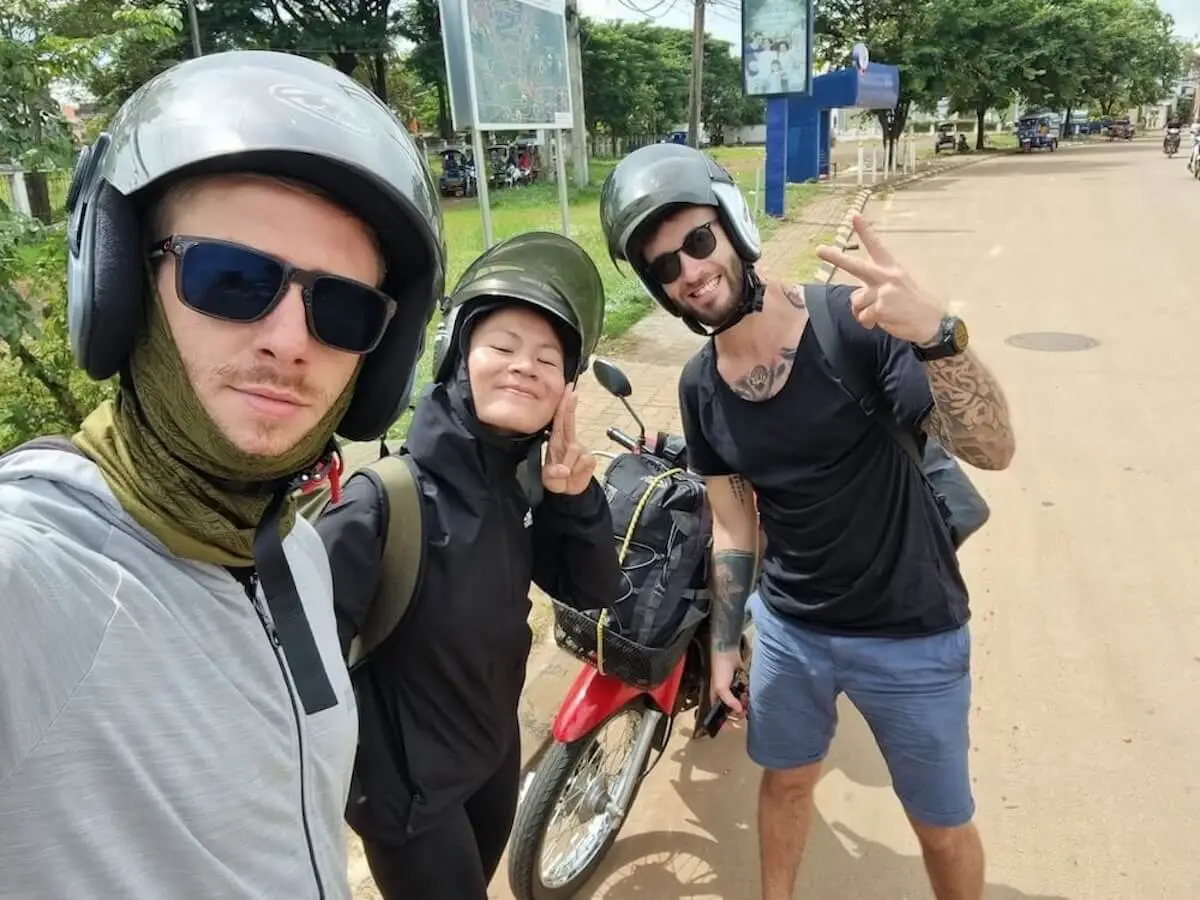
There are plenty of motorbike rentals in Pakse because of the popular Bolaven Loop. As I only have personal experience with Miss Noy Motorbike, I will talk about that specific rental shop. It is run by a Belgian guy and his Lao wife. They are both super friendly and have plenty of motorbikes to choose from.
I would definitely recommend picking a semi-automatic Honda Wave around 110cc or 125cc (if available), because riding with gears is much more comfortable on the loop. These bikes are semi-automatic, which means there is no clutch for shifting gears. Give the bike a test ride before heading out on the Bolaven Loop.
As of 2026, expect to pay around 130,000–150,000 LAK per day for a basic semi-automatic motorbike, depending on the bike you choose and current rates. Miss Noy may ask you to leave your passport as a deposit (and that’s totally fine there). We did this ourselves and had no problems getting it back after returning from the loop.
Travelers heading out on the Bolaven Loop can also leave their bigger luggage with Miss Noy until they return. Additionally, Miss Noy offers a daily Bolaven Loop briefing at around 6:00 PM, providing useful information road conditions, places to stay and stops along the way. It is also a good opportunity to meet other travelers planning to ride the loop.
Another good option in Pakse is Style Motorbikes for One-way Rentals. Especially if you’re planning a longer motorbike trip through Laos rather than just the loop itself. They have an office in Pakse and offer one-way rentals between Pakse, Vientiane and Luang Prabang, so you can ride the Bolaven Loop and then keep heading north instead of looping back to return the bike. They also carry a wider range of motorbikes, including semi-automatic, manual and larger models, which is useful if the Bolaven Loop is just the first leg of a bigger trip.
The best time to ride the Bolaven Plateau Loop is during the dry season, from October to March, when temperatures are generally cooler and road conditions are better. This period usually brings less rain, making it a great time to explore the waterfalls, coffee plantations and scenic landscapes of the Bolaven Plateau.
April and May can be extremely hot, although the higher altitude of the plateau provides some relief from the heat. The rainy season from June to September transforms the region into a lush, green landscape and the waterfalls are particularly impressive, but heavy rain, wet roads and occasional flooding can make riding more challenging.
Keep in mind that the weather around Paksong can be chilly throughout the year, especially at night, and rain is possible even outside the main rainy season. For a more detailed overview of the different seasons across the country, see our guide to the best time to visit Laos.
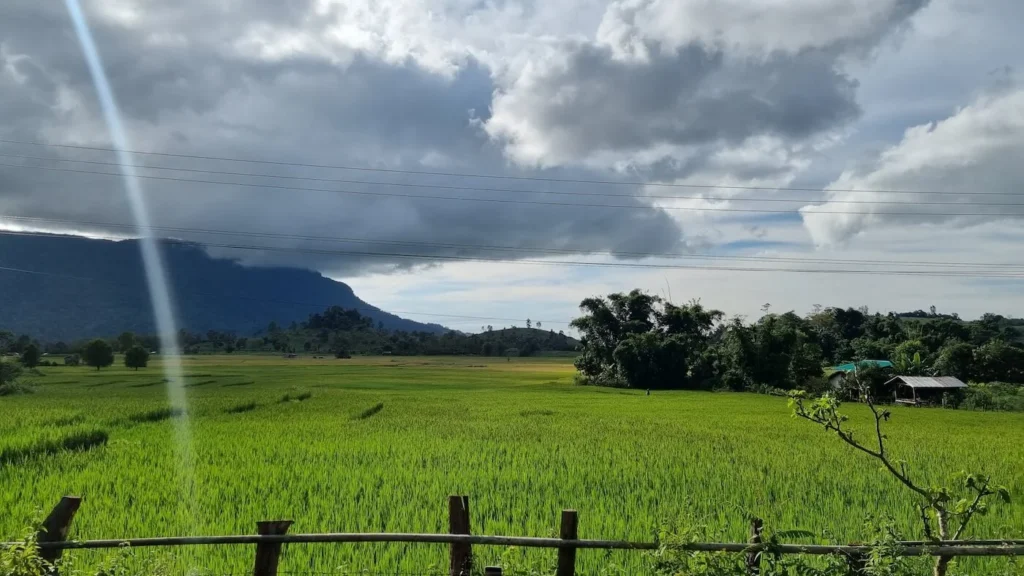
You might have heard about the “Small Loop” and “Big Loop” when planning your Bolaven Plateau trip. Both routes start and finish in Pakse, but the Small Loop covers many of the main highlights of the Bolaven Plateau and can comfortably be done in 3 days / 2 nights. The Big Loop takes you further into more remote parts of the plateau, so I would recommend planning at least 4–5 days if you want to complete the entire route without rushing.
We personally did the Small Bolaven Loop in 3 days / 2 nights, which I think is a great amount of time for the route. Since then, we have returned to the Bolaven Plateau several times, revisiting some of our favorite places and exploring new parts of the region. We have traveled around the plateau during both the dry and rainy season, visited several stops along the Big Loop and also joined a tour with the well-known Mr. Hook to learn more about coffee, local villages and life on the Bolaven Plateau.
On another trip, we explored the remote Tad Tayicseua Waterfall Valley along the Bolaven Big Loop, which became one of our favorite places on the Bolaven Plateau. You can read our detailed guide to Tad Tayicseua Waterfall Valley if you are planning to include this part of the Big Loop in your trip.
Below, we will share our complete 3-day Small Bolaven Loop itinerary from Pakse, including the waterfalls, villages and places we stopped along the way.
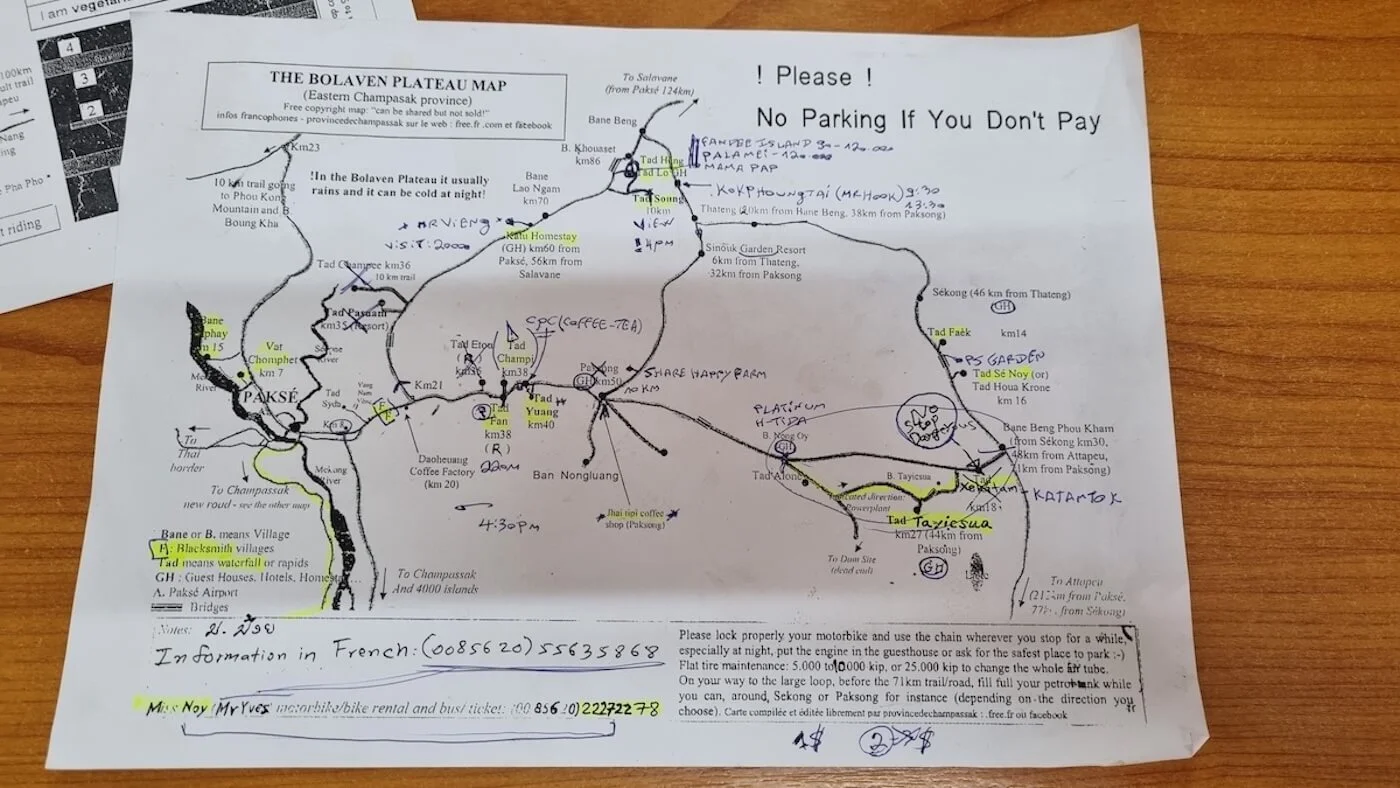
On Day 1 pick of the Bolaven Loop up your motorbike early in the morning (if you havent done yet on the previous day) and head out of the city of Pakse taking Road Nr. 13. It is a main road, so can be busy, especially in the morning or late afternoon. Dont forget to fill up gasoline! There will be plenty of gas station on the way, hard to miss them. Continue on Road 13 for about 6 km until you reach a big roundabout. At the roundabout take the 2nd exit and keep going on Road 16E. Continue on Road 16 for approx. 20 km and then turn left into Road 20. From there on, the road is not very busy anymore and scenery starts getting better revealing the beauty of the Bolaven Plateau.
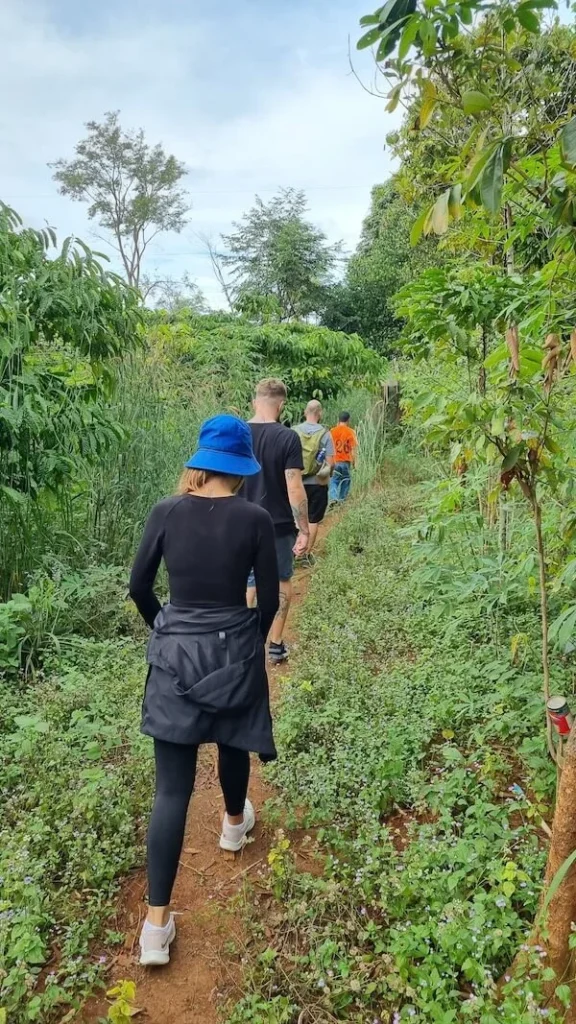

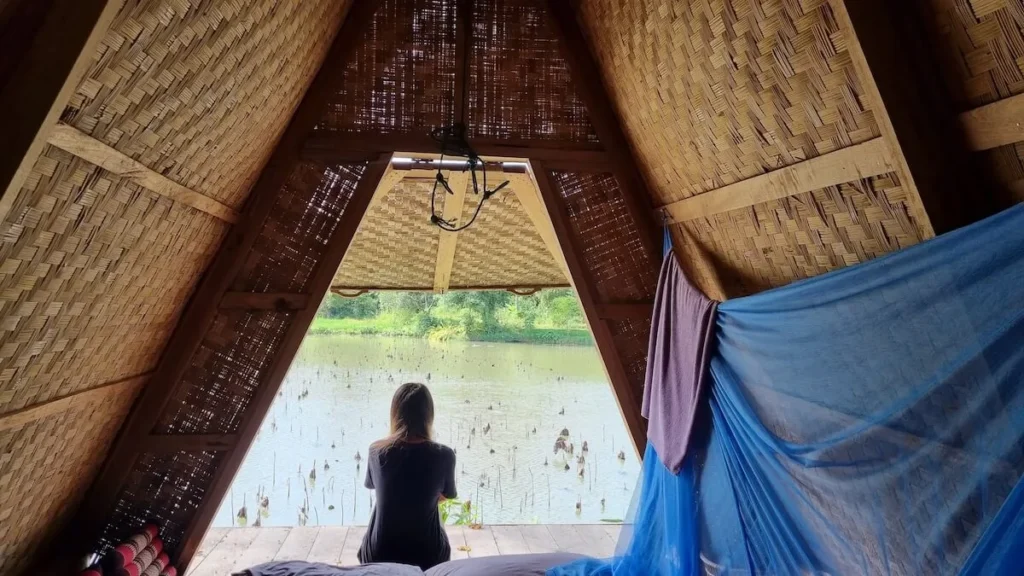

After a night near Tad Lo village, continue on Road Nr. 20 towards a village called “Beng”. Once you come to Beng village, turn right towards “Thateng” village. Turning left will bring you off track to Salavan. So make sure to turn right heading southeast. Soon you will come across another popular stop called “Captain Hook“. Unfortunately we didnt stop there when we did the loop, but will for sure next time. Captain Hook is popular for being very passionate of explaining all about coffee and his farm. Its a Katu Tribal village with different beliefs from other ethnic groups in Laos. Make sure to stop there for a tour or even an overnight stop because Captain Hook has a homestay as well.


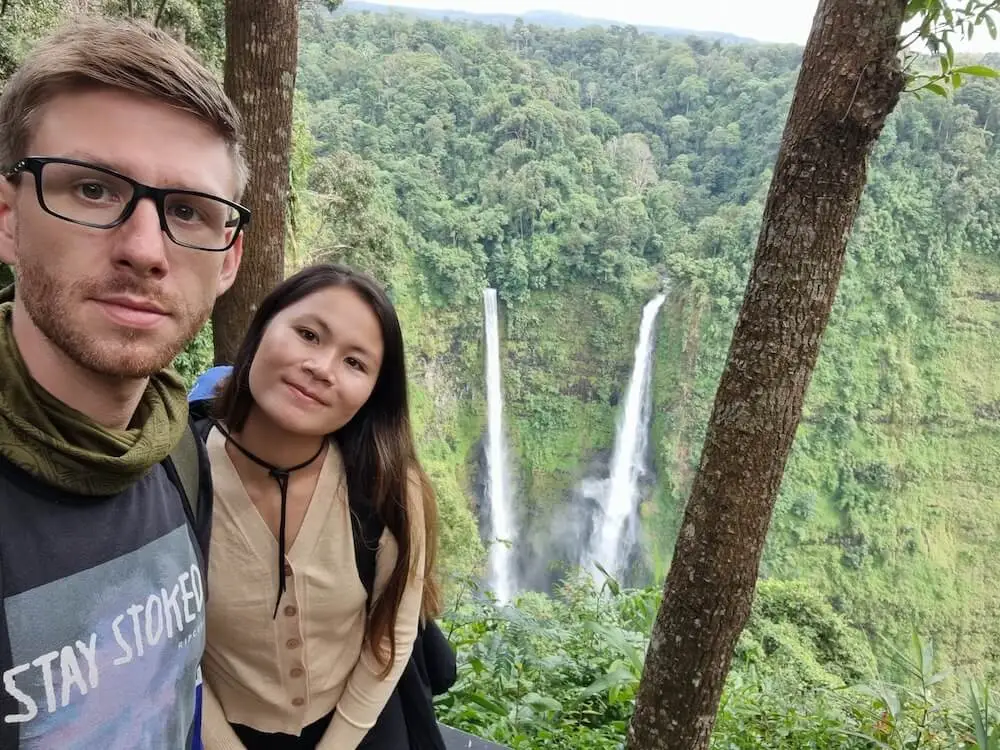
As we only did the shorter Bolaven Plateau Loop, on day 3 we made our way back to Pakse from an overnight stay in Paksong. Road Nr. 16E will bring you back to Pakse. On the way you will see plenty of fruit sellers, including Durians from the area if you’re into it. Durians from Laos are slightly cheaper than in Thailand, but definitely the same quality. Some families grow their own varieties. For me as a Durian lover, I had to try them. From Paksong it will take a bit over an hour (50 km) to reach Pakse. Once getting closer to the city of Pakse, traffic will get more again. Still not as many cars and motorbikes on the road like in neighbouring Thailand or Vietnam, but still watch out when riding back on your final day to Pakse. If you can not ride a motorbike yourself, but still want to do the Loop, you have to hire a private driver. Expect to pay at least $ 250 – 350 for a 3 days itinerary.
Some more general, helpful tips for the Loop:
Finding the right place to stay along the Bolaven Plateau Loop can really shape your experience. From rustic local guesthouses to cozy bungalows surrounded by waterfalls and coffee farms, the region offers plenty of authentic and affordable options. Here are a few places we personally stayed at and can recommend.
Many travelers coming to Laos, are asking the same question in Facebook groups over and over again. So which Loop is “better”? There is simply no answer to that! Both loops are great with different scenery and different stops.
Both the Thakhek Loop and the Bolaven Plateau Loop offer unforgettable motorbike adventures in Laos, but they each showcase very different scenery and experiences. The Thakhek Loop is known for its dramatic limestone karst landscapes, caves and more remote countryside vibes – perfect if you’re into off-the-beaten-path exploration and raw natural beauty. In contrast, the Bolaven Plateau Loop takes you through lush highlands, cool climates, countless waterfalls and coffee plantations – ideal for those who love greenery, fresh air and learning about local agriculture. Neither one is “better”, it really depends on what kind of scenery and vibe you’re looking for. If you have the time, do both because they complement each other perfectly.
All in all, the Bolaven Plateau Motorbike Loop is one of the best experiences you can have in Southern Laos. It’s the perfect mix of adventure, nature, culture, and coffee – and ideal if you want to explore the heart of this region on two wheels. The combination of cool climate, scenic landscapes, local coffee farms, and countless waterfalls makes every day on the loop exciting and different. Whether you’re learning about tribal traditions, sipping freshly roasted arabica, or jumping into a waterfall to cool off – the loop never gets boring. Take your time, plan a few extra days if possible, and enjoy the freedom of riding through one of the most beautiful areas Laos has to offer. Just ride safe, keep an eye on the road and soak in the unforgettable moments along the way.
