
Living in Laos as a Foreigner in 2026/27 | The ultimate Laos Expat Guide

Thinking about living in Laos? This practical Laos Expat Guide covers visas, cost of living, healthcare, banking, housing, and daily life to help you prepare for the reality of moving to Laos as a foreigner.

Content

Disclosure: This article contains affiliate links. If you make a purchase through them, we may earn a small commission and you support our blog to write more helpful articles – at no extra cost to you. 

Introduction Laos Expat Guide - Living in Laos as a Foreigner

If you are considering living in Laos as a foreigner, this Laos Expat Guide is exactly for you. Laos, officially the Lao PDR (People’s Democratic Republic), is often overlooked as a place to live for expats, mostly because of its bigger neighbors Vietnam and Thailand. Yet for many people, that’s precisely what makes Laos an attractive place to set up a home base. 

While Thailand and Vietnam have developed into major expat and tourist hubs, Laos still feels quieter, less commercial, and far less saturated. Life moves slower here. Costs are generally lower and anywhere outside of Vientiane, you won’t find large expat bubbles dominating daily life. This is a main reason why I personally chose Laos to settle down. It is way more authentic and it’s still possible to really blend in with locals. For me it is also about the Lao people. They are among the friendliest people in the world, always love to have fun and a laugh. The Culture in Laos is also quite welcoming towards foreigners.
Laos is the country of real smiles

If you’re thinking seriously about moving to Laos in 2026/27, you probably have some of the following questions:

What are the costs of living in Laos as a Foreigner❓
What visa options exist for long-term stay in Laos❓
Is healthcare reliable and are there good hospitals❓
Can you work remotely and what’s the Internet like❓
And what is daily life really like when living in Laos as a Foreigner❓

This Laos Expat Guide is written from real on-the-ground experience and not from short visits or second-hand research. We’ve been living in Laos for years and understand both the advantages and the challenges of living in Laos as a foreigner. Whether you’re relocating for work, planning early retirement, or looking for a quieter base in Southeast Asia, this comprehensive guide will walk you through everything you need to know before making the move.

Quick Overview – Is living in Laos as a Foreigner in 2026/27 a Good Idea?

If you’re considering moving to Laos, here’s the short version:

Cost of living in Laos is very low, especially if you earn foreign currency or work for an International Company. 

✅ Laos offers a slower, less commercial lifestyle with a very relaxed daily pace. Stress is unknown in Laos.

Long-term visa options are some of the best and easiest in all the ASEAN countries. 

✅ Laos is ideal for remote workers, retirees, and people seeking a quieter life

⚠️ Healthcare is improving, but serious cases often require treatment in Thailand or Vientiane. 

⚠️ Infrastructure outside main towns can be basic. Roads are not the best with many potholes, especially in the North. 

⚠️ International Education for children is limited to major cities like Vientiane or Savannakhet.  

❌ Not ideal if you need Western-level convenience and fast bureaucracy

❌ Not for you if you prefer expat bubbles over authentic local life. 

Why move to Laos as a Foreigner?

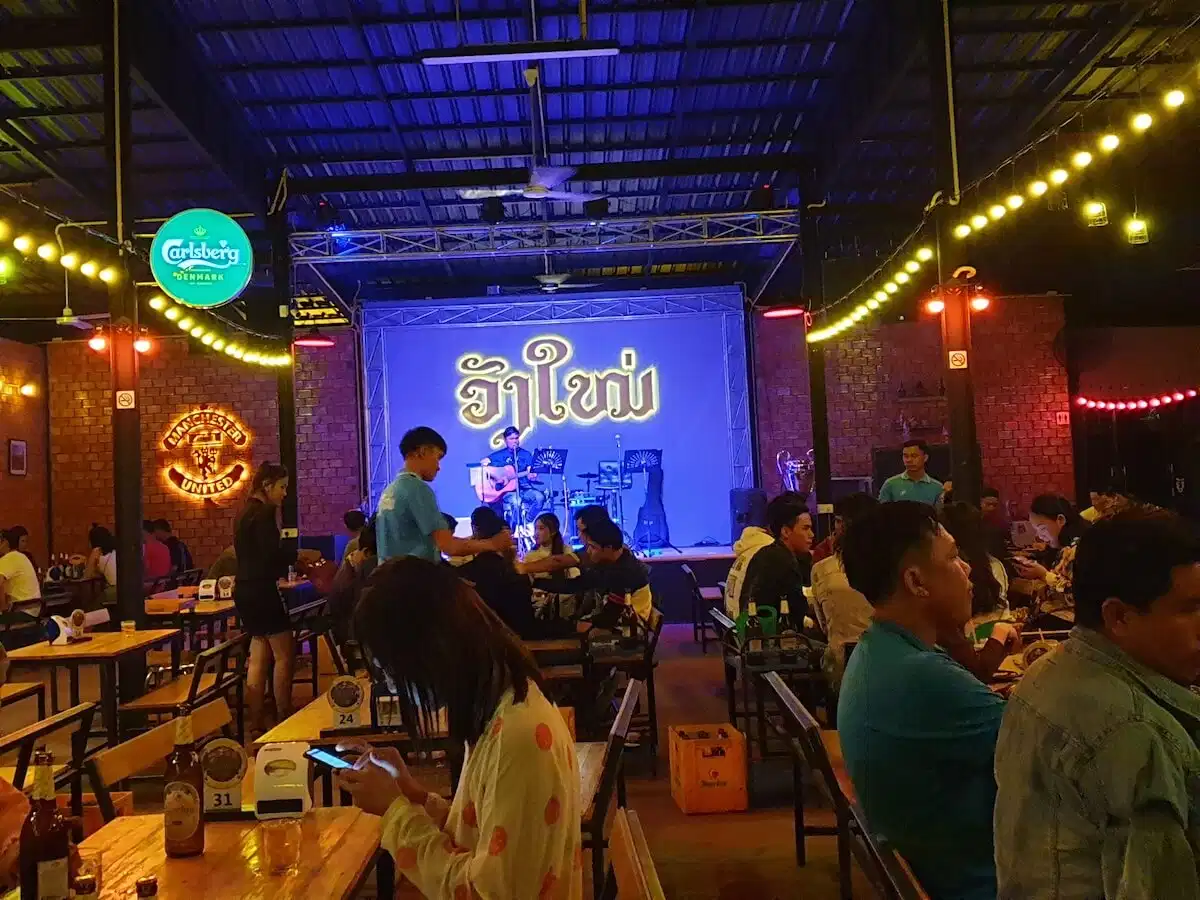
There are many reasons why foreigners from all over the world consider moving to Laos, but most of them have little to do with skyscrapers, nightlife, or fast-paced business environments. The real appeal in Laos lies somewhere else. One of the biggest advantages of moving to Laos is the lifestyle. Compared to its neighbors, the country remains quiet, traditional, and uncommercial. Daily life feels slower and less pressured. If you value simplicity, space, and a calmer rhythm, the overall expat life in Laos can feel surprisingly balanced. Still, you can have fun nightlife in Laos because Laotians love to drink and celebrate. Every city and town has typical lao-style bars, often with live music. It’s fun! 

Another major factor is affordability. While prices have increased in recent years, the overall cost of living is still quite low, especially outside of Vientiane. For many people, this makes living in Laos as a foreigner financially realistic even without a corporate salary package.

Laos also attracts a specific type of long-term resident. Some come to retire in Laos, drawn by the slower pace, friendly culture, and relatively low monthly expenses. Others choose Laos as a quiet base for remote work. If you are a digital nomad in Laos, you won’t find large coworking communities or startup scenes, but you will find fewer distractions, affordable housing, and enough infrastructure to run an online business if you set things up properly. Also the Internet Speed in Laos is fast enough to get any kind of online work done. 

Perhaps the most underrated reason to move here is authenticity. Outside the capital, daily life still revolves around local markets, family structures, temples, and community events. It is still possible to genuinely integrate, learn the language, and build real connections. That’s something that has become harder in more commercialized expat destinations.

Of course, Laos is not for everyone. But if you are looking for a quieter alternative in Southeast Asia and you understand that comfort here comes in a different form, then right now might be a surprisingly good time to make the move. 

nightlife bar in laos with life music for foreigners living in laos
A typical lao-style pub: mostly locals, live music and plenty of Beerlao. Party with the Locals, it's fun!

Visa & Legal Basics for Living in Laos as a Foreigner

Let’s talk about one of the most important topics when it comes to living in Laos as a foreigner: long-term visa options.

Is it actually difficult to legally stay in Laos long term❓
Short answer: No, compared to many other countries in Southeast Asia, it is surprisingly straightforward & easy❗

In fact, one of the reasons why many people consider moving to Laos is because the visa system is less restrictive than in neighboring countries. While Laos does not offer a specific “Retirement Visa” or “Digital Nomad Visa,” there are practical and accessible long-term options available.

If you are employed by a local lao or international company, your employer will usually handle the visa and work permit process for you.

Long Term Visa Options for Foreigners in Laos

For retirees, digital nomads, and remote workers, the most common solution is the LA-B2 Visa, which is typically issued together with a stay permit and work permit (if needed) valid for up to 12 months. All you need is a sponsoring company and there are many in Laos offering such a service for foreigners and expats who want to stay in Laos long-term. For those who have never been to Laos and want to give it a try, I would recommend coming here first and try if you actually like it. Then you can easily enter the country with a Lao Tourist Visa and stay up to 90 days (30 days on arrival or eVisa + two extensions for a max. stay of 90 days). Come and see first before you commit to a long-term visa. 

I have written a detailed step-by-step guide explaining how long-term visas in Laos work, what documents are required, and what to realistically expect from the process. You can find the full article linked below ⬇️

Cost of Living in Laos as a Foreigner

One of the most asked questions for people who want to move to Laos simply is: 

How much money do you need to live in Laos❓

The good news: the cost of living in Laos in general is still lower than in most neighboring countries.
The honest answer: it depends heavily on where you live and what kind of lifestyle you expect.

The living expenses in Laos can vary significantly between Vientiane Capital and other provinces and towns. Your monthly budget will mainly depend on:

➡️ Accommodation (House or Apartment)
➡️ Lifestyle expectations
➡️ Healthcare & insurance
➡️ Transport (motorbike vs car)
➡️ Whether you cook or eat out frequently (Western food vs Lao food)

Understanding the Cost of Living in Laos as a Foreigner

In general daily costs of living in Laos are super cheap! Whoever says something different, either has a very expensive lifestyle or simply no idea about prices in Laos. Even in 2026/27 Laos is still one of the cheapest countries to live in if you don’t need all the western standards. Compared to EU countries, USA or Canada, none of these countries can compete with Laos. 

Before looking at rent, food, or transport, it’s important to understand the economic context behind the cost of living in Laos.

Salaries to understand the costs of Living 🇱🇦 🇻🇳 🇹🇭
Laos remains one of the more affordable countries in Southeast Asia, but it is also a low-income economy. Average local salaries are significantly lower than in Western countries. In Laos, the average monthly salary is around 150-250 USD, which is significantly lower than in neighboring countries such as Thailand (around 400-600 USD) and Vietnam (approximately 350–500 USD per month).

This matters because overall living expenses in Laos are shaped by local purchasing power. If you live mostly like a local, shop at markets, rent outside expat hotspots, and avoid imported products, then the cost of living in Laos can be very low. If you aim for a Western lifestyle with all the conveniences, expenses increase quickly.

Housing Costs in Laos

The costs for renting accommodation in Laos can vary a lot, depending on: 

➡️ Where you rent (Vientiane vs. other towns or provinces)
➡️ Type of property (local or modern house, apartment, serviced condo)
➡️ Neighborhood (central expat areas vs. local residential zones)
➡️ Furnishing and overall standard of the property
➡️ Air conditioning usage and electricity consumption

The capital Vientiane has the highest rental prices in the country. Areas popular with expats and diplomats tend to charge more, especially for modern condos or fully serviced apartments. Outside the capital, in cities like Savannakhet or Pakse, similar properties can cost significantly less, which directly lowers the overall cost of living in Laos. For anyone moving to Laos, housing will likely be your biggest monthly expense, so choosing the right location and property type plays a main role in calculating your overall living expenses in Laos.

Rentals in Vientiane

In Vientiane, a modern condo or apartment suitable for expat living (1–2 bedrooms) typically rents for around 400-800 USD per month, with nicer or more centrally located units reaching 900-1,200+ USD depending on size and amenities. A larger, modern 3-bedroom, 2-bathroom house often rents in the range of 900-1,500 USD per month, with upscale properties and villas commanding even higher prices. A local lao style house with 2-bedrooms, 1-bathroom, kitchen and parking space can be around 250 – 350 USD in a non-central area.

While a modern house with approx. the same size, will be almost double that price in Vientiane. Many owners prefer yearly contracts and payment in advance. While month by month payments are possible, a yearly payment will usually give you a discount. Overall if you want to stay in a central area in the capital, expect higher prices because of the amount of expats and diplomats who live there. 

Rentals in Savannakhet

In Savannakhet, the second largest city in Laos and a far quieter, more provincial alternative to Vientiane, rental costs are much lower than in the capital, which makes a big difference for your overall cost of living in Laos.

In the city itself, you can find decent local houses with 2-3 bedrooms and basic furnishings for around 400-600 USD per month, depending on location and condition. Savannakhet has some serviced condos, such as Eden Residence, but their prices are ridiculously high. So, in Savannakhet it makes sense to straight rent a 2 or 3-bedroom house (or bigger), which will be easier to find than a condo. 

A modern western-style house or townhouse will be more expensive than a local style house. Expect to pay at least 500-600 USD for a modern house with 3 or 4-bedrooms and 2 or 3-bathrooms, garden, parking pot, fence around. While a local style lao house with the same size bit outside the city center will cost you only half that price (200-300 USD). 

Rentals in Luang Prabang

Luang Prabang is one of the most popular cities for expats and long-term residents in Laos thanks to its UNESCO heritage centre, slower pace, and beautiful surroundings. Rental prices here tend to sit between the higher costs of Vientiane and the lower costs of secondary cities like Savannakhet.

In Luang Prabang, you can find reasonably priced family homes and apartments if you look beyond short-term holiday rentals. Recent listings for 3-bedroom homes suitable for longer stays are commonly in the 400-550 USD per month range, with several 3-bedroom properties listed around 400-550 USD per month depending on location and condition. 

For slightly more modern or centrally located houses, rents around 600-800 USD per month are typical. Larger or newer homes, especially those with higher standards or scenic locations can go up to 900-1,000 USD per month or more. 

How to Find Long-Term Accommodation in Laos

To find a place to stay in Laos is generally not difficult, but it works slightly different than in countries like Thailand or Vietnam. In Laos not every property is listed online. Actually, most of the available houses are not listed anywhere online, which brings us to the first option how to find accommodation in Laos: 

1️⃣ Driving Around & Asking Locals: 
I always recommend people, traveling to a preferred city in Laos, where they considering to stay. Then take your motorbike or car and drive around some neighborhoods. There will be plenty of signs in front of houses, which say “house for rent or sale” with a phone number attached to it. Just give them a call and arrange a tour through the property with the owner or agent. Usually these places are much cheaper than places which are advertised online by real estate agents. 

2️⃣ Facebook Groups: 
Especially in cities like Vientiane and Luang Prabang, many rental properties are listed in various Facebook groups due to the larger expat population. Facebook remains one of the most effective platforms for finding long-term accommodation in Laos.

Try searching for groups such as “Rentals in Vientiane,” “Rent & Let Vientiane,” “House for Rent Vientiane,” “Luang Prabang Rentals,” or “Laos Property.” There are numerous active groups where landlords and agents regularly post available houses and apartments. Checking these groups daily and responding quickly can significantly increase your chances of securing a good property, especially in popular neighborhoods.

3️⃣ Local Agents: 
Mostly in Vientiane, there are local real estate agents who specialize in expat housing. They usually communicate via WhatsApp or Facebook and can show multiple properties within one day. I found out, that this can be a very expensive option, because some house owners give their property to an agent to rent out for a highly inflated price. Prices are sometimes weird in Laos, having in mind, that it’s a third-world country. 

💡 LAOS INSIDER TIP:
Come to the city you’re considering, book a hotel or guesthouse for 2–3 weeks, and take your time to explore the area. See if you truly like the neighborhood, the atmosphere, and the daily rhythm of life. In the meantime, use that period to search for long-term accommodation by driving around, checking local “For Rent” signs, and speaking directly with owners. This approach often leads to better deals and more options than relying solely on Facebook groups or real estate agents.

Costs of Food in Laos - Local Markets vs Western Supermarkets

Costs of food in Laos is one of the most flexible parts of your monthly budget and plays a major role in the overall cost of living in Laos. Similar like rent, your food spending can also vary significantly depending on how local or western your lifestyle is when it comes to food items. 

If you eat primarily at local markets and small Lao restaurants or roadside street food vendors, your monthly costs will remain really low. Fresh vegetables, rice, seasonal fruit, and locally sourced meat are widely available and affordable across the country. However, if you prefer imported products, Western supermarkets, specialty items, or frequent dining in expat-oriented restaurants, your grocery bill increases. Understanding this difference is essential when calculating the real cost of living in Laos in 2026/27.

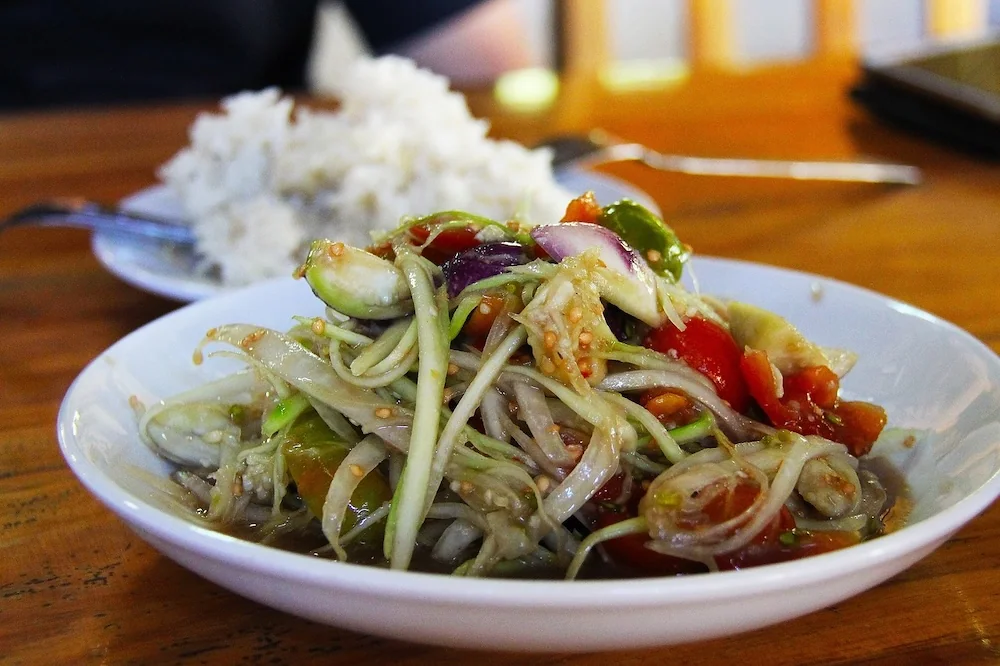
lao style papaya salad with fermented fish sauce
A Lao Original: Tam Mak Hoong (Papaya Salad) with fermented fish sauce. Best served with local Sticky Rice, super cheap

Local Market Prices in Laos

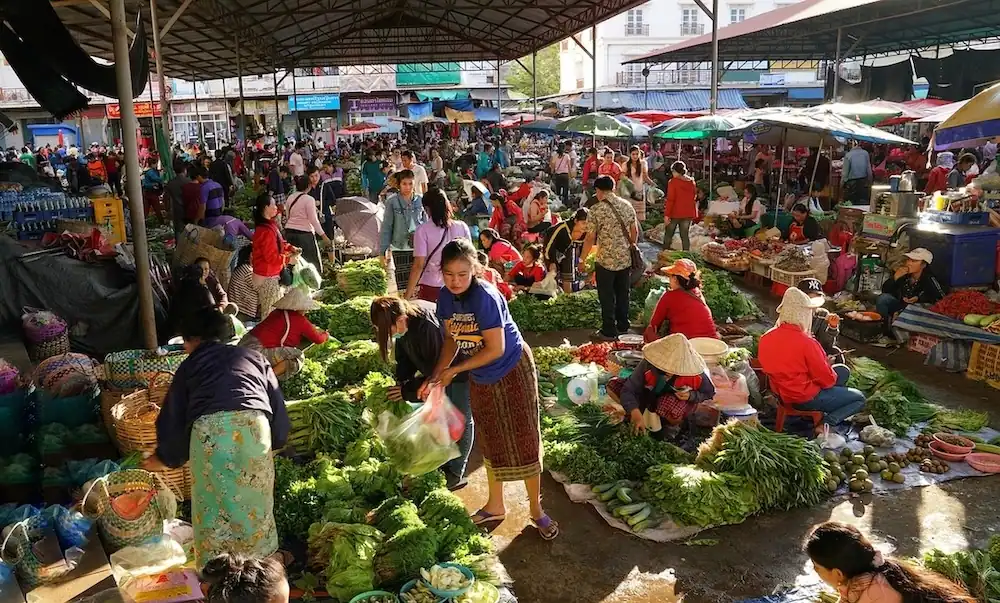
If you shop at traditional fresh markets, food prices in Laos remain very affordable, especially if you focus on local products. Vegetables are usually sold by weight or in small bundles. Seasonal, locally grown produce is extremely cheap compared to Western countries.

typical market in laos, where foreigners living in laos can buy cheap food
A typical market in Laos. Mostly local sourced and fresh ingredients can be bought there for a reasonable price.

Western Supermarkets & Imported Food Prices in Laos

While shopping local at markets keeps your living expenses in Laos low, visiting supermarkets and buying imported Western products quickly shows a very different price picture. In Laos cities like Vientiane, Luang Prabang or Savannakhet, there are several modern supermarkets, such as Supermarche, Kok Kok Marekt, and Rimping. At these supermarkets you can find a wider range of goods, including imported items, but often at noticeably higher costs than local market staples. 

Restaurant Prices in Laos – Local vs Western Dining

Eating out is very common in Laos and often more affordable than cooking  meals at home. For many expats, restaurant spending becomes a regular part of their monthly living expenses in Laos, especially since local food is cheap, widely available, and freshly prepared.

The good news: if you enjoy Lao or Southeast Asian cuisine, restaurant prices in Laos are generally very reasonable and food is super delicious. However, just like with supermarkets, costs increase quickly once you move toward Western-style cafés, international restaurants, and imported ingredients.

Local Street Food & Small Lao Restaurants

Local eateries, roadside stalls, and small family-run restaurants offer some of the best value when it comes to food prices in Laos. If you are on a tight budget, you can easily survive in Laos and live like a local for only couple of hundreds of dollars. Here are some examples of typical local lao food dishes: 

Prices of Western Restaurants & Expat Cafés

Western-style dining in Laos tells a different story. In Vientiane, Luang Prabang, Vang Vieng or Savannakhet, there are plenty of good international restaurants: French, Italian, Japanese, Korean, and more, but prices are obviously higher than at local eateries. In my opinion still quite affordable if you compare western restaurants in Thailand with those in Laos. Laos is definitely cheaper on that. Let’s dive into some examples. 

Where to live in Laos as a Foreigner

I see so many posts in Lao related expat or travel Facebook groups, where people asking randomly about where to find something in Laos, because they assume everyone knows they probably mean the capital Vientiane. But Laos is a huge country and has many cities and towns. Of course the most popular for expats is Vientiane, but Laos does not only has Vientiane. Where you want to settle in Laos, depends on your preferences and lifestyle. 

Comparison of Cities for Expats in Laos

📍VIENTIANE
If you love a busy city with restaurant options from cuisines all over the world, nightlife and all conveniences, then Vientiane is the city for you. I am personally not a big fan of the city, but it is ok for a few days. Others loves the capital. Also nowadays Vientiane feels like little china. A big chinese population lives there with lots of chinese companies and construction sites. In a few years, Vientiane will lose a bit more of its charme due to the recent developments. Vientiane is a good starting point to go up north, central or south. And if you have kids, most of the British and Australian International Schools are in Vientiane. I find Vientiane quite pricy compared to other places in Laos. 

📍SAVANNAKHET
Savannakhet is the second biggest city in Laos and absolutely underrated and often overlooked. It is truly a hidden gem right on the Mekong river with a lovely promenade, local life, old colonial buildings with an authentic charme. Laos second biggest town also has plenty of nightlife where you will see 99% locals and ocassionally some of the few expats here. The expat community is small, but exists. Everyone knows each other and we have have frequent get togethers. Also a lot of Lao, Thai, Viet and Western restaurants and thousands of coffeeshops. The best thing: Savannakhet is not any as busy as Vientiane and you will never be stuck in traffic. Its such a chilled vibe town. 

📍PAKSE
Next on the list is Pakse. I’ve been there many times for holiday, but never actually lived there. Its more comparable with Savannakhet, but with many more tourists because Pakse is the gateway for the Bolaven Plateau Loop. Smaller than Savannakhet, but also plenty of hotel and restaurant options, Pakse has a vibe too. Is a bit more quiet than Savannakhet I would say. A bit of a mix between the capital and Savannakhet. Perfect if you love nature due to the nearby coffee plantations and countless waterfalls on the Bolaven Plateau. 

📍LUANG PRABANG
Obviously Luang Prabang in the North is very popular among expats living in Laos. It is one of the most beautiful towns in Southeast Asia without any doubt. And got its UNESCO status for a reason. Been up there many times, loved it every time, but only for a trip. For me personally it has two main downsides to make Luang Prabang a home base: traffic & millions of tourists & burning season. During the months from march to may (can vary), farmers are burning their fields to prepare for a new planting season. So the surroundings are covered in thick smoke, which is terribly unhealthy, especially for sensitive groups. 

📍VANG VIENG
Vang Vieng is also one of the most popular towns for tourists. It is surrounded by beautiful mountains, stunning nature and there are many things to do: blue lagoons, hot air ballooning, Kaeng Nyui Waterfall, nightlife, viewpoints. During high season Vang Vieng is very busy. Its quite a small town and the place can fill up. If you choose to make it your future base, better choose a house to live outside of town. Its easy to get around by motorbike. 

📍THAKHEK
Thakhek is also a lovely town right between Savannakhet and Vientiane. It is smaller than Savannakhet and Pakse, but it still has a lot to offer. Thakhek is the starting point for the famous Thakhek Loop. What makes Thakhek special is the outdoor scene. The area is considered the most developed climbing spot in Laos. The town itself sits on the Mekong River and feels relaxed. You will find good food options, a bit of nightlife, and some tourists, but it is not overrun. Another practical plus is that Thakhek connects directly to Thailand via the Third Thai Lao Friendship Bridge to Nakhon Phanom, which makes quick trips and logistics easier.

📍RURAL LAO VILLAGES
Most Lao people still live in rural villages, close to nature and with a very traditional lifestyle. Life is quiet out there. People fish, cook on fire, farm, and follow local traditions that have stayed the same for generations. I personally love visiting remote villages from time to time. It is the perfect escape from town life, and you are surrounded by nature and truly friendly locals. Spending time in a village will also help you learn Lao much faster, because almost nobody speaks English there. If you want the real Laos experience, give it a try.

👉 If you want to experience rural village life in a comfortable and authentic way, you can also try our Ultimate Savannakhet Homestay Experience, where you stay with a local family and get a real insight into daily life far away from the typical tourist route. 

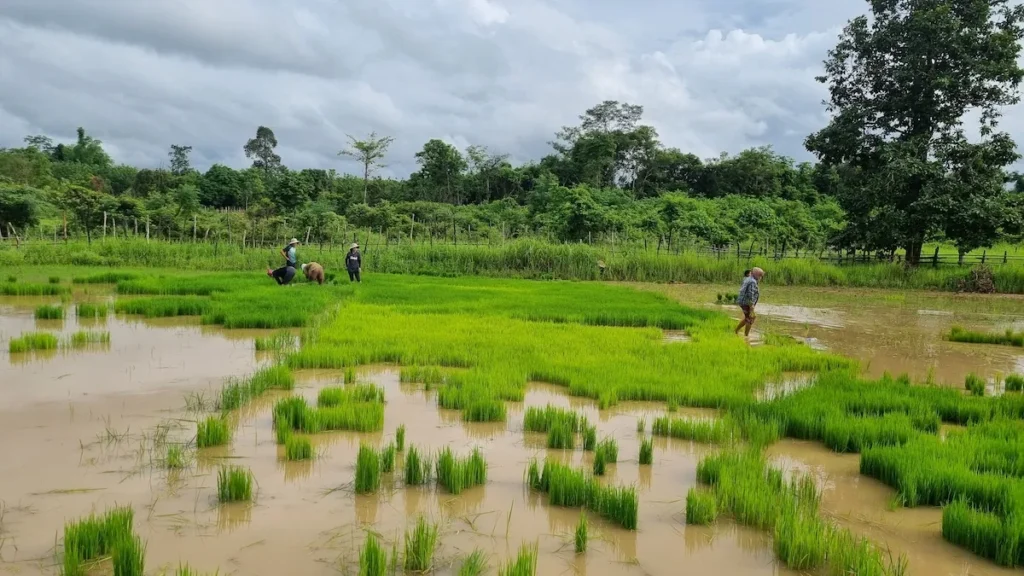
living in laos as a foreigner in a rural village selfie with rice farms
Some Foreigners prefer a quite life in a rural Lao village, where it's all about farming

Internet & Mobile Data in Laos

Internet and mobile data are relatively affordable and reliable in Laos. Home fiber internet packages typically cost something between 12–150 USD per month, depending on speed and provider. For most expats and digital nomads, the internet packages offered in Laos are more than enough for video calls, streaming, and any kind of online business operations. A wide range of options are available. All internet providers in Laos provide a better deal if you pay for 3, 6 or 12 months in advance. Definitely worth checking out who has the best deals and availability in your residential area. When renting a house, internet is sometimes installed already, but it’s not always the case. 

Here are some examples of Internet Packages for your home from the two most popular providers Lao Telecom & Unitel: 

➡️ Lao Telecom Home Fiber, Speed 70 Mbps, Price: 17.00 USD / month
➡️ Lao Telecom Home Fiber, Speed 120 Mbps, Price 35 USD / month
➡️ Unitel Home Fiber, Speed 50 Mbps, Price: 12 USD / month
➡️ Unitel Home Fiber, Speed 100 Mbps, Price: 28 USD / month

As a Foreigner living in Laos, you definitely have to get yourself a sim card or eSim. Mobile sim data in Laos is easily available everywhere and inexpensive. A prepaid SIM card with generous data packages usually costs around 5–10 USD per month, making mobile internet one of the smaller components of your overall living expenses in Laos. If you want a detailed breakdown of available providers, real internet speeds, and SIM card options, you can read our full guides here:

👉 Laos SIM Card Guide – Best options listed
👉 Internet Speed in Laos – What to Expect
👉 Digital Nomad in Laos – Complete Guide

Transportation in Laos for Expats

If you are planning to live in Laos as a foreigner long-term, you don’t always want to rely on public transport. Speaking about public transport in general, it is quite cheap to get from A to B in Laos using minivans and local busses. Ticket prices obviously depending on the distance and form of transportation. While a minivan is usually faster, but also a bit more expensive than a local bus, which can be significantly slower and more uncomfortable. In general prices for public transport in Laos are very low. 

Best is to get a motorbike or even a car if you prefer more convenience. I would say some form of own transportation is definitely necessary while living in Laos. Unless you live in main towns like Vientiane, Luang Prabang or Savannakhet, where ride-sharing apps are available, such as: Xanh SM Laos, Kokkok Move or Loca. Keep in mind, that the mentioned apps are not available all around Laos and mostly work around cities. If you want to explore outside a town, you need to hire a driver or have your own transport like a motorcycle or car. 

Motorbike Costs in Laos (Purchase, Maintenance & Fuel)

For most expats, a motorbike is the most practical and cost-effective way to get around in Laos. It gives you flexibility, independence, and very low monthly transport costs. Let’s talk about motorbike prices in Laos. 

➡️ Yamaha Finn Semi-Automatic 115CC, Price new: 1.700 USD
➡️ Honda Wave Semi-Automatic 110CC, Price new: 1.900USD
➡️ Honda Click Automatic, 125CC, Price new: 2.000+ USD

If you prefer a second-hand motorbike, will be cheaper, depending on the brand, age, mileage and maintenance. Expect to pay around 300-800 USD for a used motorcycle in Laos. Bigger motorbikes above 125+ CC will be pricier. There are so many motorbike dealers in Laos. Easy to get around and compare prices before buying one. 

Fuel in Laos is relatively inexpensive, and this keeps your overall transport costs low if you own your own vehicle. Gasoline at the pump costs around 1.10 – 1.35 USD per liter, depending on where you fill up and price fluctuations.

Maintenance costs for a motorbike in Laos is also very affordable. Basic services such as regular oil changes, brake adjustments or minor repairs are typically just a few dollars at local mechanics, and even bigger items like new tires remain inexpensive. Routine upkeep and parts are widely available throughout Laos, especially along major roads and in towns. For many expats, this combination of low fuel price and cheap maintenance means owning and operating a motorbike is one of the most cost-efficient transport solutions and keeps transport as a manageable part of the overall cost of living in Laos.

Car Costs in Laos (Purchase, Fuel & Maintenance)

If you plan to buy a car in Laos, expect to pay around 20–30% more than in neighboring Thailand or Vietnam. Laos does not have its own car manufacturing industry, so most vehicles are imported, and import taxes significantly increase prices.

Basic Sedan second-hand cars like KIA or Hyundai usually start at $8,000–15,000 USD, depending on age and condition (don’t expect anything below that prices). Popular models like the Toyota Hilux or Isuzu D-Max are widely available, but even used vehicles are often more expensive than comparable models in Thailand. New cars can easily exceed $25,000–60,000 USD. See some examples below. 

➡️ New Isuzu D-Max V-Cross 4×4 Diff-Lock, AT, Price in Laos: 50.000 USD
➡️ New Isuzu D-Max V-Cross 4×4 Diff-Lock, MT, Price in Laos: 42.000 USD
➡️ New Toyota Hilux Revo 4WD MT, Price in Laos 43.000 USD
➡️ New Toyota Hilux Revo Adventure, 4WD, AT, Price in Laos: 60.000 USD
➡️ New Kia Sorento SUV, 4WD, AT, Price in Laos: 48.500 USD
➡️ New Kia Seltos, Price in Laos: 30.500 USD

Diesel price in Laos currently is around $0.90–1.10 USD per liter. Maintenance and spare parts for the popular Japanese or Korean brands like Toyota, Isuzu, Kia or Hyundai remain relatively affordable. 
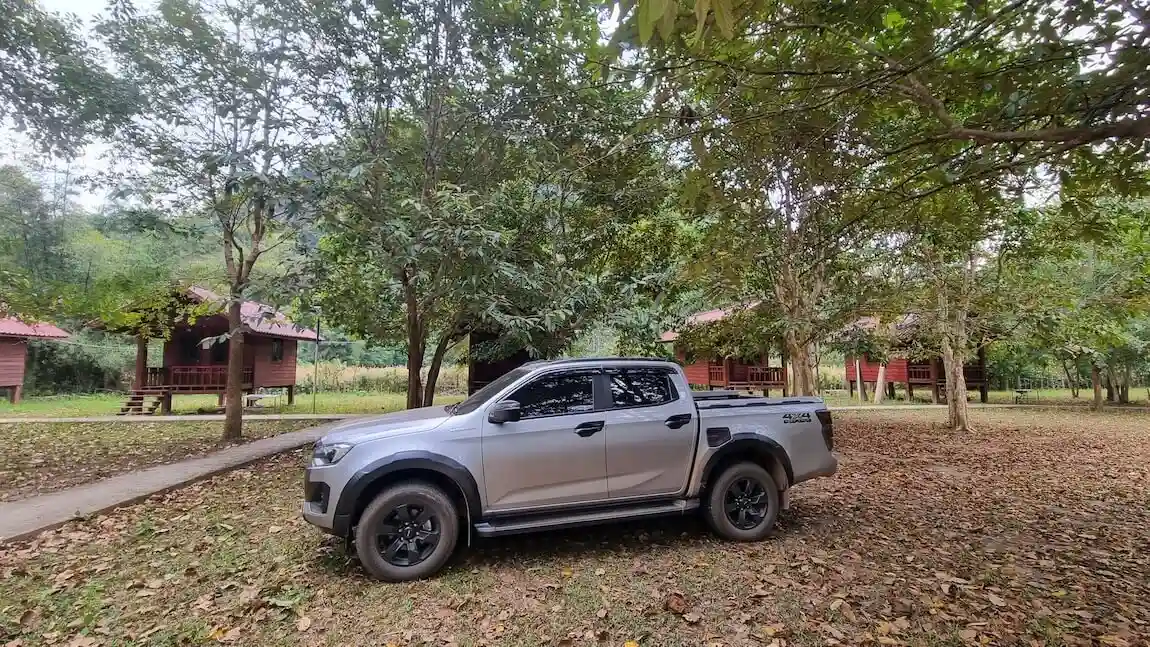
isuzu pickup car laos
A 4x4 Pickup is a convenient way for expats to travel around Laos and neighboring countries

Required Documents & Annual Costs for Cars in Laos

If you own a car in Laos, there are some mandatory documents and annual requirements you must maintain to legally drive, especially important at police checkpoints when you’re asked for it to avoid some pocket money. 

✅ Every vehicle must pass a technical inspection once per year, which is inexpensive and typically costs around $7 USD annually. This confirms that the car meets basic safety and environmental standards.

✅ Car insurance is also mandatory. You can choose between different coverage levels. Basic insurance policies cost around $20 USD per year, but these offer very limited protection and are often purchased mainly to comply with legal requirements at checkpoints. A mid-range package usually costs around $100–120 USD annually, while full coverage policies can range from $200–250 USD per year, depending on the vehicle and insurer.

Several insurance providers operate in Laos, including Lane Xang Insurance, Alliance, and Phongsavan Insurance. However, not all providers offer the same level of service.

❗Based on personal experience and feedback from other expats, I would strongly advise extreme caution when dealing with ST Muang Thai Insurance. Claim handling and payout processes have been reported as problematic and frustrating. Before choosing any insurer, speak with long-term residents and thoroughly review policy conditions. 

✅ In addition, car owners receive official ownership documents. Sometimes referred to as the “yellow book”, which lists vehicle and owner details, along with a registration card that must be kept inside the vehicle.

✅ An annual road tax must also be paid at the provincial tax office and usually costs around $10 USD per year.

✅ Driver’s License: Of course, you should hold a valid driving license to legally drive in Laos. While some foreigners initially rely on an international driving permit, long-term residents are strongly advised to obtain a Lao driver’s license. The process is relatively straightforward if you have the required visa and documents. If you want a detailed step-by-step explanation of requirements, costs, and procedures, you can read our full guide on how to get a Lao driver’s license for Foreigners below.

Second-Hand Car Market in Laos (It's very different here)

The second-hand car market in Laos is quite different. Because there is not really a big car industry in Laos (other than Daehan or KoLao), most of the cars are produced outside of Laos and have to be imported. Popular cars like Toyota, Isuzu or Ford do not lose much in value over the years if you want to resell it.

Let me give you an example: We owned an Isuzu D-Max 2WD MT Pickup and bought it second-hand. At the time of buying, the car was around 2 years old and had around 32.000 km on it. The second-hand price was around 27.300 USD. We sold the car around 1.5 years later for about 28.500 USD, thats even an increase in value because of the high demand for such cars in Laos. 

Many second-hand cars are sold via Facebook groups, mostly only available in Lao Language though. There are also many second-hand resellers in all major towns. You can just go to their showroom, see and test drive some cars you’re interested in. Best would be to get a local lao person to help you when buying a car. 

Financing a Vehicle in Laos – Think Twice

If you don’t have the cash to buy a car in Laos, financing through a bank is technically possible. However, it is usually not very attractive. Local bank financing often comes with interest rates of around 0.8% per month or more, and banks typically require collateral such as land titles or other financial guarantees. This makes the process complicated and relatively expensive. And officially anyway not possible for foreigners residing in Laos. 

Some people turn to informal money lenders because the process is fast and requires fewer documents. But this is where things can become dangerous. Many of these so-called “loan shark” operations are unregulated private lenders, often Thai-owned, operating outside proper banking supervision. Monthly interest rates of 1.5–2% or even more are common, which quickly becomes financially unsustainable. In addition, these lenders are known for aggressive collection methods and operate in a legal grey area. Stay away from these criminals! 

If you are moving to Laos or living in Laos as a foreigner, the safest strategy is simple: only buy a vehicle if you can afford to pay for it upfront. Financing through informal lenders in Laos carries serious financial and personal risk.

Can Foreigners register a car or motorbike in their name in Laos?

Yes. Under the 2021 Land Transport Law of Laos, foreigners are legally allowed to own and register cars and motorcycles in their own name. The law explicitly includes a registration category called “Foreign private individuals” (Article 31), which confirms that vehicles can be registered under a foreigner’s name. Vehicle registration serves to verify legal ownership (Article 29), and the law applies to both Lao citizens and foreigners (Article 6 & 7).

This means that long-term foreign residents in Laos with the required documents (valid visa, address, import and purchase documents) can legally buy, register, and own both motorbikes and cars in Laos (Lao PDR Trade Portal, Vientiane Capital, 2021)

It’s common practice to let a local Lao person register the car in their name, because it’s usually easier & straight forward. That doesn’t mean that it is a good idea though. 

How Much Money Do You Need to Live in Laos? (Budget Overview)

After breaking down rent, food, transport, and internet, the big question remains:

How much money do you actually living in Laos as a foreigner❓

The answer depends entirely on your lifestyle. Below are three realistic budget scenarios for Foreigners, Retirees, Expats & Digital Nomads who want to make Laos their new home. 

➡️ If you live on a tight budget of around $600–800 USD per month, it is absolutely possible to do so, but you will mostly live like a local. This means renting a simple Lao-style house outside the city center, shopping at local markets, eating mainly Lao food, riding a motorbike, and consuming limited imported or Western products. You can still have a delicious Beerlao though, Beer prices are super cheap in Laos. 

➡️ If your monthly budget is $800–1,200 USD, life becomes much easier and more relaxed. At this level, you can rent a decent house or small modern apartment, own and maintain a motorbike or even smaller car comfortably, eat local food daily while enjoying Western meals occasionally, travel within Laos, and still keep your living expenses in Laos very manageable. Beer is also significantly cheaper than in neighboring Thailand, which makes social life more affordable.

➡️ If you are in the $1,200+ USD range, you can live very comfortably, with a modern apartment or well-located house, frequent Western dining, imported groceries, possibly even owning a pick-up truck, and more lifestyle flexibility.

👉 Compared to Europe or the US, the overall cost of living in Laos remains low. The main difference is simply how local or how Western you choose to live.

Healthcare & Insurance for Foreigners in Laos

If you are planning on living in Laos as a foreigner, healthcare is one of the most important topics to understand before moving.

Laos has basic public hospitals and a growing number of private clinics, especially in Vientiane, Pakse or Savannakhet. For minor issues, routine check-ups, or common illnesses, treatment is generally affordable and accessible. However, the overall medical infrastructure is limited compared to Thailand, Vietnam or Western countries. Advanced diagnostics, complex surgeries, or serious emergency treatments are often not available outside of the Capital Vientiane. 

For this reason, many expats rely on medical evacuation to Thailand. Particularly to hospitals in Udon Thani, Khon Kaen, Mukdahan, Ubon Ratchathani or Bangkok when facing serious health conditions. Evacuation can be done by road in many cases, but in more critical situations, air evacuation may be required. Private Thai hospitals are generally quite good (not public ones though), but when treating foreigners, they have the reputation of overcharging foreigners. The well-known dual-pricing scam also exists in Thai hospitals, just keep that in mind before undergoing expensive treatments. 

This is why proper insurance is absolutely essential. 

Public vs Private Hospitals in Laos

Public hospitals in Laos are inexpensive but often crowded and very basic in equipment. I saw patients and relatives sleeping on the floor waiting for treatment. Private clinics offer better service, shorter waiting times, and sometimes more English-speaking staff, but still have limitations when it comes to advanced treatment.

If you are moving to Laos long-term, you should not assume Western-level hospital standards. Healthcare works, but it works differently.

List of private Hospitals in Laos

📍VIENTIANE: 
Kasemrad International Hospital (Vientiane): One of the most modern hospitals in Laos, part of a Thai hospital network. Offers better equipment, diagnostics, and more international standards compared to most local hospitals. Most expensive option, but probably the best. So better make sure you have insurance. 

Alliance International Medical Centre (AIMC): Popular among expats for general practice, vaccinations, and outpatient services. More of a clinic than a full hospital, but well equipped.

Mahosot Hospital Vientiane:
China-aided expansion: A major new wing/building at Mahosot Hospital funded by the Chinese government, designed to bring more modern facilities, equipment, and higher-capacity hospital services to Vientiane compared to the older public-hospital standard. Low prices, but longer waiting times because it can be crowded. Friendly nurses

📍SAVANNAKHET: 
SK International Hospital:
The most “expat-friendly” private-style hospital option in Savannakhet and usually the first choice if you want something above the public hospital level.

Savannakhet Provincial Hospital: 
The main public hospital in Savannakhet, cheap and accessible for basic treatment and minor issues, but expect crowded conditions, limited equipment, and very variable service quality compared to private clinics.

📍PAKSE
International Pakse-Thanghoa Hospital:
A more “international-style” hospital option in Pakse, often chosen for basic diagnostics and general treatment when you want better service and communication than typical public facilities in the south.

Champasak Provincial Hospital: 
The main public hospital in Pakse, very affordable and useful for basic care, but facilities can be crowded and limited, so many expats prefer private clinics or go to Thailand/Vientiane for anything serious.

📍THAKHEK: 
Khammouane Provincial Hospital:
The main public hospital in Thakhek—accessible for basic treatment, but equipment, comfort, and specialist care are limited, so more complex cases usually require Vientiane or Thailand.

Vientiane-Thakhek Clinic:
A convenient private clinic option in Thakhek for general consultations and minor issues, often preferred for quicker service and a more straightforward experience than the provincial hospital.

Health Insurance for Foreigners in Laos

If you plan on living in Laos as a foreigner, health insurance is not just a “nice to have”. It’s a real decision you should make sooner rather than later. Healthcare in Laos works for many everyday situations. A doctor consultation, basic treatment, and common medication are usually easy to get. Many things can also be paid out of pocket without blowing your budget. And many expats in Laos I know, never had health insurance since living here. But once it goes beyond standard issues, the reality changes fast and things get really expensive. 

Serious dengue fever is a good example. Mosquito-borne diseases in Laos are part of life over here, especially during certain seasons. The bigger problem is anything that needs proper diagnostics or specialist treatment. A motorbike accident. A complicated infection. Surgery. In those situations, you want options. And in Laos, the best option in serious cases is often Vientiane or evacuation to Thailand. You’d better (financially) prepared for that, because thats exactly when

That’s why health insurance in Laos for foreigners matters. Not because you will constantly use it, but because when you truly need it, you don’t want to think about money or limits. Most long-term expats don’t rely on local insurance alone. They use international health insurance that covers private treatment in Laos and also gives them a safety net for treatment abroad if needed. It’s simply the most realistic approach if you want peace of mind while living in Laos.

International Insurance for Expats, Retirees, Digital Nomads in Laos

There are several local Lao health insurance providers foreigners can choose from. But in reality, these plans often come with limitations. Many don’t include international coverage at all, and even within Laos the coverage can be low or very case-dependent.

Many foreigners assume they can simply buy a local health insurance plan in Laos and be fully covered. In practice, it often doesn’t work the way people expect. Local policies can be fine for simple outpatient visits, but coverage limits are often low, paperwork can be messy, and some hospitals or treatments are not handled smoothly. The biggest issue is this: if you ever need serious treatment, you usually want the option to go to a high-quality private hospital in Vientiane or even Thailand. And that’s exactly where many local plans fall short.

Insurance is also never “one size fits all”. Your age, medical history, and lifestyle matter. What works for a 28-year-old remote worker is not the same as what a 55-year-old retiree needs. That’s why many long-term expats prefer international health insurance instead. A solid international plan can cover you in Laos, keep Thailand as a real backup option, and also protect you when you travel or fly back home. and in most other countries of the world, so that you don’t need to worry even when traveling outside of Laos. 

➡️ If you’re not sure what kind of coverage makes sense for your situation, it’s worth getting a quick professional opinion first. You can book a free consultation call (in English or German) right here. An independent insurance broker will look at your personal situation and help you find the best international insurance option for your individual situation, then prepare a free, no-obligation quote for you.

Money and Banking in Laos for Foreigners

For foreigners moving to Laos, it’s important to understand how money in Laos really works. The local currency is the Lao Kip (LAK), and once you live in Laos you quickly notice one thing: Laos is still mostly a cash country, but there has been a huge shift toward QR payments in recent years.

QR payments are now common in shops, cafés, markets, and even small local businesses. But to use them, you usually need a Lao bank account or a local payment app such as LOCA Pay or Ezy Kip. Card payments exist, especially in Vientiane, but they are not something you can fully rely on. Outside the capital, cash is still the default.

Another important point is inflation and currency instability. Over the last few years, prices in Laos have increased and the Kip has lost over half of its value (Covid, wars, you know it). You notice this especially with imported products, which can jump in price. In some cases, rent or bigger purchases like cars are also discussed in USD or THB, and many foreigners prefer to keep most of their savings in a stronger currency instead of holding large amounts of Kip.

ATM withdrawal limits are between 2 million and 2.5 million LAK (90-120 USD) and fees add up quickly if you have to withdraw multiple times. Withdrawal fees in Laos vary between 30.000 and 50.000 LAK per withdrawal (1.4 – 2 USD). And if you earn money abroad or need to send money into Laos, you’ll need a reliable transfer setup, not just cash.

Lao Bank Account for Foreigners & Payments

Sooner or later, almost every foreigner in Laos runs into the same issue: how do you reliably move money into the country and pay like a normal person once you live here? This applies whether you earn online, get paid by a foreign employer, receive a monthly pension, or simply top up your savings every month to cover living costs in Laos.

❓Do you really need a Lao bank account? 

If you live in Laos long-term, yes, in most cases you do. Not because you can’t survive without one, but because a local bank account makes daily life much easier. Without a Lao bank account you will often fall back to cash-only life, and you’ll miss out on the QR ecosystem that locals use daily.

Having a local Lao bank account unlocks things like: 

How to open a Bank Account as a Foreigner in Laos

In general, opening a bank account in Laos is usually only possible if you have a Lao long-term visa (and in many cases a stay permit or supporting documents like a local address). Requirements can vary by bank and branch, and sometimes even depend on how familiar the staff is with foreigners.

This is why many expats open their account after they already have their long-term visa and documents sorted. Once that part is done, the process itself is usually straightforward.

For foreigners, BCEL (Banque Pour Le Commerce Exterieur Lao) is one of the most common choices. It is widely used across the country, has a large ATM network, and is integrated into the everyday payment system in Laos,  especially for QR payments and domestic transfers.

What do you need to open a BCEL bank account? 
➡️ Passport with long-term Visa in Laos
➡️ Sometimes they require to see the stay permit and work permit (if applicable)
➡️ Cash to deposit to your bank account (minimum amounts of 200.000 LAK, 10 USD or 250 THB)

You can open a multi-currency account in LAK, USD and THB, which is very convenient because many bigger purchases in Laos are handled either in USD or THB. There are many other banks in Laos, such as LDB (Lao Development Bank), JDB (Joint Development Bank), Lao-Viet Bank, Banque Franco-Lao (Lao-French Bank), Indochina Bank and more. I personally only have experience with BCEL though. 

💡 LAOS INSIDER TIP:
When opening a bank account in Laos, make sure to open a multi-currency account as mentioned above (LAK, USD, THB). You only need to hold a minimum amount of that currency, but it doesn’t cost anything more and it will give you more flexibility when receiving money from abroad, especially if you can hold USD in your Lao bank account. 

International Money Transfers to Laos

There are several ways to move money from an overseas bank account to your Lao bank account, and the differences can be huge in terms of fees, exchange rates, and speed. Below I’ll focus on the methods I personally use, because they work reliably in real life and help avoid unnecessary costs.

👉 I’ve written a full dedicated article on using Wise in Laos. Read it here to see how Wise works in practice and how to send money directly to a BCEL bank account in Laos. Revolut works similar like Wise when sending money, just has a different fee structure because they also offer premium plans, where sending and money exchanging fees will be lower. 

Sell USDT on Binance P2P to Receive LAK in Your Lao Bank Account

This is definitely my preferred method of receiving Lao Kip into my BCEL bank account. You need a basic understanding of how crypto works and a Binance account, which is free to create.

The idea is simple: you use a US dollar backed stablecoin called USDT, and you convert it into LAK by selling it on the Binance P2P marketplace. P2P means peer-to-peer. You’re not selling to “Binance” directly, you’re selling to another verified user, and Binance acts as the market place and dispute system to keep the transaction safe.

One important detail: the buyer will send the LAK directly to your BCEL bank account (via bank details or QR payment), and only after you confirm you received the money, Binance releases the USDT to the buyer. That’s why this method is fast and usually very competitive on exchange rates.

1️⃣ Create and verify your Binance account (KYC), then activate Binance P2P.

2️⃣ Get USDT into your Binance wallet

3️⃣ Go to P2P → Sell, choose USDT as the coin and select LAK as the currency.

4️⃣ Filter for bank transfer and select BCEL (or any bank you use).

5️⃣ Choose a buyer with high completion rate, many orders, and good reviews.

6️⃣ Enter the amount of USDT you want to sell, then add your BCEL account details as the payment method.

7️⃣ Start the trade. The buyer sends LAK to your BCEL account.

8️⃣ Check your BCEL balance first (don’t trust screenshots). Only when the money is actually in your account, click “Confirm received”.

9️⃣ Binance releases the USDT to the buyer and the trade is done.

Why expats use this method: fast, good rates, and LAK arrives directly in your Lao bank account.

⚠️ Important: Only do this if you’re comfortable with crypto basics, always use Binance, and never confirm payment before the funds really arrive in your bank.

Lao Culture and Daily Life Reality Check

Living in Laos as an Expat, Digital Nomad or Retiree is not difficult, but daily life works differently than in the West. Here are the biggest things that surprise most foreigners when they first settle in Laos.

✔️ Saving face and indirect communication: People avoid direct conflict. A simple yes can sometimes mean maybe, or I do not want to say no. If you need to get something done, Laotians will always say “can”, and in the end surprise you with a “can not”. Bit annoying, but that’s how it is. 

✔️ Lao time and slow service: Things move slower, especially at offices. Patience is not optional in Laos, it is part of the system. Don’t expect superior and fast service. It’s not a service oriented country and salaries are very low. 

✔️ Noise and neighborhood life: Loud music, karaoke, dogs, chicken and early mornings are normal. Privacy and quiet are not the default in many areas.

✔️ Dress codes in temples: Temples are not tourist attractions for locals. Dress modestly and behave respectfully, especially during ceremonies. I still see foreigners dressing impropriate when visiting a temple. Don’t be that Farang walking around shirtless, it’s disgusting and doesn’t fit into Lao culture! 

✔️ Language barrier: English is limited or non-existent outside tourist areas. Even basic Lao will change your daily life, prices, and how locals treat you. Please put some effort in learning Lao language. It shows respect and gets a long way. Locals love you speaking Lao. Many Foreigners don’t even try, which is sad. 

✔️ Traffic and safety: Traffic can feel chaotic and rules are not always followed. Most expats quickly learn to drive defensively and stay alert. There are some basic traffic rules, but basically noone follows them and not many people actually have a license. 

✔️ Expat community reality: Outside Vientiane, expat circles are small. The upside is that people actually know each other and connections happen fast. For me it is one of the biggest plus points for Laos. I want to feel to live in a foreign country and not an expat bubble! I enjoy the frequent Farang get togethers though. 

✔️ Lao people love to celebrate. Festivals, family events, and Beerlao are a big part of local social life. Be prepared to be invited for weddings, house parties, temple parties, village parties and all kinds of good luck ceremonies. Take part in it and enjoy! Laotians are very welcoming toward foreigners. 

👉 If you want the deeper cultural side, read the full guide here: Culture in Laos
Checklist for living in Laos as a Foreigner

1️⃣ Arrive with a lao tourist visa (eVisa or VOA, 30 days, extendable up to 90 days). 

2️⃣ Prepare documents you might need later: passport copies, passport photos, basic scans of important paperwork.

3️⃣ Get international health insurance sorted and save your policy details on your phone.

4️⃣ Set up your money system: at least 2 working debit/credit cards, plus a reliable way to move money internationally.

5️⃣ Stay in a hotel or guesthouse for the first 7 to 14 days so you can search housing in person. For online bookings in Laos, Agoda offers the best deals. 

1️⃣ Buy a local lao SIM card and test your mobile data in your area.

2️⃣ Choose a temporary base in the city you want to live in and explore different neighborhoods.

3️⃣ Get transport sorted: rent or buy a motorbike, or at least know your daily transport options.

4️⃣ Locate your essentials: nearest ATM, market, pharmacy, and a private clinic for basic treatment.

5️⃣ Keep a cash buffer at home and do not rely on card payments only.

1️⃣ Decide if Laos is for you long term and then move to your long term lao visa plan.

2️⃣ Find long term housing and make sure the basics are fine: water pressure, aircon, internet availability, and a clear agreement with the landlord.

3️⃣ Open a Lao bank account if possible and set up QR payments for daily life.

4️⃣ Set up your transfer method for sending money into Laos regularly, such as Wise.

5️⃣ Get a Lao driving license if you plan to stay long term and drive often.

Frequently Asked Questions About Living in Laos as a Foreigner

1. Is Laos a good country to live in as a foreigner?

Yes, if you like a slower pace, lower costs, and a more local lifestyle. Laos is not ideal if you need Western level convenience, fast bureaucracy, and a big expat bubble.

It depends on your lifestyle and city. Many foreigners live on around 600 to 800 USD with a very local setup, 800 to 1,200 USD is a comfortable middle range, and 1,200 USD plus is a very comfortable lifestyle with more Western choices.

Vientiane has the most convenience and services, but is the busiest and feels like little China. Luang Prabang is beautiful but has strong tourism and burning season. Savannakhet and Pakse are quieter and cheaper, and Thakhek is great if you love nature, caves, and climbing. For me Savannakhet wins by far!

No. Compared to many other countries in Southeast Asia, long term stay options in Laos are surprisingly straightforward. The most common solution for many foreigners is an LA-B2 setup via a sponsoring company. Contact us if you need help with that. 

For everyday doctor visits you can often pay out of pocket. But for serious issues like accidents, surgery, or emergency evacuation to Thailand, insurance can save you from huge costs. That is why international health insurance is the most realistic option for long term expats. Contact us if you want reliable international insurance options. 

Yes, but usually only with a long term visa and supporting documents. Requirements can vary depending on the bank and branch, but with long-term visa no problem. 

In many areas, yes. Vientiane and major towns have fiber and mobile data is affordable. Outside cities, stability can vary, so having a backup SIM is a good idea.

Laos is generally considered a low crime country, but traffic and road conditions are the biggest real risks. Drive defensively, especially on motorbikes, and be careful at night outside well lit areas.

If you stay long term, buying often makes sense because it gives you independence. For short stays, renting can be easier. Motorbikes are the most practical option for most foreigners. But cars will give you even more freedom to travel around Laos and neighboring countries. 

Expecting Laos to work like Thailand or the West. If you accept slower processes, learn some Lao, and adapt to local systems, life becomes much easier. Lao and Thai culture are similar, but Laos is not the place for the typical Pattaya sex tourist. It’s a way more traditional country. 

share this article:

Facebook
Twitter
Pinterest
Interested in more Laos related content?