
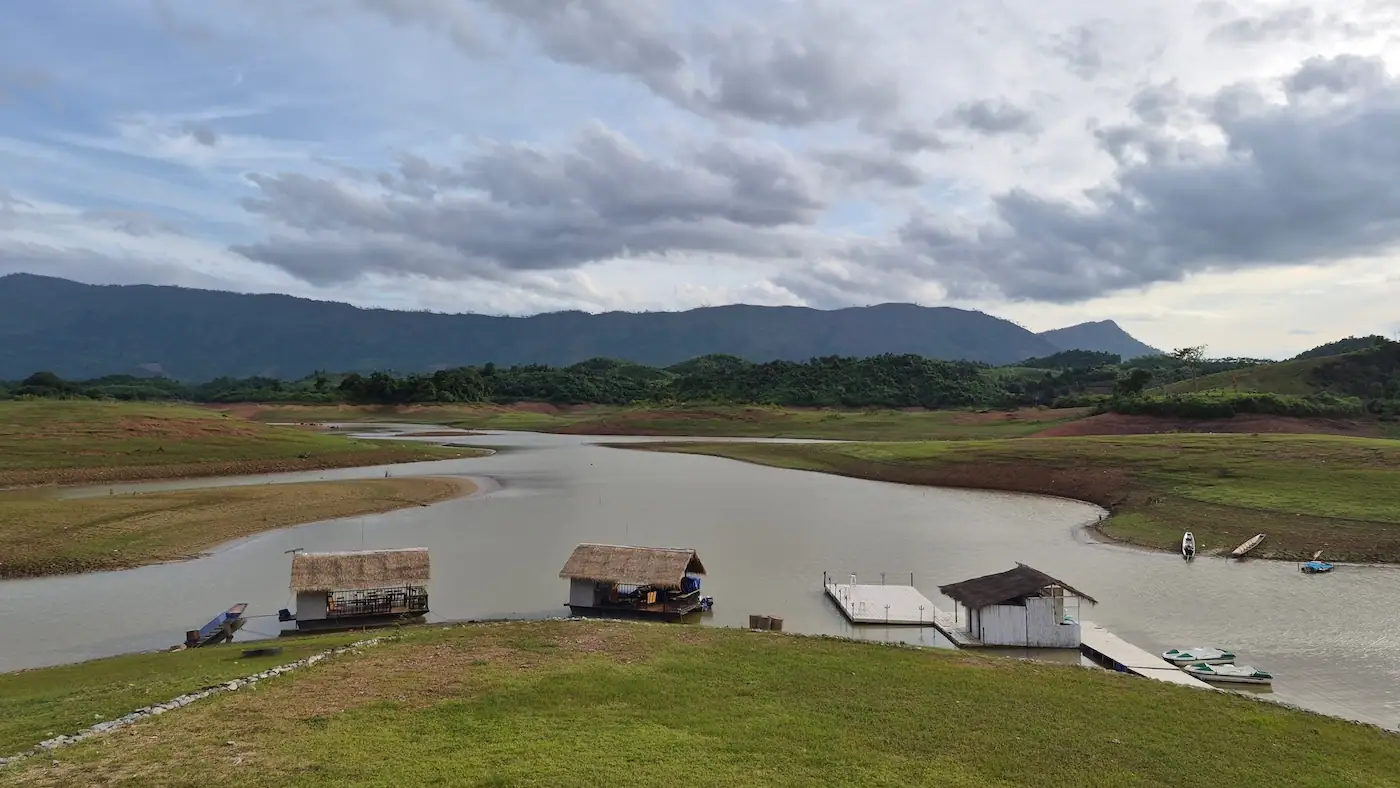
Nam Ngum Reservoir is an artificial lake created by damming the Nam Ngum River in Vientiane Province. Construction of the Nam Ngum 1 Hydropower Plant began in 1968, and the first turbines became operational in December 1971. Originally built with a capacity of 30 MW, the plant was expanded over several phases and became one of the foundations of Laos’ hydropower development. Today, the reservoir serves both as an important source of hydroelectric power and as a popular destination for nature and lake tourism.
Nam Ngum Lake, also known as Nam Ngum Reservoir, is one of the largest freshwater lakes in Laos. Located in Vientiane Province in central Laos, approximately 90 km north of the capital, this huge reservoir is a peaceful escape surrounded by green hills, forested islands and traditional fishing villages.
By locals often referred to as the “Sea of Laos” (Thalay Lao), Nam Ngum Lake offers a very different experience from the country’s better-known destinations. Instead of busy tourist towns and crowded attractions, visitors can explore the lake by boat, enjoy freshly caught fish at floating restaurants, discover small islands and experience the slower pace of local life along its shores.
One of the most interesting areas to visit is Tha Heua on the northern shore, a traditional fishing village known for its local fish market and lakeside atmosphere. This is also where visitors can find the beautiful Sanctuary Nam Ngum Beach Resort, making it an appealing destination for a relaxing overnight stay.
Nam Ngum Lake is often nicknamed the “Sea of Laos” (Thalay Lao) because of its vast surface area and the way its open waters stretch across the landscape like an inland sea. With hundreds of islands, distant shorelines and wide expanses of water, parts of the reservoir feel more like a coastal destination than a typical freshwater lake. The name also reflects its importance as one of Laos’ best-known lakeside recreation areas.
Nam Ngum Lake covers an area of approximately 370 km² and has several access points, with Tha Heua in the north and the Nam Ngum 1 Dam area in the south. The reservoir is also an important part of Laos’ hydropower network, with a gross storage capacity of around 7 billion cubic metres. Here are the key facts of Nam Ngum.
| Quick Fact | Details |
|---|---|
| Location | Vientiane Province, Central Laos |
| Lao Name | Nam Ngum (Nam Ngum Reservoir) |
| Common Nickname | Sea of Laos (Lao Sea / Thalay Lao) |
| Type | Artificial freshwater reservoir created for hydropower generation |
| River | Nam Ngum River, part of the Mekong River system |
| Surface Area | Approximately 370 km² at the usual operating water level |
| Gross Storage Capacity | Approximately 7.03 billion m³ of water |
| Dam Type | Concrete gravity dam |
| Dam Height | 75 metres |
| Dam Length | 468 metres |
| Construction Started | 1968 |
| First Operation | December 22, 1971 |
| Installed Hydropower Capacity | 155 MW (officially listed capacity of Nam Ngum 1 Hydropower Plant) |
Nam Ngum Lake is located in Vientiane Province in central Laos, north of Vientiane Capital. The reservoir stretches across several districts, with its northern and southern shores offering different access points and visitor experiences.
For most travellers, Tha Heua village on the northern shore is one of the easiest places to explore the lake. It is also a convenient stop when travelling between Vientiane and Vang Vieng. Further south, visitors can reach the Nam Ngum 1 Dam and Thalay Lao Recreation Area, which form a separate area of the reservoir.
If you’re looking for Nam Ngum Lake on a map, it’s worth checking the exact destination rather than searching for the lake in general. Distances and travel times can vary considerably depending on whether you’re heading to Tha Heua, the dam or another part of the shoreline.
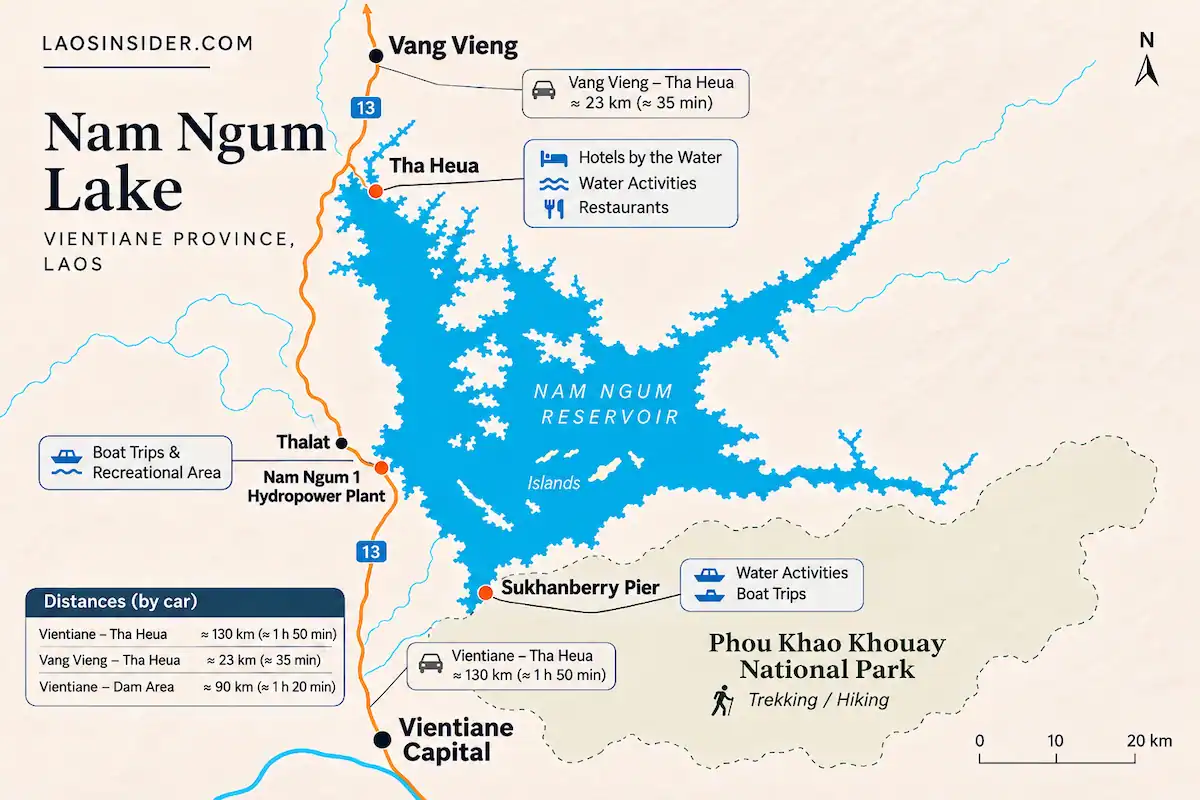
Nam Ngum Reservoir is a large lake with several access points, and the different areas around its shoreline offer quite different experiences. Rather than thinking of it as one single tourist destination, it helps to understand the main locations before planning your visit.
The northern shore around the village called Tha Heua (basically means Pier in Lao Language) is one of the best-known areas for visitors. This traditional lakeside village offers hotels and resorts directly on the water, local restaurants, boat trips and various water activities. It is also conveniently located for travellers coming from Vang Vieng, making it a good base for exploring the northern part of the reservoir and those who are looking for things to do around Vang Vieng.
📍 Google Maps Location Tha Heua
On the western side of the reservoir, Thalat is an important local reference point. The village is located close to the Nam Ngum 1 Hydropower Plant, one of Laos’ major hydroelectric facilities. This area is particularly relevant when approaching the reservoir from Vientiane and helps visitors understand the geography of the western shoreline. There is also a recreation area on the western shore of Nam Ngum.
📍 Google Maps Location Thalat
Further south, Sukhanberry Pier, located near Dansavanh Nam Ngum Resort, offers another way to explore the reservoir. Visitors can arrange private boat trips or enjoy water activities such as kayaking, stand-up paddleboarding, speedboats and jet skis. Private boats and larger cruise boats are also available. Prices and trip durations depend on the type of boat and experience, so it is best to contact the resort directly or ask at the pier for current rates and availability.
📍 Google Maps Location Sukhanberry Pier
Beyond the southern shoreline, the landscape extends towards Phou Khao Khouay National Park, a protected area known for its forested mountains, waterfalls and hiking opportunities. This region is less developed for tourism than the lakeside areas, and some access roads are unpaved, particularly worth considering during the rainy season. But there are definitely some treks and waterfalls, such as Zaova Waterfall, Kao Nang View Point or Phu Pha Dang with great views over the Nam Ngum Lake.
Beyond the more accessible areas around Nam Ngum 1, the wider Nam Ngum reservoir system extends into the mountainous province of Xaysomboun. This remote region is home to the Phu Kham Copper-Gold Mine and the upper Nam Ngum 2 Reservoir, which also serves as an important transport link between the mining operations on either side of the lake.
There is an alternative way to reach Xaysomboun from the Vang Vieng area by crossing the reservoir by boat or ferry. However, this is not a straightforward shortcut. The access roads are rough, finding the correct pier can be difficult, and departures are not always predictable. Depending on the boat and conditions, the crossing can take several hours.
The route is particularly interesting for adventurous travellers, especially those travelling by (off-road) motorbike. We cover the ferry crossing and our practical recommendations in our Phou Hua Lon and Xaysomboun travel guide.
Getting to Nam Ngum Lake depends on which part of the reservoir you want to visit. The main access points for travellers are Tha Heua on the northern shore, Thalat and the Nam Ngum 1 Reservoir Recreation Area on the western shore, and Sukhanberry Pier in the south. Each area offers different accommodation options and ways to explore the lake.
Tha Heua is particularly convenient when travelling between Vientiane and Vang Vieng, while Thalat is another good base with several lakeside hotels and resorts. The southern area around Sukhanberry Pier is worth considering for its boat trips and water activities. Below, we explain how to reach each area by public transport, minivan, private transfer or car, as well as the options for travelling between them by boat.
The village called Tha Heua is located approximately 120 km north of Vientiane and can be reached by road via Route 13 North. The journey usually takes around 1.5 to 2 hours by car, depending on traffic and your exact starting point. There are several ways to get from Vientiane to Tha Heua, including buses, minivans, trains and private transfers.
By Bus or Minivan
Buses to Vang Vieng depart from Vientiane’s Central Bus Station, behind the Morning Market. Minivans are also available through local travel agencies and transport companies.
Since Tha Heua is directly on the route to Vang Vieng, you can ask the driver to drop you off in the village. However, not all services stop there, so confirm this before booking. You can check connections at the bus station or ask your hotel in Vientiane to arrange transport.
By Train via Vang Vieng
Take the Laos-China Railway from Vientiane Railway Station to Vang Vieng. The journey takes around one hour. From Vang Vieng Railway Station, you will need a taxi or private transfer to Tha Heua, as the station is outside town.
You can arrange a pick-up through your accommodation. Sanctuary Nam Ngum Beach Resort, for example, offers private transfers from Vang Vieng Railway Station.
By private Car or Taxi
A private car or taxi is the most convenient option, especially if you are travelling with luggage. You can arrange a transfer through your hotel, a local travel agency or your accommodation in Tha Heua. Many resorts also offers private minivan transfers from Vientiane or Vang Vieng, which can be booked directly with the resort.
If you are travelling by private car, you can choose between the old National Road 13 and the Lao-China Expressway. The expressway is considerably faster and has several exits near Nam Ngum Lake, including Phonhong and Ngeum Lake. From these exits, you can continue towards the reservoir and Tha Heua using the local road network. If you prefer to drive through the village itself, take the old Route 13 North instead. Keep in mind, that once you leave the expressway, the road conditions to Tha Heua get much worse with lots of potholes.
➡️ If you prefer driving your own rental car, you can book it directly here.
Tha Heua is located approx. 24 km south of Vang Vieng, making it an easy stop when travelling between Vang Vieng and Vientiane. The journey takes around 30 minutes by car or minivan.
By Minivan, Bus or Songthaew
Minivans and buses travelling from Vang Vieng towards Vientiane pass through Tha Heua along Route 13 North. You can ask the driver to drop you off in the village, but make sure to confirm this before departure.
Local songthaews also operate between Vang Vieng and Tha Heua. Ask at the local bus station or your accommodation in Vang Vieng about current departures and availability. Usually there are no fixed times for that and you have to ask.
By Taxi, Motorbike or Private Transfer
A taxi or private transfer is the most convenient option if you want to travel directly to your hotel or resort. You can arrange one through your accommodation or a local travel agency in Vang Vieng.
Travelling by motorbike is another option, as the route follows the main road south towards Vientiane. The journey is relatively short and easy to combine with a stop at Nam Ngum Lake.
Thalat is located around 80–90 km north of Vientiane and provides access to the western shore of Nam Ngum Reservoir, including the Nam Ngum 1 Hydropower Plant and several lakeside hotels and resorts.
By Bus or Songthaew
Public buses to Thalat depart from Vientiane’s Central Bus Station near the Morning Market. Songthaews also leave from the Northern Bus Terminal, offering a more local way to travel. Departure times can vary, so check connections at the stations before travelling.
From Thalat, you can take a local tuk-tuk to the Nam Ngum 1 Dam area, the marina or your lakeside accommodation. If you are staying at a resort outside town, ask about a pick-up in advance.
By Private Car or Taxi
By car, you can reach Thalat via Route 13 North, with a turn-off towards the reservoir near Phonhong. Another option is Road 10 via Ban Keun, a more scenic alternative with opportunities to stop along the way.
You can also use the new Lao-China Expressway and exit near Phonhong before continuing towards Thalat on local roads. Check Google Maps for the most suitable exit and route.
If you prefer not to drive, you can arrange a private transfer through your hotel or a local travel agency. Several lakeside accommodations, including Long Ngum View Resort and Salapa Nam Ngum Resort, are located in this area.
Sukhanberry Pier and Dansavanh Nam Ngum Resort are located on the southern side of Nam Ngum Reservoir. The area can be reached from both Vientiane and Vang Vieng, although travelling by private car or arranging a resort transfer is the most convenient option.
From Vientiane
Follow Route 13 North towards Thalat and the Nam Ngum Reservoir. According to the resort’s official website, Dansavanh is approximately 90 km from Vientiane. The resort also offers a shuttle service from Vientiane city centre, which you can arrange directly with them.
From Vang Vieng
From Vang Vieng, follow Route 13 South towards Vientiane. Dansavanh lists the distance from Vang Vieng as approximately 60 km. A private car or taxi is the most practical way to reach the resort.
Resort Shuttle and Private Transfers
If you prefer not to arrange your own transport, you can contact Dansavanh directly about its shuttle service and available transfers. It is best to confirm the pick-up location, departure time and price in advance.
Contact Dansavanh Nam Ngum Resort directly for more information and booking a room.
There is more to do at Nam Ngum Lake than just enjoying the scenery. Visitors can explore the reservoir by boat, discover traditional Lao fishing villages, visit local markets and enjoy freshly caught fish at lakeside restaurants. Around Tha Heua, there are also opportunities to discover local handicrafts, visit nearby villages or simply relax by the water. Here are some of the best things to do during your visit to Nam Ngum Lake. In this article we will focus mostly on Tha Heua area because thats where we stayed during our last visit in June 2026.
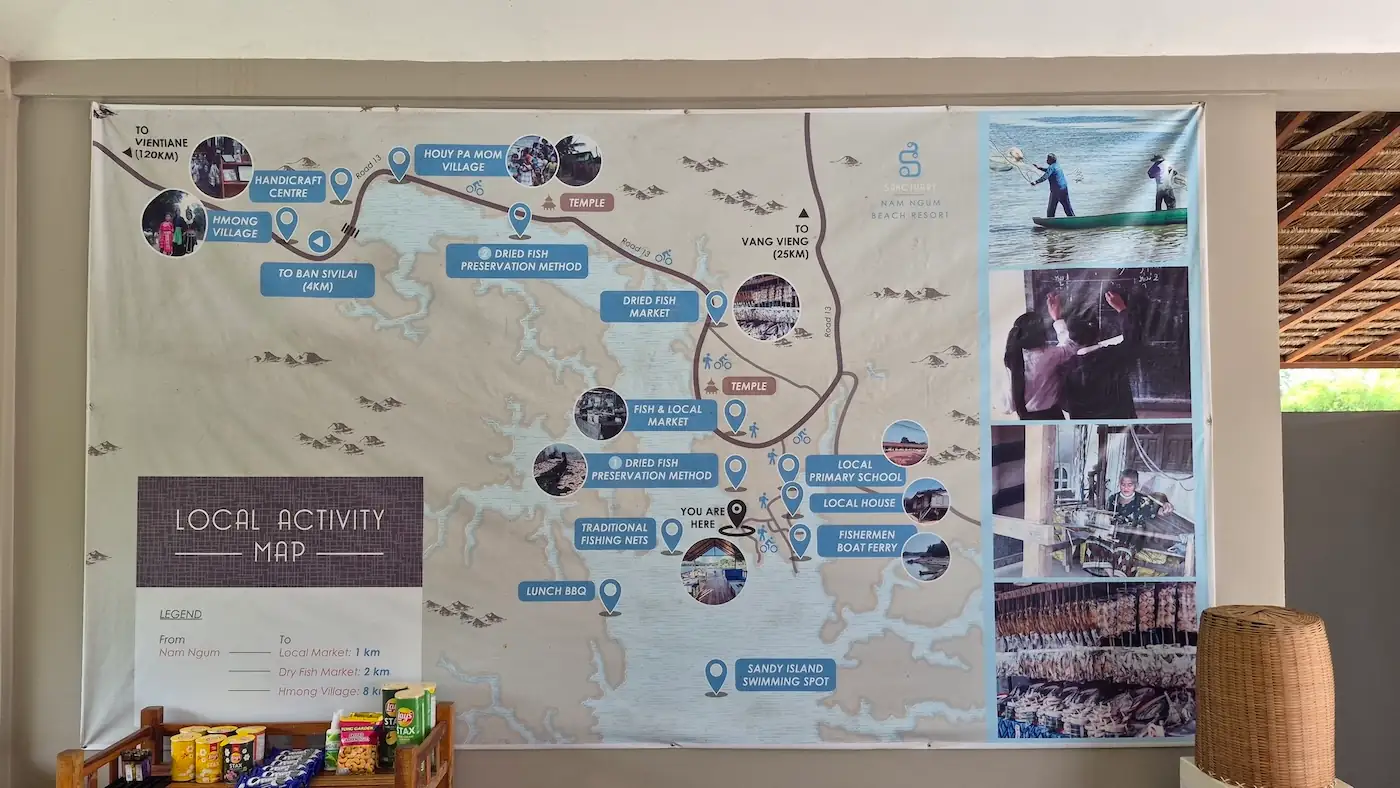
One of the best ways to explore Nam Ngum Lake is by taking a boat trip from Tha Heua. The reservoir is dotted with small islands, and some boat excursions include stops at sandy spots where visitors can swim and relax. One such location is the Sandy Island Swimming Spot, shown on the local activity map at Sanctuary Nam Ngum Beach Resort.
Depending on the arrangement, a boat trip can also include lunch or a BBQ on one of the islands. You can ask your hotel or local boat operators in Tha Heua about available trips, prices and departure times. Sunset cruises are also very popular at the Nam Ngum Reservoir. These excursions are generally arranged locally rather than through a fixed public timetable.
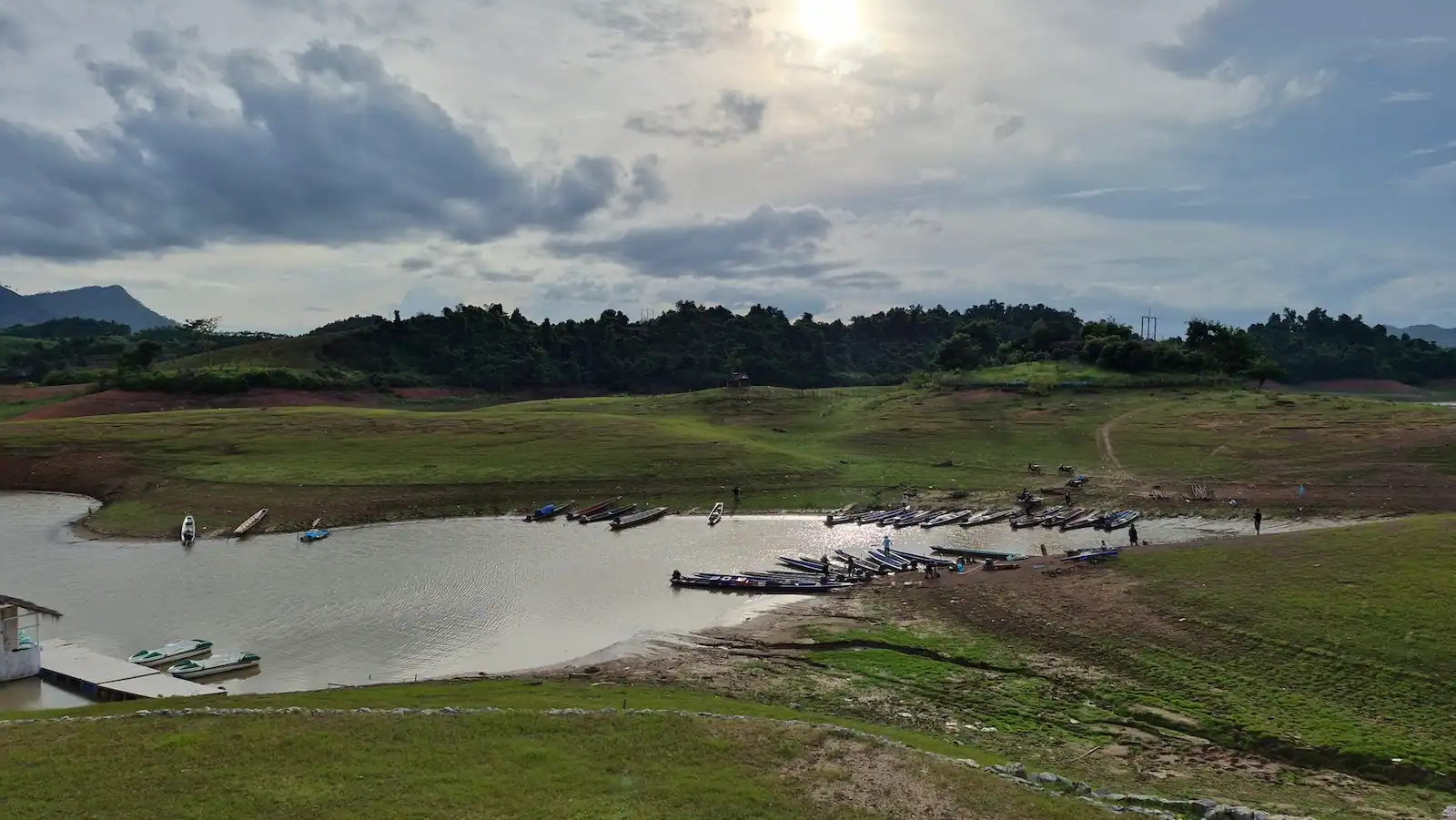
Fishing plays an important role in everyday life around Nam Ngum Lake, and Tha Heua is one of the best places to get a glimpse of the local fishing culture. Along the shore, you can see numerous traditional fishing boats used by local fishermen on the reservoir. The village is also known for its freshwater fish, with local markets selling freshly caught fish and a variety of dried fish products.
According to the local activity map at Sanctuary Nam Ngum Beach Resort, visitors can explore a dried fish market and learn more about traditional fishing nets and local fish preservation methods. These are interesting aspects of life around the reservoir and offer a different perspective on the area beyond its usual tourist activities.
Although Tha Heua is a small village, it has some nice local restaurants serving fresh fish from the reservoir. During our stay, we ate twice at ຮ້ານອາຫານ ຟ້າຮຸ້ງ (ນ ຫມີ), a small family-run restaurant with very tasty food and reasonable prices. We particularly enjoyed the local atmosphere and would recommend stopping here for a meal when visiting Tha Heua. The fact that the name of the restaurant on Google Maps is only available in Lao Language is a pretty good sign, that means it’s a real authentic local restaurant and not just for tourists. 100% Recommended by Laos Insider.
Beyond the lakeside activities, there are also opportunities to explore the villages around Tha Heua. The local activity map at Sanctuary Nam Ngum Beach Resort highlights several places worth discovering, including a Hmong village approximately 8 km from the resort, Houy Pa Mom Village and a local handicraft centre. Visitors may also come across traditional houses and temples along the way.
These places offer a glimpse into local life and traditional culture around Nam Ngum Lake. If you are interested in exploring the surrounding villages, you can directly organize them with the Sanctuary Nam Ngum or any other hotel in which you’re staying.
Kayaking is another great way to explore Nam Ngum Lake. During our stay at Sanctuary Nam Ngum Beach Resort, we could use kayaks and stand-up paddleboards (SUPs) free of charge, as these activities were included in our stay.
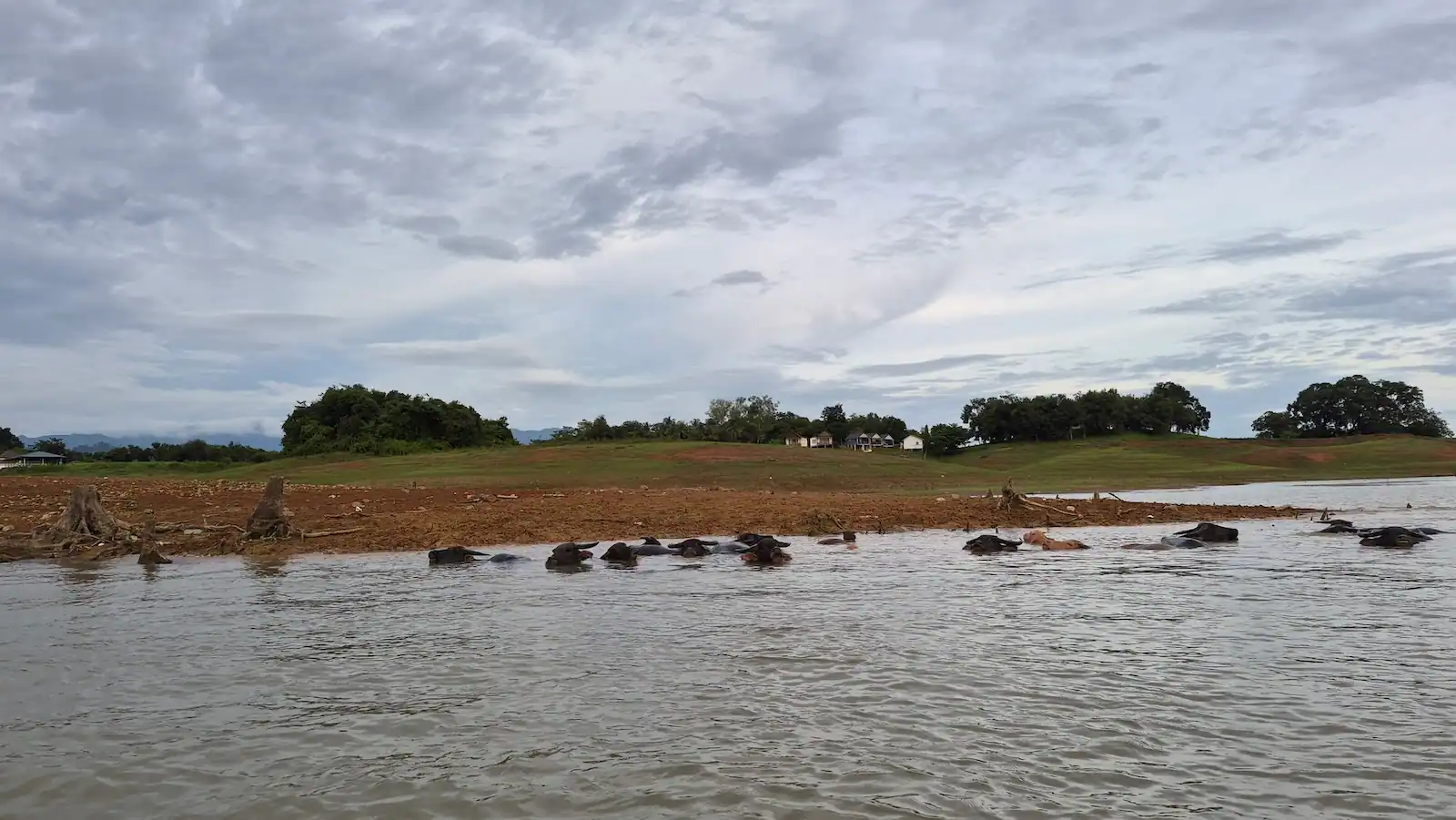
We took a kayak out onto the reservoir and came across several water buffaloes cooling off near the shore. It was a memorable experience and a nice way to discover the quieter parts of the lake away from the village.
One thing to keep in mind is that the water level at Nam Ngum Lake can change considerably throughout the year. During our visit in June, the water level was particularly low, exposing large areas of the shoreline. This can affect the landscape and the types of water activities available, so the experience may be quite different depending on when you visit. We cover seasonal water levels in more detail in our section on the best time to visit Nam Ngum Lake later in this article.
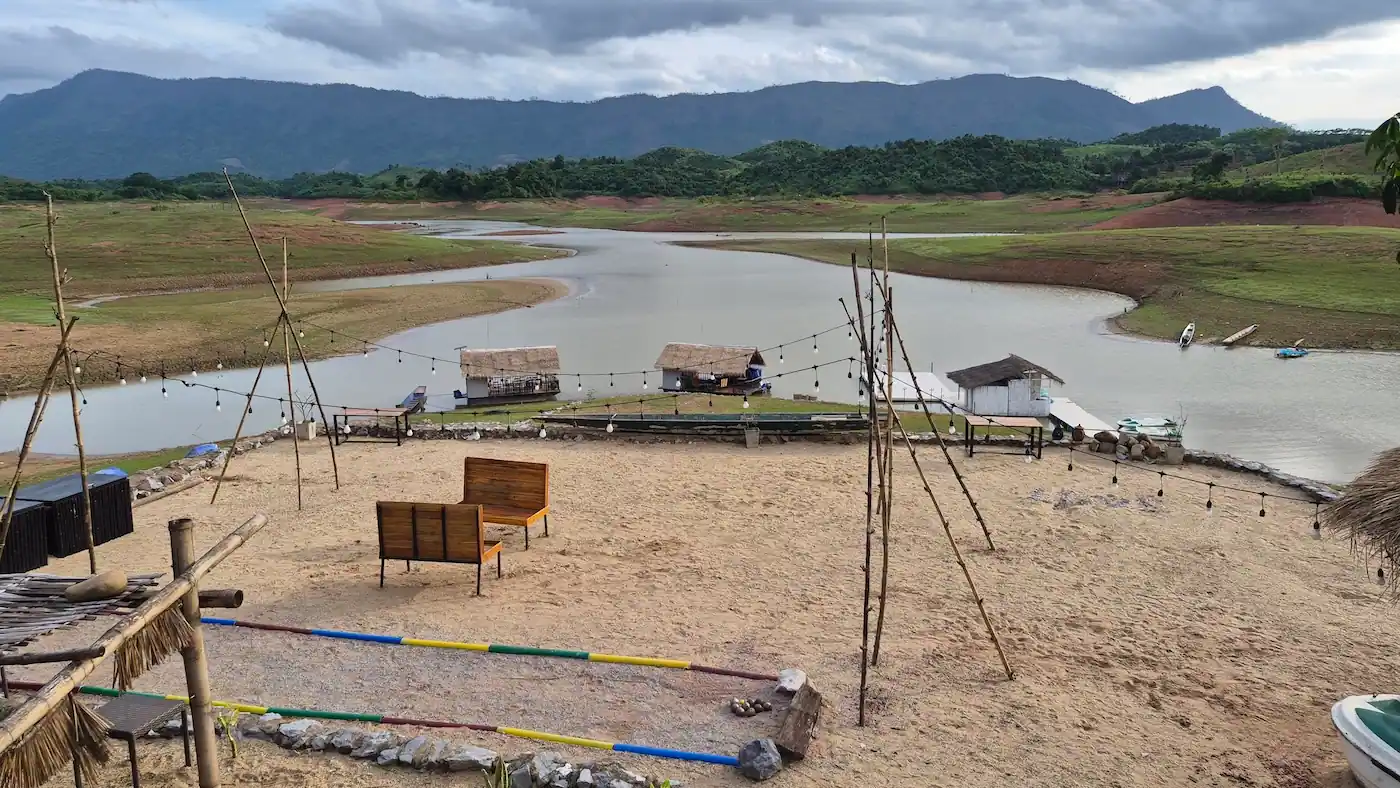
If you prefer a more relaxed experience, Sanctuary Nam Ngum Beach Resort is a great place to spend some time by the water. The resort has its own lakeside area with sun loungers, shaded seating and a small sandy beach, offering plenty of space to unwind and enjoy the scenery.
There are also several leisure facilities around the resort, including a swimming pool, a pétanque area and waterside chill-out spots. Whether you want to spend the afternoon relaxing by the pool, enjoy a drink overlooking the reservoir or simply take in the peaceful surroundings, Sanctuary offers a comfortable base for a relaxing stay at Nam Ngum Lake.
One of the things we particularly enjoyed during our visit was the combination of the lakeside setting and the facilities available directly at the resort. It is a good option if you want to experience Nam Ngum Lake without having to organise activities or excursions throughout the day.
If you are wondering where to stay at Nam Ngum Lake, there are several hotels and resorts around the reservoir, particularly near Tha Heua and Thalat. During our visit in June 2026, we spent a few nights at Sanctuary Nam Ngum Beach Resort in Tha Heua and were genuinely surprised by how much we enjoyed our stay.
We arrived without any particular expectations, but the friendly staff, professional Lao management and excellent service made a very positive impression. As it was the low season and the water level was particularly low, there were very few guests at the resort. This also meant we got a good deal through Agoda, including a complimentary room upgrade.
Our room was exceptionally clean and spacious, with some rooms offering beautiful views of Nam Ngum Reservoir. Breakfast was also very good. Overall, we had a much better experience than expected and would happily recommend Sanctuary as one of the accommodation options to consider when visiting Nam Ngum Lake.
You can check availability and current rates at Sanctuary Nam Ngum Beach Resort on Agoda.
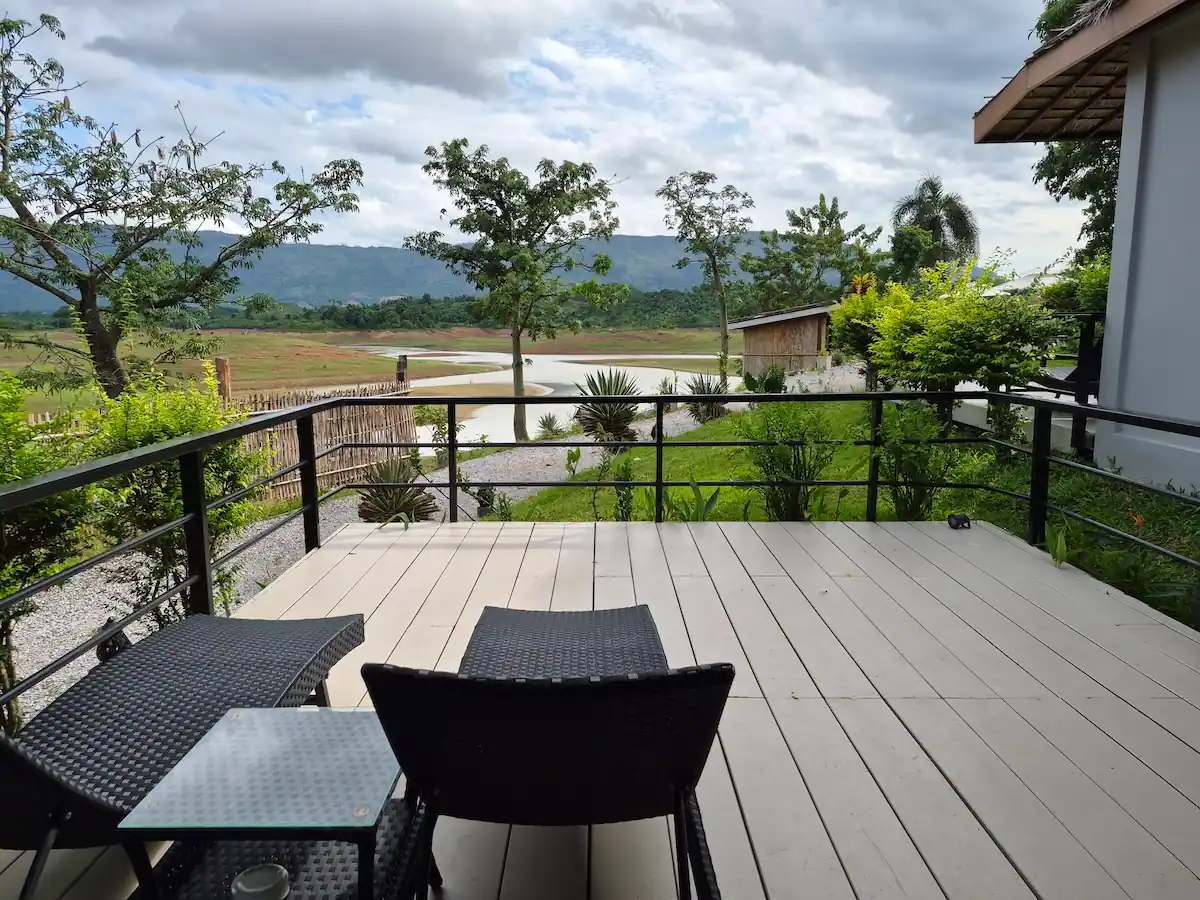
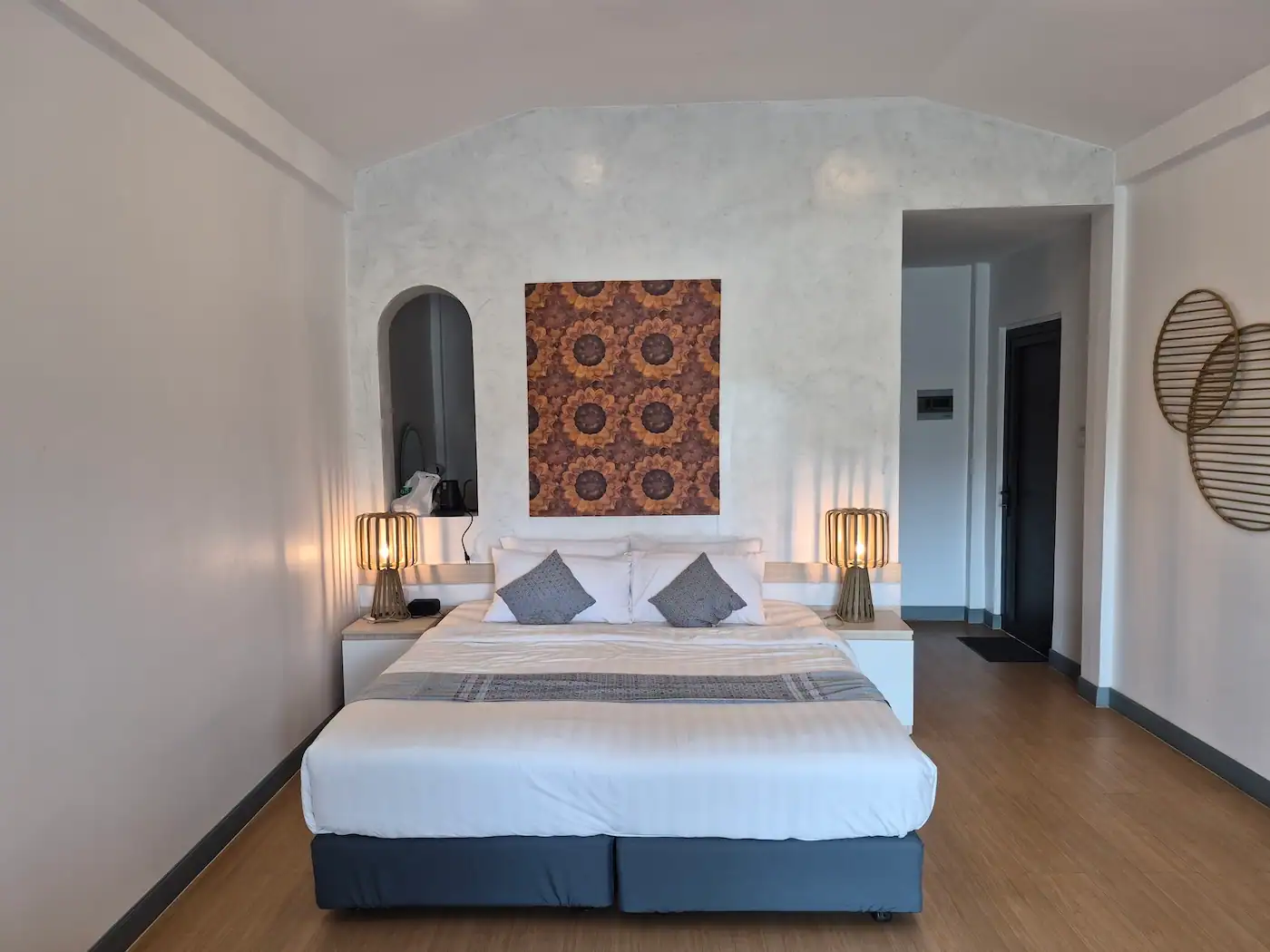
During our stay, we were impressed by the rooms at Sanctuary Nam Ngum Beach Resort. They were exceptionally clean, spacious and well maintained, with large bathrooms and private terraces. One detail we really appreciated as coffee lovers was the complimentary Lao coffee provided in the room, together with a French press to prepare it. There was also an electric kettle, making it easy to enjoy a coffee while taking in the surroundings. We had originally booked a different room category but were pleasantly surprised with a complimentary upgrade.
The resort also has several facilities that make it easy to enjoy a relaxing stay without having to leave the property. There is a swimming pool overlooking the lake, a sandy lakeside area with sun loungers, a pétanque court and its own pier directly on Nam Ngum Reservoir. Guests can use kayaks and stand-up paddleboards (SUPs), and the resort can also help arrange boat trips around the lake or visits to nearby villages.
Breakfast was another highlight of our stay. It was served à la carte, with a good selection of options, including homemade yoghurt, local lao bread, eggs and traditional Lao soups. The coffee was very good, and fresh juices were also available. Combined with the friendly staff and professional management, the overall service made us feel very welcome throughout our visit.
One of the things we liked most about Sanctuary Nam Ngum Beach Resort was its location. Set on a small peninsula surrounded by the reservoir, the property feels pleasantly secluded and private. With the lake views, peaceful atmosphere and facilities right by the water, it is an excellent place to slow down and enjoy a few relaxing days at Nam Ngum Lake. Based on our experience, we would definitely consider staying here again.
The best time to visit Nam Ngum Lake in Laos depends largely on the water level of the reservoir and the type of landscape you want to experience. The dry season, generally from November to April, offers more stable weather, while the rainy season gradually brings higher water levels and greener surroundings. For visitors who want to see the reservoir with plenty of water, October to December is generally the best period.
During our visit in June 2026, at the beginning of the rainy season, the water level was still surprisingly low. Large sections of the shoreline were exposed, creating a very different landscape from the typical images of Nam Ngum Lake. However, this also revealed sandy areas and offered a different perspective on local fishing life. We could still do kayaking and stand-up-paddling during that time. The bigger Sala-boats and sunset cruises were not operational unfortunately.
According to the seasonal information published by Sanctuary Nam Ngum Beach Resort, water levels remain relatively low during the early rainy season and gradually rise as the monsoon progresses. The resort identifies October to December as a period of particularly high water levels, while January to April offers a drier landscape with exposed shorelines and opportunities to observe local fishing activities.
If you are planning a visit, it is therefore worth considering more than just the weather forecast. The water level can significantly change the appearance of Nam Ngum Lake and the experience of activities such as boat trips, kayaking and swimming. For a broader overview of the country’s climate, see our guide to the best time to visit Laos.
| Period | Water Level & Landscape | Best For |
|---|---|---|
| 🌤️ January–April | Dry season with receding water levels, exposed shorelines and sandy areas. | Fishing culture, exploring exposed shorelines and outdoor activities. |
| 🌱 May–August | Early rainy season. Water levels remain low initially and gradually rise as the monsoon progresses. Vegetation becomes greener. | Quiet stays, green landscapes and experiencing local fishing life. |
| 🌊 September–December | Water levels generally reach their peak, with lush green surroundings and more extensive open water. | Boat trips, kayaking, water activities and panoramic lake views. |
If you are already visiting Vientiane or Laos’ Outdoor Adventure Capital Vang Vieng, or travelling between the two destinations, Nam Ngum Lake is an easy stop to add to your Laos itinerary, especially if you want to go where not everyone else goes. Even if just visiting from Vang Vieng for few days, I would say it’s worth it.
Spending one or two nights at Nam Ngum Lake gives you time to slow down and experience the area beyond the usual tourist stops. You can enjoy water activities, go on a boat trip, swim, relax by the lakeside or discover the traditional fishing culture of the local communities living around the reservoir. Whether you are looking for a relaxing break or a chance to explore a more rural side of Laos, Nam Ngum Lake fits easily into a trip between Vientiane and Vang Vieng.
💵 Bring enough cash: We did not see any ATMs in Tha Heua during our visit, so make sure to withdraw enough cash beforehand, for example in Vang Vieng. If you are unsure about local payments and cash availability, see our guide to money and currency in Laos.
🌊 Pack your swimwear: If you plan to go kayaking, swimming or join a boat trip, bring swimwear and a towel.
📱Get a local SIM card: Unitel and Lao Telecom are two commonly used mobile networks in Laos. Check our guide to SIM cards and mobile internet in Laos for information on choosing a suitable option. Usually Unitel is the provider to go with.
⛽ Fuel up if travelling independently: Tha Heua has petrol stations, which is useful if you are exploring the area by car or motorbike. If you are planning a longer ride, our guide to motorbiking in Laos has more practical information.
If you are planning to spend one or two nights at Nam Ngum Lake, the following itinerary is a good way to experience the area without rushing. It works particularly well if you are travelling from Vientiane or Vang Vieng and staying around Tha Heua.
Day 1: Arrive, Relax and Enjoy Local Food
After arriving in Tha Heua, check into your hotel and take some time to relax. You can spend the afternoon by the pool or head straight out onto the water with a kayak or stand-up paddleboard (SUP). Many lakeside resorts, including Sanctuary Nam Ngum Beach Resort, offer these activities free of charge to their guests.
In the evening, try some of the local freshwater fish at one of the restaurants in Tha Heua. Fresh fish from the reservoir is a regional speciality, whether grilled Lao-style over charcoal, served in a traditional fish soup or prepared as Laap Pha or Koy Pha. These local fish dishes are well worth trying during your stay.
Day 2: Explore Local Life and Enjoy a Sunset Boat Trip
Spend your second day discovering more of the area. You could visit a nearby village, explore local handicrafts or learn more about traditional fishing culture. Your accommodation may be able to recommend suitable places and help arrange a local visit.
In the late afternoon, consider taking a sunset boat cruise on one of the traditional sala boats. It is a lovely way to experience the reservoir from the water and enjoy the changing colours of the landscape as the sun goes down.
We recommend spending two nights at Nam Ngum Lake if you want enough time to enjoy the water activities, discover local life and take a boat trip without rushing. If you mainly want to relax and enjoy the lakeside atmosphere, three nights would be even better.
However, even one night is worthwhile if you are travelling between Vientiane and Vang Vieng and simply want to break up the journey with a relaxing stop at the Sea of Laos.
In our opinion yes, Nam Ngum Lake is worth visiting if you want to experience a quieter, more authentic side of Laos beyond the usual tourist destinations. Whether you are interested in boat trips, kayaking, local fishing culture or simply relaxing by the water, the reservoir offers a refreshing change of pace. Its location between Vientiane and Vang Vieng also makes it an easy stop to include in your itinerary. Even one or two nights here can be memorable addition to your trip through Laos.
Nam Ngum Lake is located in Vientiane Province, around 120 km north of Vientiane and approximately 24 km south of Vang Vieng. The reservoir is easily accessible from both destinations and makes a convenient stop between them.
Nam Ngum Lake is often called the Sea of Laos because of its enormous size. Covering around 370 square kilometres at full supply level, the reservoir is one of the largest bodies of water in the country.
October to December is generally a good time to visit if you want to experience higher water levels and enjoy the reservoir with more extensive open water. However, the landscape changes considerably throughout the year, and each season offers a different experience.
Swimming is one of the main activities at Nam Ngum Lake, especially in designated areas around lakeside hotels and resorts. The reservoir is also great for kayaking, stand-up paddleboarding and other water activities. However, avoid swimming near the dam and always check with your hotel about safe swimming areas and current local conditions before getting into the water.
We recommend spending two nights at Nam Ngum Lake to enjoy activities such as kayaking, boat trips and village visits without rushing. One night is also worthwhile as a stop between Vientiane and Vang Vieng, while three nights allow for a more relaxed stay.
Tha Heua is one of the most convenient areas to stay, with lakeside accommodation, local restaurants and access to water activities. We stayed at Sanctuary Nam Ngum Beach Resort and particularly enjoyed its peaceful location, friendly service and facilities directly by the reservoir.
Disclosure: This article contains affiliate links. If you make a purchase through them, we may earn a small commission and you support our blog to write more helpful articles – at no extra cost to you.